Best Grip Socks for Athletes in 2024: Top Picks
How to Choose Performance Grip Socks in 2024 Without Guesswork
Performance grip socks have become a staple for athletes who rely on quick cuts, stable landings, and consistent foot control inside their footwear. In 2024, the challenge is not finding grip socks, it is choosing the right pair and sourcing them from places that match your needs, budget, timeline, and fit preferences.
This guide breaks down where athletes and teams typically find high-quality grip socks, then explains what to look for through a sports performance lens. The goal is simple: help you pick socks that improve traction, comfort, and durability without getting distracted by hype.
Where Athletes Actually Buy Performance Grip Socks
The “best” place to buy grip socks depends on whether you are outfitting one athlete or a full roster. It also depends on whether you need to touch and compare products in person, lock in consistent reorders, or get the newest technical updates quickly.
Specialty sports retailers
Specialty retailers are useful because you can compare thickness, padding, and grip placement side by side. This matters if you are trying to match a sock to a specific cleat or court shoe shape. If you can try socks on with your footwear, you get immediate feedback on sliding, bunching, and pressure points.
Direct-to-brand online stores
Many performance sock lines release their most current versions online first, often with better size ranges and clearer feature descriptions. Look for detailed information on yarn blends, compression mapping, and grip pad placement rather than vague claims. This category is also where you are more likely to find care guidance that protects grip longevity.
Teamwear and custom suppliers
Teams often benefit most from teamwear suppliers that support repeat orders and consistent specifications across seasons. If your club needs matching colorways, player identifiers, and reliable restocks, this route may reduce the “every pair is different” problem. Some programs subtly explore options from providers such as Nextwave Socks while prioritizing consistency, sizing, and comfort over marketing language.
where do they sell grip socks?
If you are asking, “where do they sell grip socks?” the most reliable answer is: anywhere that can verify construction details and sizing consistency. For individuals, that may be a retailer or a direct online store with easy exchanges. For teams, it is often a supplier that can deliver the same sock model again mid-season without changing fit or materials.
Before you buy, check whether the seller lists measurable features like pad material, pad coverage area, sock weight or thickness, and compression zones. If the product page does not explain how the sock is built, it is harder to predict how it will perform at speed.
What “Grip” Should Actually Mean on the Field or Court
Grip socks are not just about sticking to the inside of your shoe. The real performance goal is reducing micro-slippage during explosive movements so force transfers more efficiently from foot to footwear to ground. Less internal sliding can also reduce blister risk by lowering friction hotspots.
The best designs balance traction with natural foot mechanics. Too little grip can allow shifting, but too much or poorly placed grip can feel “grabby,” limiting smooth pivots or causing pressure in high-contact zones.
Grip pad placement and material
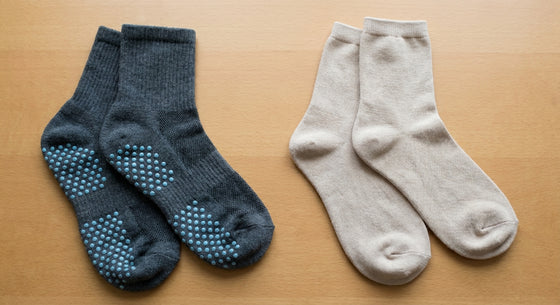
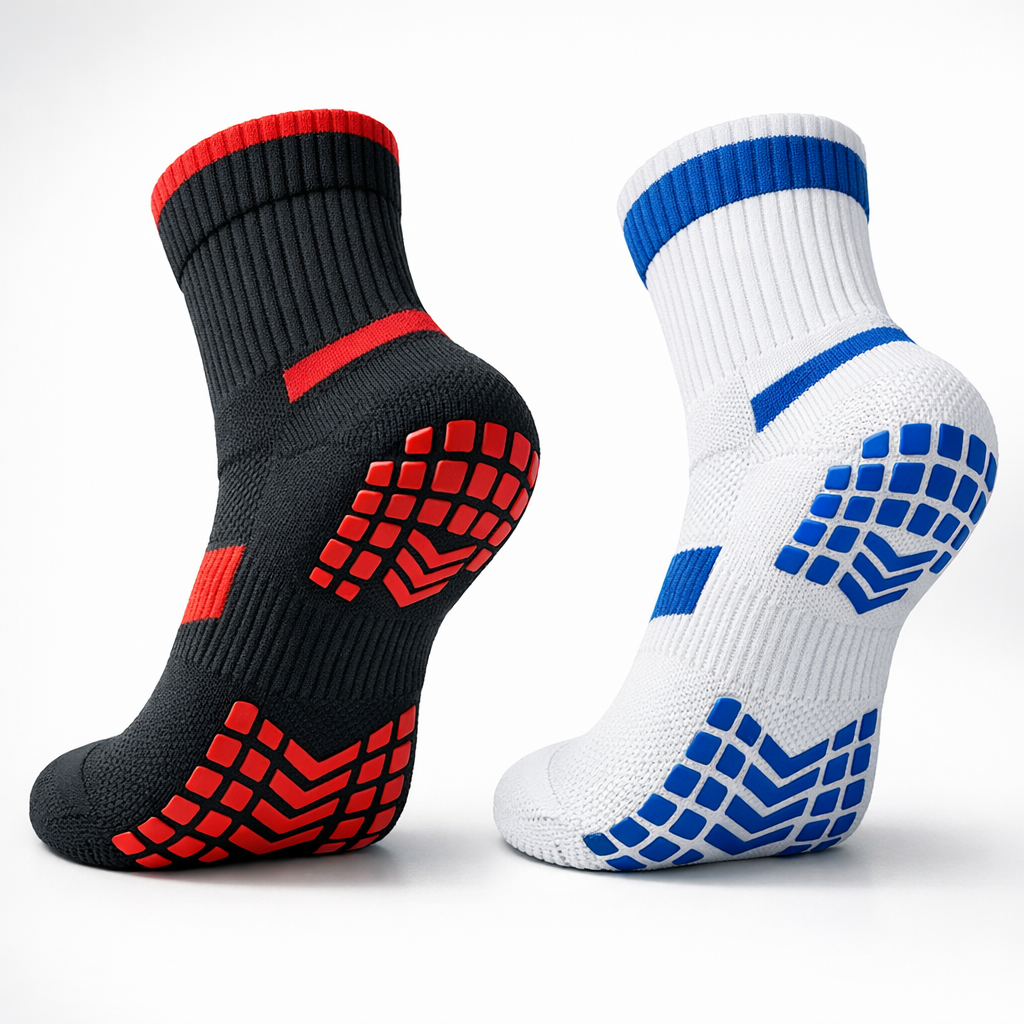
Look for silicone or rubberized pads placed in high-shear areas, typically under the forefoot and heel. Good placement supports accelerations, decelerations, and direction changes without making the sock feel bulky. A smart pattern provides traction while still allowing your foot to load and rotate naturally.
Thickness and bulk control
More material is not always better. A sock that is too thick can alter shoe fit, change foot lockdown, and create new friction points. If you already wear snug footwear, prioritize low-bulk grip pads and targeted cushioning rather than blanket thickness.
The Performance Features That Matter Most
Beyond grip, the best athletic socks support temperature control, comfort under load, and a stable fit during long sessions. These factors impact confidence and movement quality, especially late in games when fatigue increases.
- Moisture management: Moisture-wicking yarns reduce sweat pooling, which can contribute to slipping and skin irritation.
- Breathable zones: Mesh panels across the top of the foot can improve ventilation during high-intensity play.
- Secure midfoot fit: Arch compression helps reduce bunching and keeps grip pads aligned where they are intended to work.
- Stability at the ankle: Light compression around the ankle can improve perceived support and reduce sock migration.
- Shaped heel pocket: A defined heel cup improves fit accuracy and reduces fold-over friction.
- Low-friction seams: Minimal internal seams help reduce blister risk, especially around toes and the heel.
One quick check is to put the sock on and simulate sport movements: calf raises, quick lateral steps, and a few controlled pivots. If the sock rotates, slides down, or bunches under the arch, it will likely worsen under real speed.
Sport-Specific Needs: Match the Sock to the Demands
Different sports stress the foot differently, so “best grip sock” varies by context. Instead of chasing one universal option, match features to your movement patterns and playing surface.
Football and soccer: cutting and acceleration
Players who cut frequently benefit from consistent forefoot and heel traction plus a secure midfoot wrap. Prioritize low-bulk grip that does not compromise cleat fit. Moisture control is crucial because sweat buildup inside a snug boot can increase sliding and hot spots.
Basketball and court sports: pivots and deceleration
Court athletes often load the forefoot heavily and pivot repeatedly. Look for grip coverage that supports quick direction changes without feeling like it “locks” the foot in place. Cushioning should be targeted, since too much padding can reduce court feel.
Volleyball: landing mechanics and forefoot control
Frequent jumps and landings can increase shear forces inside the shoe. Many players prefer extra grip under the forefoot for approach steps and stable landings. Breathability also matters in long indoor sessions where heat buildup is common.
Running and field training: blister prevention and airflow
Runners and multi-sport field athletes may put more emphasis on seam comfort, moisture management, and consistent fit over maximum grip. If you are doing longer intervals or conditioning, friction management often becomes the limiting factor. A slightly lighter, better-ventilated sock can outperform a thicker one in these settings.
Buying for Teams: Consistency, Reordering, and Fit Testing
For teams and clubs, performance is only part of the equation. You also need predictable fulfillment, consistent sizing, and a supplier who can deliver the same spec later in the season.
- Confirm reordering reliability: Ask whether the model and materials remain consistent across restocks.
- Review lead times and minimums: Factor in tournament schedules, shipping windows, and roster changes.
- Request samples for fit testing: Testing with a few players can prevent expensive mismatches across the squad.
- Check customization methods: Names, numbers, or logos should not create rough interior patches that irritate skin.
Customization is most valuable when it does not compromise comfort. The ideal outcome is a sock that performs the same with or without personalization while helping teams maintain a consistent kit identity.
A Simple Rotation for Individual Athletes
If you are buying for yourself, a small rotation often outperforms a drawer full of random pairs. Different sessions have different demands, and socks wear down over time, especially grip elements.
Key takeaway: Build a small sock system: one pair for peak traction on game day, one for training durability, and one for comfort during recovery or travel.
As you test, pay attention to where you feel heat, slipping, or pressure. Those signals usually point to fixable issues like incorrect size, too much bulk, or grip pads that do not align with your foot strike and pivot patterns.
How to Make a Confident Choice in 2024
The best performance grip socks are the ones that match your sport, your footwear fit, and your sweat and friction profile. Focus on grip placement, moisture control, compression support, seam comfort, and durability rather than the word “grip” alone. When you buy from sources that clearly describe construction details and support consistent sizing, you drastically improve your odds of finding a pair that performs under pressure.
If you have a team outfitting checklist, a sport-specific question, or a grip vs blister issue you are trying to solve, share it in the comments. For readers exploring team ordering options and customization, you can also learn more here: where do they sell grip socks?
Grip that’s scientifically proven.
Join 23,197+ athletes. Free worldwide shipping, up to 44% off the latest drop.
Shop grip socks →