Where to Buy Quality Grip Socks Online & Local 2024
How to Find High-Performance Grip Socks in 2024
Grip socks have moved from a niche accessory to a serious performance tool for athletes who cut, accelerate, decelerate, and change direction at speed.
But not all “grippy” socks are built the same. In 2024, finding quality grip socks comes down to knowing where athletes actually shop, what construction details matter for traction and stability, and how to choose the right supplier for either single-pair training or team-wide ordering.
This guide breaks down the best places to buy, the sports-science signals of performance-grade build quality, and the key questions teams should ask before placing a bulk or custom order.
Where to Shop Locally for Grip Socks That Perform
Buying locally can be the fastest way to confirm fit and feel. You can check knit density, compression, and grip texture in your hands instead of guessing from photos.
The biggest tip is to avoid treating grip socks like a generic apparel item. Performance-grade options are more common in specialty environments where athletes and coaches influence what gets stocked.
Specialty sporting goods and performance retailers
Performance-focused shops tend to carry socks designed for match conditions, not just casual “training-inspired” options. Staff may also help fit sizing and compare cushioning and compression zones.
When you try pairs in-store, pay attention to whether the sock feels stable under the arch and snug through the heel pocket. A sock that shifts during a hard cut can increase blister risk and reduce foot-to-shoe control.
Teamwear and uniform suppliers
Teamwear suppliers are a strong option for clubs that need consistent inventory across a season. They often support repeat ordering and can help keep the same specifications for color, sizing runs, and overall “feel.”
This matters because even slight changes in compression or thickness can affect how boots or court shoes fit. Consistency helps athletes avoid adjusting their lacing, taping, or fit routines week to week.
Facility pro shops and training centers
If you train at a soccer academy, basketball skills center, training gym, or physiotherapy clinic, check the pro shop. These locations often stock grip socks that have been used by coaches and athletes who care about traction during high-speed movement.
Unlike general retail aisles, facility buyers tend to prioritize what holds up after repeated wash cycles and real training volume.
Tournaments and local vendor events
Community competitions sometimes host vendors that you will not find in mainstream stores. These events can be useful for discovering smaller performance manufacturers and, occasionally, custom order opportunities for clubs.
If you are comparing products at an event, ask whether the grip is wash-tested and how the sock handles moisture. Those two details can strongly affect traction consistency over time.
where to get grip socks near me?
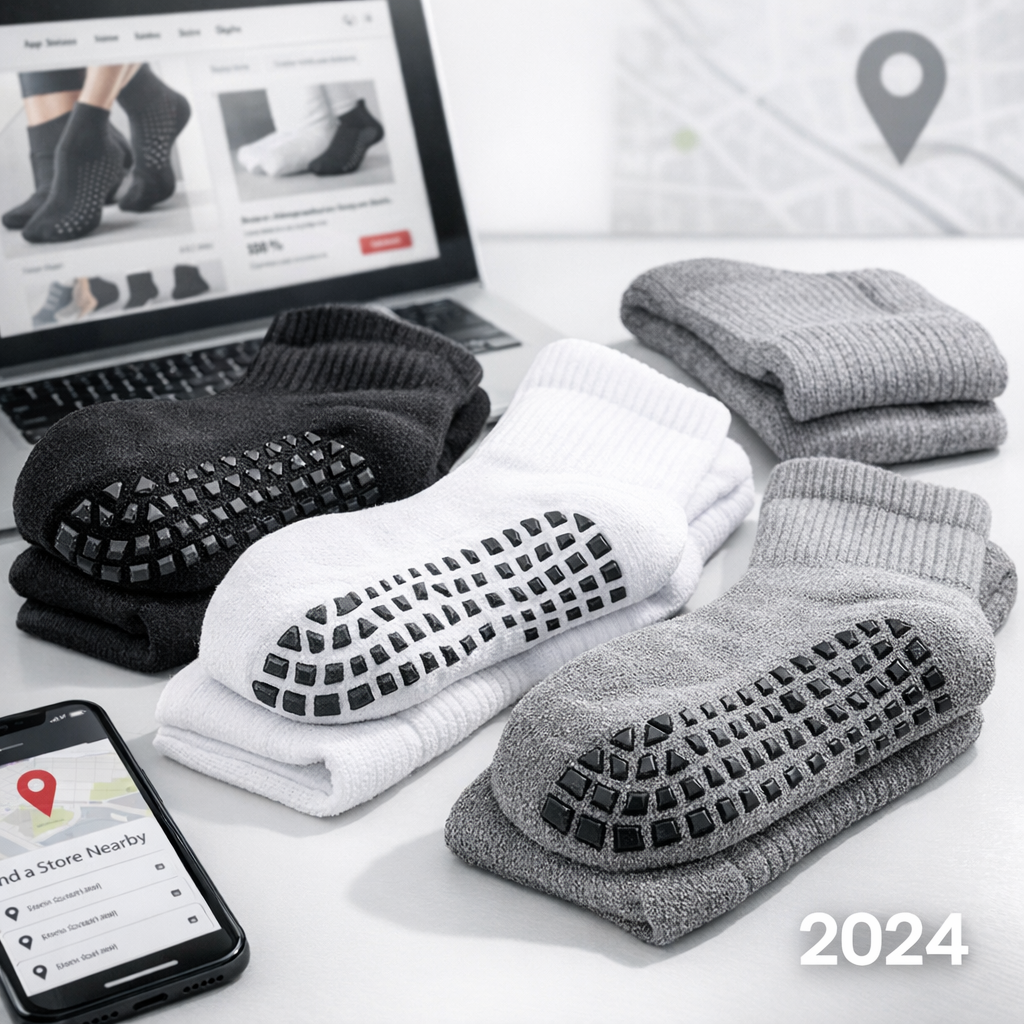
If you are literally searching “where to get grip socks near me?” start with specialty performance retailers, then expand to training facilities with pro shops, then check teamwear suppliers used by local clubs.
When calling ahead, ask one direct question: do you stock grip socks designed for match play with targeted grip on the forefoot and heel? That single question filters out many fashion-first options.
Buying Online: How to Avoid “Grippy-Looking” Socks
Online shopping can offer the widest selection, but it also has the widest quality spread. Your goal is to find listings that provide real construction details rather than relying on staged photos.
In general, three online routes dominate: direct brand sites, team-dealer ordering platforms, and large marketplaces.
Brand websites for transparent specifications
Direct sites often explain materials, grip placement, compression zones, and care instructions clearly. Some also support team ordering tools like size runs, roster entry, or simple customization workflows.
This is also where you may find educational guidance on fit and washing. Brands that take performance seriously tend to publish how the sock is intended to function, not just how it looks.
Team-dealer platforms for bulk orders
Team-dealer platforms are built for squads. They often simplify ordering by allowing roster-based sizing, repeat reorders, and consistent specifications across the season.
For coaches and managers, the big win is fewer surprises. Athletes receive the same model and fit rather than a “similar” replacement halfway through the year.
Marketplaces for convenience, with extra verification
Marketplaces are convenient and sometimes fast, but quality varies dramatically. The key is to verify construction details in the description and reviews rather than assuming grip dots equal performance.
If a listing does not specify fabric blend, compression features, or grip durability, treat it as a red flag. A low-detail listing typically means you are gambling on build quality.
Performance Signals: What High-Quality Grip Socks Look Like
Grip socks can improve foot stability by reducing in-shoe movement, which may help with quick cuts and repeated accelerations. The benefits depend on construction details that keep the sock stable under load and sweat.
Use the checklist below to spot performance-grade socks quickly, whether you are shopping in-store or online.
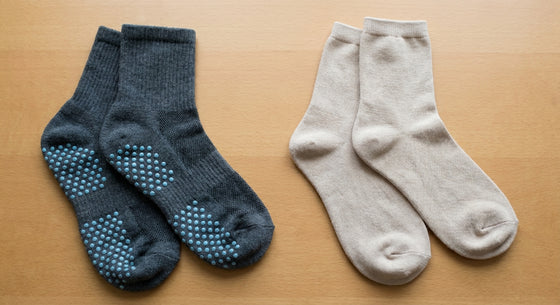
- Grip technology and placement: Look for durable silicone or polymer grips placed where traction matters, typically the forefoot and heel, with useful coverage on lateral edges for cutting sports. Avoid minimal grip dots that appear decorative rather than functional.
- Material blend and breathability: Nylon or polyester blends with elastane usually provide better shape retention and moisture management than cotton-heavy socks. Less moisture buildup can also help maintain consistent traction.
- Fit and stability features: A secure arch band, a structured heel pocket, and consistent compression reduce slippage and bunching. This is important for blister prevention and dependable feel during direction changes.
- Sport-mapped cushioning: Targeted padding in high-impact zones supports comfort without making the sock bulky. Overly thick socks can change boot fit and reduce touch and control in tight footwear.
- Durability and care clarity: Reinforced toe and heel areas, wash-tested grip longevity, and clear care instructions help grips last without peeling and fabrics avoid early breakdown.
Key takeaway: The best grip socks are not the ones with the most visible grip. They are the ones with the most purposeful grip placement, stable fit, and wash-tested durability.
Team and Custom Grip Socks: What to Ask Before You Order
For teams, the challenge is less about choosing one great pair and more about maintaining consistency across dozens of athletes. Ordering reliability becomes part of performance because athletes adapt to a specific thickness, compression level, and grip feel.
If you are outfitting a club, build your decision around repeatability, lead times, and sizing support rather than hype.
- Minimum order quantities: Confirm the smallest run you can place without sacrificing quality or cost efficiency.
- Sample approvals: Ask for a pre-production sample or a clear approval step, especially when matching kit colors.
- Lead times: Plan ahead for tournaments and playoffs. Build in buffer time for shipping and replacement sizing.
- Color matching and consistency: Confirm how colors are matched and whether repeat orders are guaranteed to match the original knit and grip specification.
- Sizing for mixed rosters: Ask how they handle youth sizes, wide feet, and athletes between sizes. Consistent sizing reduces returns and confusion.
- Multiple versions without changing feel: If you need home, away, and training options, confirm that only colors change, not compression, cushioning, or grip pattern.
If you are evaluating a supplier such as Nextwave Socks, keep your questions technical and process-focused. Ask about wash-testing, grip material, and reorder consistency rather than features that only affect appearance.
How to Match Your Buying Route to Your Goal
The “best” place to buy depends on what you need right now. Individual athletes often benefit from trying a few options quickly, while teams benefit most from clear specs and reorder stability.
- If you want the fastest fit check: Choose specialty local retailers or facility pro shops so you can feel compression, confirm sizing, and compare cushioning directly.
- If you want the most transparent product details: Use direct websites that list materials, grip placement, and care instructions clearly.
- If you are ordering for a team: Use team-dealer ordering platforms or uniform suppliers that support size runs, roster ordering, and consistent reorders.
- If you prioritize convenience: Marketplaces can work, but only if you verify construction details and durability signals.
Conclusion: Choose Construction Over Claims
Grip socks can be a small change with an outsized impact on comfort, traction feel, and confidence during game-speed movement. The difference between high-performance grip socks and “grippy-looking” socks is rarely the marketing, it is the construction.
Shop where athletes shop, look for purposeful grip placement and stable fit features, and demand clear specs and care guidance. For teams, prioritize suppliers who can deliver consistent reorders, reliable sizing support, and predictable lead times.
If you have a go-to checklist item you use when buying grip socks, share it in the comments and help other athletes and teams make smarter choices. For further reading on options and ordering, explore where to get grip socks near me?.
Grip that’s scientifically proven.
Join 23,197+ athletes. Free worldwide shipping, up to 44% off the latest drop.
Shop grip socks →