Why Rugby Players Are Switching to Grip Socks for Better Performance
Why Rugby Players Are Switching to Grip Socks
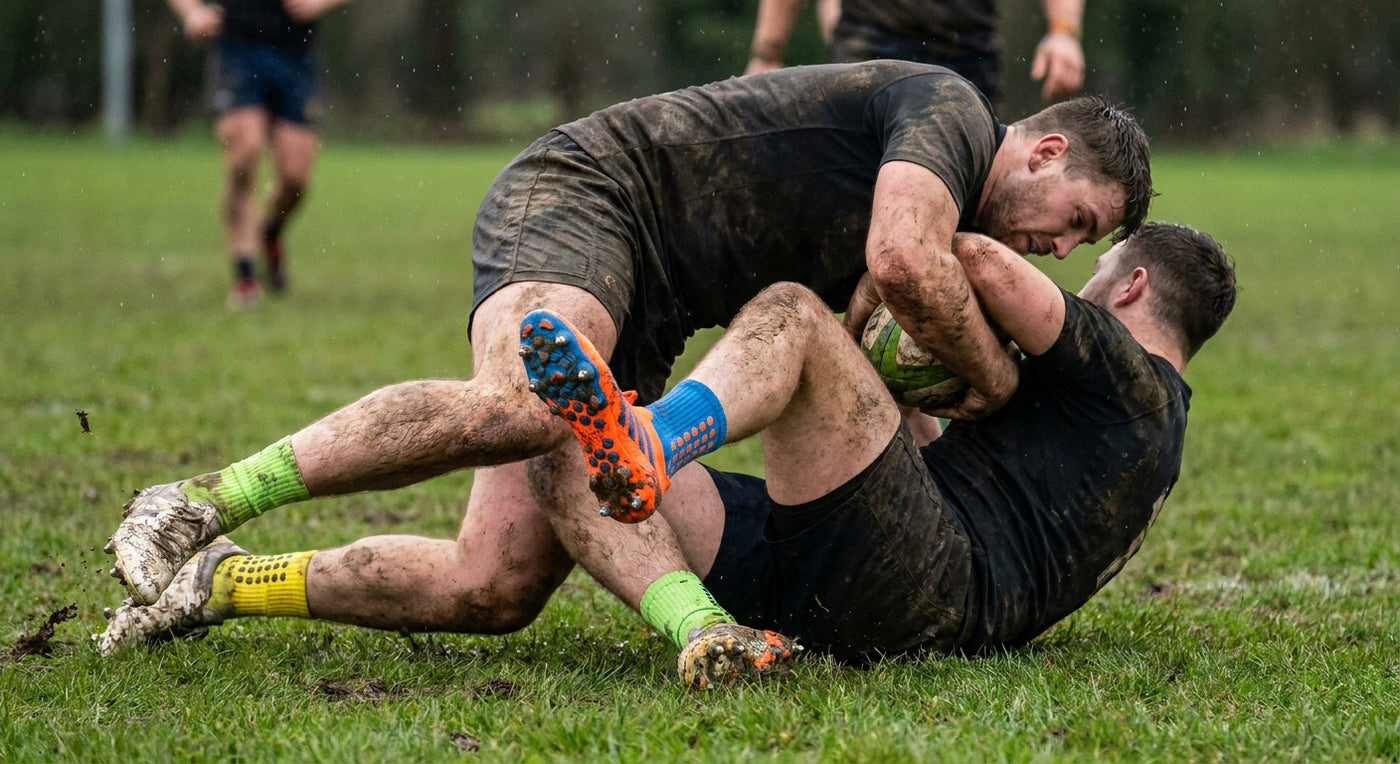
Rugby players are switching to grip socks because they lock your foot into your boot, killing the internal slippage that steals power on every sprint, ruck and change of direction. Less foot movement means more of your energy goes into the ground instead of getting lost inside your boot.
If you've ever finished a match with hot spots on your heels or felt your foot sliding when you cut sharply, that's exactly the problem grip socks are designed to fix. It's a small kit change that makes a surprisingly big difference.
The Grip Problem Nobody Talks About
Rugby boots are built to grip the pitch, but most players never think about what's happening between their foot and the boot itself. Standard cotton socks get sweaty and slick, so your foot shifts around inside the boot no matter how tight you lace up.
That internal slip is where power leaks away. When you plant to sidestep or drive into contact, some of that force is wasted moving your foot inside the boot rather than propelling you forward.
How Grip Socks Actually Help
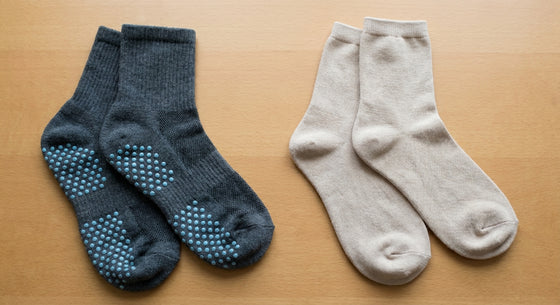
Grip socks have rubberised pads printed on the sole, usually inside and out. The inner grip holds your foot steady against the boot, and that stability translates into faster acceleration and sharper direction changes.
For a sport built on quick footwork and heavy collisions, that extra lockdown matters. You feel more connected to the ground and more confident planting hard when the pitch is greasy.
The Injury and Comfort Side
It's not just about performance. A foot that isn't sliding around rubs less, which means fewer blisters over an 80-minute match.
There's also an argument for reduced ankle and knee strain, since your foot moves as one unit with the boot rather than shifting independently. Less unwanted movement generally means less awkward loading on your joints.
What to Look For in a Rugby Grip Sock
Not all grip socks are equal, and rugby puts more demand on them than five-a-side football does. Here's what actually matters:
- Strong inner and outer grip pads that survive repeated washing
- A breathable, moisture-wicking fabric to handle wet and muddy conditions
- A snug arch band to stop the sock bunching mid-game
- Enough cushioning for contact and scrums without feeling bulky
Brands like Nextwave Socks build theirs with rugby in mind, so the grip holds up to the physicality rather than peeling off after a few sessions.
The Cut-Sock Trick
Plenty of players wear their grip socks as ankle socks and then pull their club socks over the top. This keeps you match-legal for the team kit while still getting the grip benefit underneath.
It's become such a common workaround that you'll spot it across professional teams now. If your league has strict kit rules, this is the easy way around it.
Are They Worth It?
For most players, yes. The upgrade from a standard sock is noticeable in the first training session, and once you've felt that locked-in stability it's hard to go back.
They won't turn you into a better player overnight, but they remove a small handicap you probably didn't know you had. Cleaner footwork and fewer blisters for the price of a decent pair of socks is a fair trade.
Ready to feel the difference for yourself? Shop our grip socks and lock your feet in for your next match.
Grip that’s scientifically proven.
Join 23,197+ athletes. Free worldwide shipping, up to 44% off the latest drop.
Shop grip socks →