
Grip Socks for CrossFit: How to Choose the Best Pair for Functional Fitness
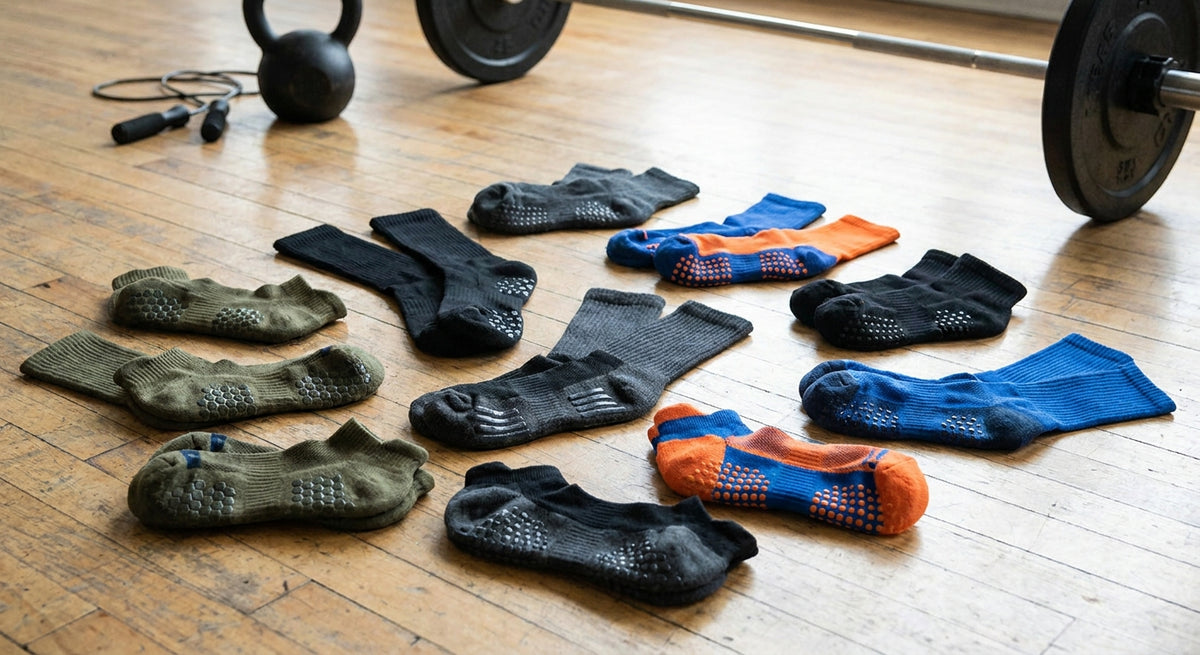
How to Choose Grip Socks for CrossFit and Functional Fitness
The best grip socks for CrossFit have rubber grips on the sole, a snug but not tight fit, and enough cushioning to survive box jumps and rope climbs. Look for a mid-crew height, moisture-wicking fabric, and grips that cover the whole footbed rather than just a few dots.
If you train barefoot for lifts or wear minimalist shoes, grip socks are one of the cheapest upgrades you can make. They stop your feet sliding around inside your shoes and give you real traction when you kick them off for cleans and snatches.
Why Grip Socks Actually Matter in Functional Fitness
CrossFit throws everything at your feet in a single session. You might go from heavy squats to double-unders to a barefoot handstand hold, and each one asks something different from your footing.
Regular socks let your foot slide, which wastes energy and messes with your balance. Grip socks lock you in, so the power you generate actually goes into the movement instead of into staying upright.
The Features That Really Count
Not all grip socks are built for hard training. A lot of them are made for pilates or yoga, and they fall apart the first time you do a rope climb.
Here is what to prioritise when you are choosing a pair for functional fitness:
- Full-sole grip pattern, not scattered dots, for consistent traction
- Reinforced heel and toe to handle rope climbs and heavy lifting
- Compression through the arch to keep the sock in place mid-workout
- Breathable, moisture-wicking fabric so your feet do not turn into a swamp
- Mid-crew height to protect your ankles during rope work
Get those five right and the rest is mostly personal preference. Colour and branding do not affect your grip.
Getting the Fit Right
Fit is where most people go wrong. A grip sock that is too loose will bunch up and the grips will end up on the side of your foot instead of the bottom.
You want it snug enough that the sock moves with your skin, not against it. Check the sizing chart properly, because grip sock sizes often run differently to your normal sock size.
Cushioning: How Much Do You Need
This one depends on how you train. If you do a lot of running and jumping, a bit more cushioning under the ball of the foot saves your joints over a long WOD.
If you are mostly lifting and want to feel the floor, go thinner. Thinner socks give you better ground feedback for squats and deadlifts.
When to Wear Them and When to Skip
Grip socks shine during barefoot skill work, gymnastics, and any session where you take your shoes off. They also work great inside shoes to stop internal slipping on high-rep days.
For heavy Olympic lifting in flat shoes, a lot of lifters swear by them. Brands like Nextwave Socks make pairs designed to survive that kind of abuse without the grips peeling off after a few washes.
Keep reading: our guide to grip socks for Hyrox, or see Hyrox and CrossFit grip socks.
Looking After Them
Grip socks last longer if you treat them right. Wash them inside out on a cool cycle and always air dry, because a hot tumble dryer will crack the rubber grips over time.
Do that and a decent pair will easily last you a year of regular training. Cheap ones you machine dry on high heat might not survive a month.
Ready to upgrade your training kit? Shop our grip socks and feel the difference on your next session.
Grip that’s scientifically proven.
Join 23,197+ athletes. Free worldwide shipping, up to 44% off the latest drop.


