
How Long Do Grip Socks Last? When to Replace Them
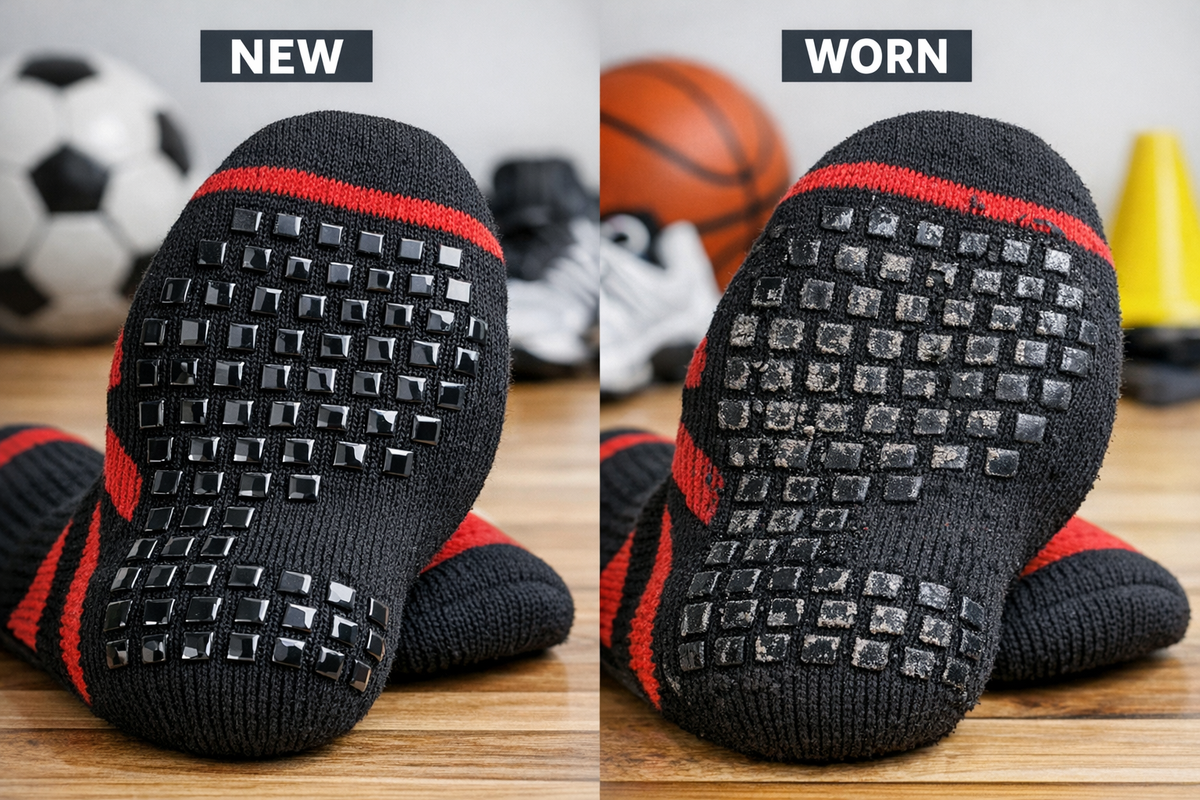
Grip Socks Lifespan: When Traction and Fit Stop Performing
Grip socks are more than a comfort accessory; they are performance equipment that can influence foot stability, cut efficiency, and confidence in quick direction changes. But athletes and coaches often ask the same practical question: how long should a pair really last?
The honest answer is that grip socks do not have a single, universal lifespan. Their longevity depends on sport demands, training frequency, playing surface, and how they are washed and rotated. This guide breaks down what actually wears out first, how to spot performance decline early, and how teams and individual athletes can plan replacements without guesswork.
How long do grip socks last?
If you are looking for a simple number, most athletes can expect a well-made pair in a normal training rotation to stay game-ready for several months. Meanwhile, pairs worn multiple times per week without rotation often show a noticeable performance drop sooner, especially in sports with repeated pivots, starts, and stops.
A better way to think about the question “how long do grip socks last” is to focus on traction and fit performance rather than visible damage. Socks can still look fine while the grip has smoothed down or the compression has relaxed enough to allow foot movement. That is when performance and comfort start to drift.
What wears out first: the grip pattern
In most cases, the first thing to decline is the grip on the sole. High-friction environments like indoor courts and turf accelerate wear because the grippy elements constantly rub against the shoe insole. Over time, the grip can smooth down, crack, or peel in high-contact zones.
When traction fades, athletes often adjust without realizing it. They may tighten laces more than usual, notice subtle sliding inside the boot, or feel less stable on hard cuts. Those small changes can reduce foot control and confidence long before the sock looks “worn out.”
Early traction warning signs during play
- Feeling the foot slide forward on deceleration
- Less confidence pushing off during quick cuts
- Needing tighter laces to feel “locked in”
- More in-shoe movement on repeated sprints
Fit and compression: the second performance drop
After grip, the next big issue is fit. Elastic fibers gradually relax, which can change how the sock hugs the midfoot, heel, and cuff. Once compression is reduced, the sock may bunch under the arch or slip slightly at the heel, creating friction where you want smooth contact.
If the sock rotates during play or develops “baggy” zones, that is not just annoying. It can increase the risk of blisters and hot spots because your foot is moving inside the sock instead of the sock moving with the foot. In performance terms, that can affect planting mechanics and stability when fatigue sets in.
Fit cues that it is time to replace
- Heel slippage that was not there before
- Arch area bunching or folding under load
- Loose cuff that will not stay in place
- Noticeable rotation of the sock inside the shoe
Feel and hygiene signals athletes should not ignore
Athletes often rely on feel as much as visuals, and that is smart. If padding thins in pressure zones like the forefoot or heel, impact can feel harsher and foot fatigue can rise. A rougher texture can also indicate fiber breakdown, which increases friction risk over longer sessions.
Persistent odor that does not wash out is another practical sign. It often means fibers are degrading and retaining moisture and bacteria more easily. That matters for comfort and skin health, especially in high-volume training blocks.
Quick self-check after training
- Pinch the fabric at the heel and forefoot: does it feel thinner than newer pairs?
- Run your hand over the inside: does it feel rougher or more abrasive?
- Smell test after washing: does odor linger even when fully dry?
- Check if the sock “settles” into place or keeps shifting during warmups
Visual replacement cues that matter on game day
Visual damage is not the only factor, but it is still useful. Fraying at the heel and toe can signal fabric breakdown where pressure and shear are highest. Stretched seams can change how the sock sits on the foot, increasing friction peaks during change-of-direction work.
Most importantly, look at the sole: missing grip pieces in key strike areas can create uneven traction across the foot. That unevenness can feel like instability during hard plants even if some grip remains elsewhere.
- Grip elements peeling, cracking, or missing in high-contact zones
- Thin spots that look semi-transparent when stretched
- Fraying around toe box and heel pocket
- Seams that look stretched or wavy rather than flat
Teams versus individual athletes: planning replacements
Replacement timing looks different for teams than for individuals. Teams benefit from predictability because training loads are consistent and the cost of inconsistent traction can show up in performance and injury risk. Many programs set a simple cadence tied to season phases, for example refreshing pairs mid-season for heavy-use squads.
Individual athletes can often stretch lifespan by rotating multiple pairs. Rotation reduces repeated heat and friction stress on the same sock and allows full drying between sessions, which helps both grip material and elastic structure. Coaches can support this by encouraging athletes to bring backups for double sessions or tournament weekends.
Key takeaway: Replace based on performance. If traction, secure fit, and comfortable underfoot contact are no longer reliable, the sock is no longer doing its job.
Care and washing: the biggest controllable factor
How you care for grip socks can dramatically change how long they stay game-ready. Heat and harsh chemicals are common culprits in premature grip breakdown and elastic fatigue. Small laundry habits can preserve both traction and compression with minimal effort.
For general best practice, wash inside-out, use cooler water, skip fabric softeners, and avoid high-heat drying. If you want a deeper overview of evidence-based laundry guidance, the CDC hygiene resources provide helpful context on cleaning and hygiene principles, including how moisture and materials affect microbial growth.
Simple care checklist for longer grip sock lifespan
- Turn socks inside-out before washing to protect grip and remove sweat residue
- Use cool or warm water rather than hot cycles
- Avoid fabric softeners, which can coat fibers and reduce performance feel
- Air dry or use low heat to protect elastic structure and grip elements
- Shake out debris like rubber pellets or court dust after each session
Practical rule of thumb: performance over appearance
If you only replace when holes appear, you are waiting too long for high-performance use. The most meaningful decline often happens earlier, when grip is less consistent or the sock no longer locks to the foot. That is when athletes may unconsciously change movement, lace tension, or foot strike behavior.
High-performance teams treat socks the same way they treat other contact equipment: they monitor wear, rotate inventory, and replace before reliability drops. Even if you are an individual athlete, building a small rotation can help keep your traction and fit consistent across training phases.
Keep reading: our guide to how to clean grip socks, or see grip sock care guide.
Conclusion: keep your traction and fit game-ready
Grip socks last as long as their traction and fit remain dependable under real playing demands. The grip pattern typically wears first, followed by compression and structural fit, with feel changes and hygiene issues providing additional clues. If your sock starts to slide, bunch, rotate, or lose underfoot bite, it is time to replace even if it looks fine.
If you want to keep learning about performance gear, training consistency, and how small equipment choices affect outcomes, explore more resources from Nextwave Socks and share your own replacement rules with teammates. For more information, visit how long do grip socks last and keep the conversation going.
Grip that’s scientifically proven.
Join 23,197+ athletes. Free worldwide shipping, up to 44% off the latest drop.


