
Are Grip Socks Necessary for Pilates? Studio Safety Guide
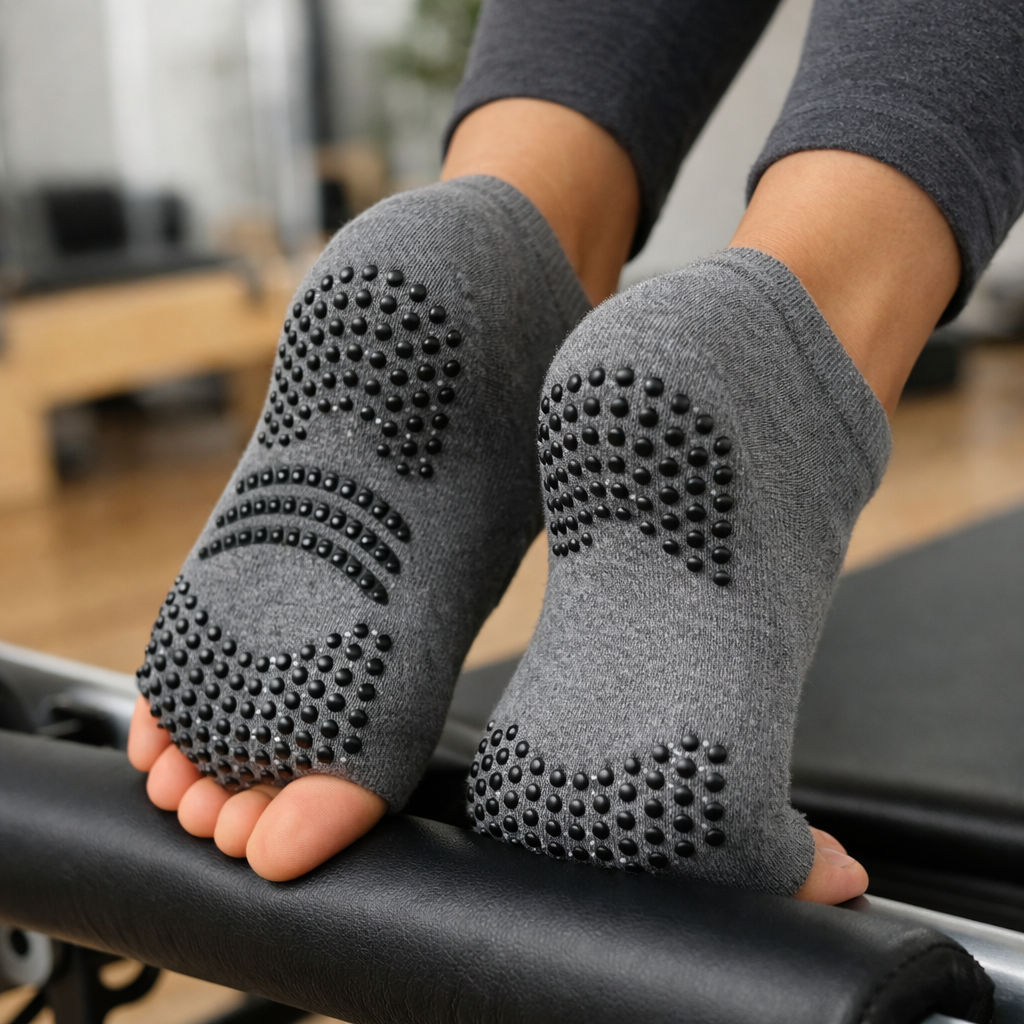
Grip Socks in Pilates: Safety Tool or Training Trend for Athletes?
Pilates has become a staple in high-performance training rooms, rehab clinics, and strength programs because it sharpens control, alignment, and core-to-limb coordination. Along with that rise, one piece of gear shows up almost everywhere: grip socks. Athletes and coaches often ask whether they are truly useful or simply part of studio culture.
This article breaks down what Pilates instructors prioritize, what athletes notice in real training, and how to decide what is best for your sessions. The goal is simple: help you reduce slip risk, improve movement consistency, and stay focused on quality reps rather than the floor under your feet.
Why grip socks became common in Pilates studios
Most studios did not adopt grip socks because they look “Pilates-specific.” They became common for practical reasons that affect group safety and consistency. When a class includes mixed ability levels, variable sweat, and shared equipment, footwear decisions stop being purely personal and start affecting the whole room.
Many instructors point to three recurring drivers: traction, hygiene, and liability. Grip socks help standardize those three factors across a class, especially when clients move between stations or use equipment with smooth surfaces.
Traction: keeping force where you intend it
Pilates footwork, planks, lunges, and balance sequences demand controlled pressure through the foot. If the floor or equipment is slick, your nervous system often compensates by gripping with the toes or stiffening the ankles and hips. That can reduce the quality of the movement you are trying to train.
Grip socks can improve traction when feet are sweaty or surfaces are polished, helping you apply force more consistently through transitions. That consistency matters most when sessions include single-leg loading, tempo work, or unstable positions.
Hygiene: a shared-space consideration for teams
Hygiene is not glamorous, but it is a real part of performance environments. Teams and group classes often share mats, reformers, chairs, and springboard attachments for back-to-back sessions. Socks provide a simple barrier that can reduce direct skin contact on high-touch surfaces.
Many studios still clean equipment thoroughly, but “clean” does not always mean “dry,” especially between classes. A thin layer of moisture can be enough to change friction and increase slip risk.
Liability: standardizing safety expectations
From an instructor’s perspective, policies aim to reduce preventable incidents. If one person slips during a transition, it can disrupt the group and potentially cause injury. That is why some studios require grip socks in reformer classes or any session with elevated or moving platforms.
Even for experienced athletes, a small slip can be costly when training loads are high and schedules are tight. Standardizing traction helps keep the focus on mechanics.
Are grip socks necessary for pilates
In most cases, grip socks are not universally mandatory, but they are often strongly recommended. The better question for athletes is not “Do I have to wear them?” but “What is the performance cost if I do not?” If you are using Pilates to reinforce clean mechanics for sport, slipping is noise you do not need.
When your foot loses purchase, your body may shift strategy: a knee caves slightly, a hip rotates early, or you unload the intended working leg. Those small changes add up, especially for athletes using Pilates as movement quality work on recovery days.
What athletes gain: performance, not just policy compliance
Athletes tend to describe grip socks as a performance tool, similar to choosing a stable lifting shoe for certain sessions. Reliable traction can improve confidence in dynamic transitions, which lets you keep your breathing, tempo, and alignment consistent. That matters in Pilates because small positional errors can change which tissues are being trained.
In team settings, grip socks can also improve session-to-session repeatability. If one day the studio is cooler and drier and the next day it is humid and slick, your mechanics should not have to change to accommodate the floor.
Where traction shows up in biomechanics
When traction is inconsistent, athletes often “search” for stability by overusing the toes, increasing calf tension, or shifting pressure laterally. Over time, that can reduce foot tripod control and alter knee tracking. Better friction can support cleaner loading patterns, especially during single-leg work and long-lever planks.
If you want a quick refresher on why friction and surface interaction matter in injury prevention, this explainer from the NCBI article database is a useful starting point for evidence-based reading.
When grip socks matter most for athletes and teams
Not every Pilates session has the same demands. The more dynamic the transitions and the more equipment involved, the more grip becomes a limiting factor. Coaches often notice the biggest benefit when athletes move fast enough that a small slip changes the entire rep.
- Reformer, chair, or springboard sessions where foot placement must stay precise on moving or elevated surfaces
- Dynamic transitions that require quick changes between kneeling, standing, plank, and side support
- Return-to-play phases after ankle or knee injuries when confidence in footing supports better movement execution
- Smooth studio surfaces such as hardwood or laminate, especially when humidity or sweat increases
- Shared equipment environments where hygiene and consistent friction both matter
When you may not need grip socks
There are situations where barefoot makes sense. Some athletes prefer maximal sensory feedback from the foot, particularly during slower mat-based sessions focused on articulation and balance. If your mat surface is high-friction and the room is cool, barefoot can be completely workable.
That said, “barefoot is best” can change quickly with sweat, temperature, or a different studio floor. If you are traveling for competition, rotating between facilities, or stacking sessions, grip socks can be the more reliable option.
What to look for in high-performance grip socks
Ignore hype and focus on how the sock supports movement quality. The best design is the one you forget about during training because it stays in place and behaves consistently. Whether you choose a studio-provided pair or something from a performance-focused company such as Nextwave Socks, the functional checklist is similar.
- Multi-directional grip placement that supports pivots and transitions, not just standing still
- Secure fit so the sock does not twist, slide, or bunch under load
- Breathability and sweat management to keep friction consistent across a full session
- Durable grip that does not smooth out quickly after washing
- Comfort details such as a smooth toe seam and light arch support for longer classes
A simple decision rule for coaches
If your session includes equipment, pacing is moderate-to-fast, or athletes are rehabbing lower-limb injuries, grip socks are a low-cost way to reduce preventable variability. If the session is slow, mat-based, and the surface is reliably grippy, barefoot can be fine if studio policy allows.
Key takeaway: Grip socks are rarely about fashion. For athletes, they are about repeatable mechanics, safer transitions, and keeping attention on alignment rather than slipping.
Keep reading: our guide to best grip socks for Pilates, or see custom Pilates socks for studios.
Conclusion: a small choice that can protect training quality
Grip socks are not universally required, but in many Pilates environments they meaningfully improve safety, hygiene, and performance consistency. For athletes, the main benefit is not just avoiding a slip, but preserving clean movement patterns when fatigue, sweat, and speed increase. If Pilates is part of your strength, rehab, or durability plan, traction is one of the simplest variables to control.
If you have a team policy, a preferred setup, or questions about matching grip needs to specific sports, share what you are seeing in training. To explore more options and resources, visit are grip socks necessary for pilates.
Grip that’s scientifically proven.
Join 23,197+ athletes. Free worldwide shipping, up to 44% off the latest drop.


