How Grip Socks Improve Athletic Performance
Grip Socks for Athletic Performance: What Actually Makes Them Work
Grip socks have become a staple across soccer, basketball, lacrosse, volleyball, and training, but not all “sticky socks” improve on-field or on-court performance. Real benefits show up only when the grip is engineered as part of a complete system: traction, fit, cushioning, moisture control, and durability working together.
This post breaks down what separates true performance grip socks from gimmicks. If you are a coach, equipment manager, or athlete trying to decide what matters, these are the sports science fundamentals to look for and how to test them in real sessions.
The real job of grip socks: reduce in-shoe foot slippage
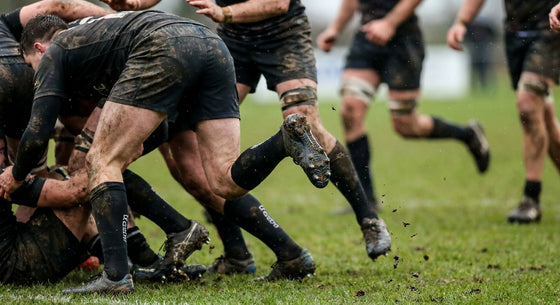
The core performance goal is simple: reduce foot movement inside the shoe. During hard stops, quick cuts, and explosive accel-decel changes, your foot can slide microscopically, even when the shoe “fits.” That micro-movement is often what creates instability, wasted energy, and hot spots.
When internal sliding is reduced, athletes often report more confident planting, cleaner lateral transitions, and better power transfer. The sock is not making you faster by magic, it is helping your foot and shoe act more like one stable unit. It can also reduce friction points that commonly lead to blisters over long practices or tournament weekends.
Grip placement matters more than “more grip”
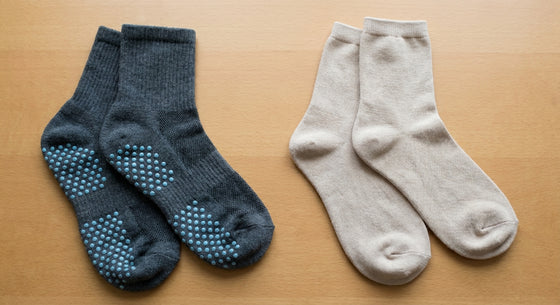
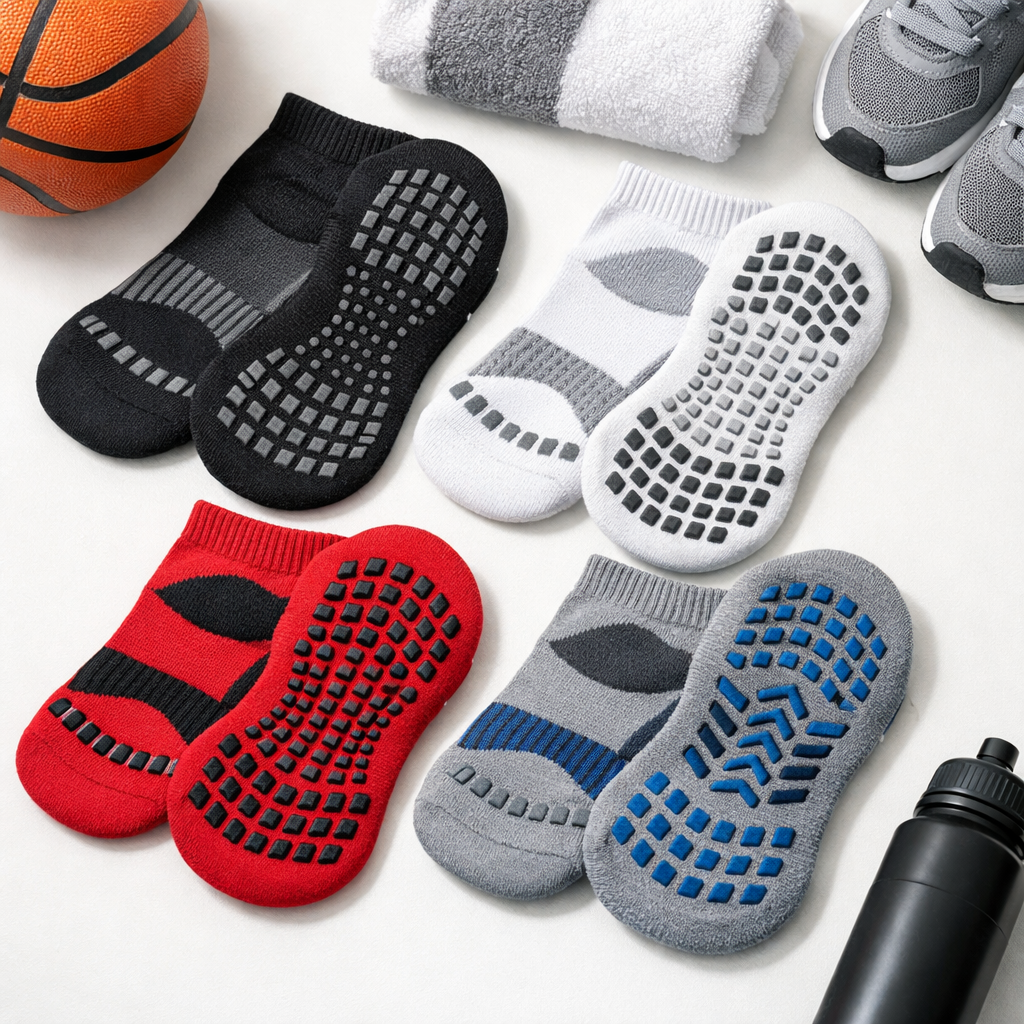
Effective grip is not just dots everywhere. The best layouts typically match where athletes generate and absorb force: under the forefoot for push-off, under the heel for braking and landing, and along key edges for lateral support.
Random or overly dense grip patterns can backfire by creating uneven pressure or restricting natural foot movement. A performance-focused design aims for a balance: enough traction to control slip without feeling like your foot is glued in place.
Common high-value grip zones
- Forefoot traction for sprint takeoffs, jumps, and first-step quickness
- Heel traction for deceleration, landing, and controlled stops
- Lateral edge support for shuffles, defensive slides, and cutting
- Midfoot moderation to prevent bunching while preserving comfort
Grip material: stickiness is not the same as performance
Many socks feel tacky straight out of the package, but performance depends on how the grip compound behaves under heat, sweat, and repeated washing. Silicone or similar materials must be formulated to stay functional when wet and warm, not just when pressed dry in a product photo.
Too soft, and it can smear, peel, or lose shape under load. Too hard, and it can become slick, especially when sweat acts like a lubricant. The key metric is not only “how sticky,” but how well it handles force in motion.
Why shear resistance is a big deal
Athletes rarely load their feet straight down. Cuts and shuffles generate side-to-side forces, so grip should be evaluated for shear resistance, meaning how well it holds when the foot tries to slide laterally inside the shoe.
If you want a deeper background on friction and traction concepts, the NIH PubMed Central library is a searchable hub for biomechanics and sports medicine research.
Fit and construction: the foundation of performance traction
Even great grip is useless if the sock twists, bunches, or shifts during play. Grip zones only help when they stay aligned underneath the areas they were designed to support. That makes fit and construction the performance foundation, not a “comfort detail.”
Look for a secure heel pocket, arch compression that stabilizes the midfoot, and a cuff that holds without cutting circulation. Seam placement also matters: bulky toe seams can become a hotspot in sports with constant stop-start movement.
Construction features that keep grip aligned
- True left and right shaping for more consistent alignment
- Locked-in heel pocket to resist sliding and twisting
- Supportive arch band to reduce internal sock movement
- Low-profile toe construction to reduce irritation during long sessions
Performance cushioning: protect impact without losing feel
Cushioning should be treated as a performance tool, not just softness. Strategic padding can reduce peak impact in high-load areas like heel strike zones and the metatarsal heads, especially during repeated jumps or hard cuts. But too much thickness can change shoe fit and reduce court or field feel.
The best approach is targeted reinforcement where you take repeated impact, with minimal bulk where precision matters. This preserves responsiveness for athletes who rely on quick foot feedback, like guards in basketball or midfielders in soccer.
Moisture management: traction fails when sweat wins
Sweat is one of the biggest enemies of traction because it reduces friction and encourages sliding. Good grip socks manage moisture with smart yarn blends, knit structures that move sweat away from the skin, and ventilation where heat tends to build.
A common performance pattern is more breathability on the top of the foot for cooling, paired with denser structure underfoot for stability and durability. Odor-control treatments can help for team travel and multi-game days, but they should not come at the expense of skin comfort or irritation risk.
For athletes who want practical hydration and sweating guidance, the CDC heat stress resources offer clear, sport-relevant information that pairs well with better apparel choices.
Durability and quality control: performance has to survive training cycles
A grip sock is only “high-performance” if it stays consistent over weeks of training, not just one session. High-wear zones should be reinforced, and grip adhesion needs to hold through repeated laundering. Inconsistent grip dots or uneven compression can make the same model feel different pair to pair, which is a real problem for teams.
Durability is also performance insurance. When grip starts peeling or compression loosens, athletes unconsciously adjust footwork or tighten laces, which can create new pressure points and increase blister risk.
How to test grip socks like an athlete, not a shopper
Do not judge grip socks by initial tackiness alone. Instead, test how they perform in your actual shoes during the movements that matter in your sport. The goal is to check whether they reduce in-shoe movement during high force actions and whether they prevent hot spots after time on feet.
- In-shoe movement check: do a light warm-up, then re-tie your shoes. If your foot feels more “set,” that is a good sign.
- Sprint-to-stop drills: evaluate whether braking feels more controlled and whether your toes slam forward less.
- Lateral shuffle test: notice whether the foot rolls or slides inside the shoe during side-to-side movement.
- Post-session hotspot mapping: check heel, forefoot, and toe areas for redness that signals friction.
Key takeaway: The best grip socks feel stable during cuts and stops, then disappear in your awareness. If you are thinking about them all session, something is off in fit, moisture control, or pressure distribution.
how to make grip socks: the complete system checklist
If you have ever wondered how to make grip socks that actually improve athletic performance, the answer is systems thinking. Traction has to match sport movements, fit has to lock alignment, cushioning has to protect without bulk, moisture control has to preserve friction, and durability has to last through real training. Miss one, and the whole concept under-delivers.
This is why some teams choose to work with experienced makers, including Nextwave Socks, especially when they need consistent fit across a roster. The performance principles stay the same whether you are buying off the shelf or building a team spec from scratch.
Sport-specific customization considerations
- Logo placement that does not interfere with stretch zones or compression
- Color choices that hide wear if you are training daily
- Grip layout tuned for linear sprinting versus heavy lateral play
- Cushion level based on athlete preference, shoe volume, and impact demands
Conclusion: engineered grip beats sticky dots every time
Grip socks can support better cutting, planting, and acceleration, but only when the “grip” is part of a full performance build. Look beyond marketing claims and focus on grip placement, shear-ready materials, locked-in fit, strategic cushioning, moisture management, and long-term durability.
If you are experimenting as an athlete, test them with the drills you actually do and track hot spots after sessions. If you manage a team, prioritize consistency and real-world wash durability so athletes get the same feel week after week.
Want to explore options for team builds and performance specs? Visit how to make grip socks and share what sport you play, what shoes you wear, and what movements you want to feel more secure.
Grip that’s scientifically proven.
Join 23,197+ athletes. Free worldwide shipping, up to 44% off the latest drop.
Shop grip socks →