
Can Grip Socks Prevent Blisters in Football Training?
Grip Socks and Blister Prevention: What Actually Works for Athletes
Blisters are one of the most common foot issues in high-intensity sport, and they can quietly derail performance long before something “serious” happens. For teams, they show up as missed reps, altered movement, and athletes who cannot push off confidently. For individuals, they are a frustrating mix of pain, distraction, and stop-start training.
This article breaks down the sports science behind blister formation and explains how grip socks can help reduce risk when they are designed and used correctly. You will also learn what grip cannot fix, how to choose the right construction, and how to test a setup before competition.
Why blisters happen in sport
A blister forms when layers of skin experience repeated shear stress, typically from friction that occurs over time in a concentrated “hot spot.” In sport, that friction is rarely caused by one big slip. It is usually caused by microscopic movement that repeats hundreds or thousands of times during cutting, jumping, deceleration, and acceleration.
Three factors tend to work together: friction, heat, and moisture. The more intense the session, the more each factor rises, especially late in matches and tournaments. That is why athletes often feel fine early, then suddenly develop irritation that turns into a blister by the final quarter or last set.
can grip socks prevent blisters
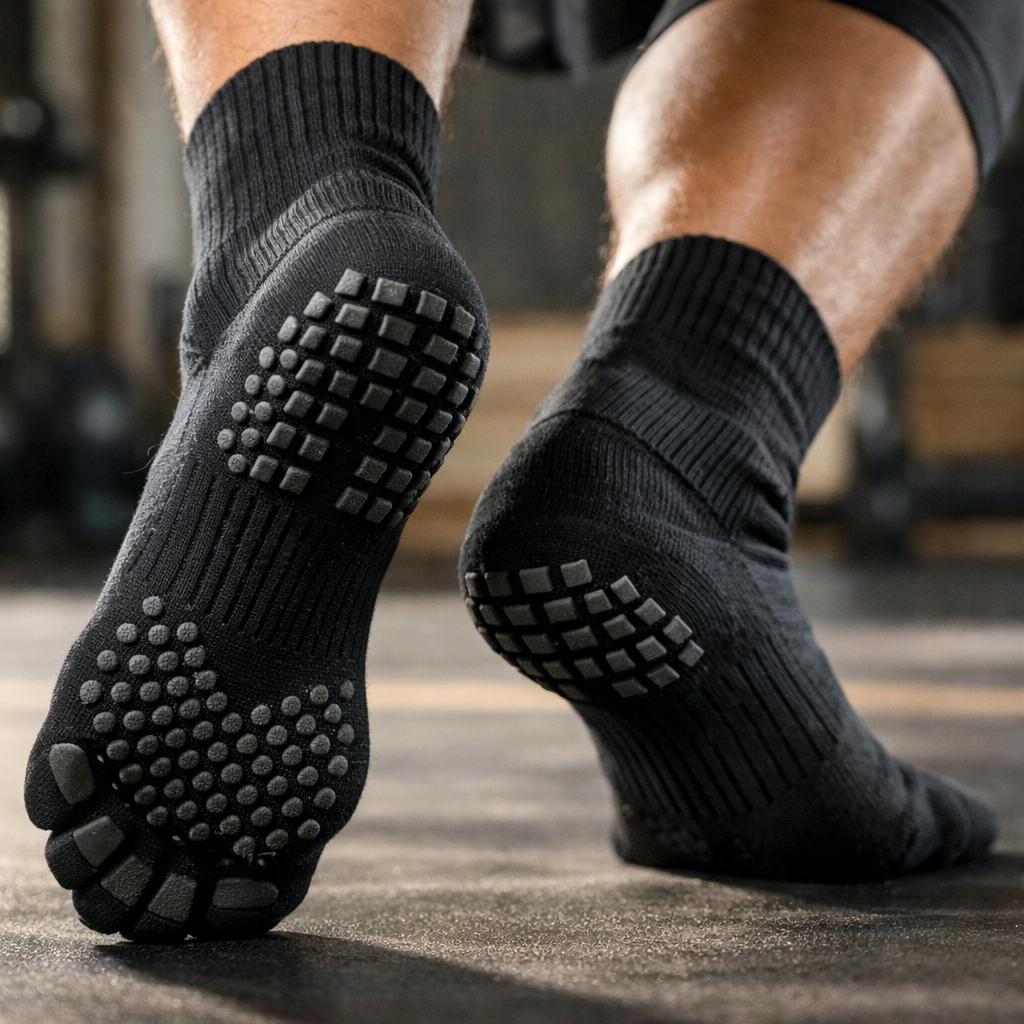
Grip socks can reduce blister risk, but not simply because they feel sticky. The real value is how they influence the foot-to-footwear interface by limiting unwanted sliding inside the shoe. When the foot stays placed more consistently, friction in common hot spots can drop significantly.
That said, grip socks are not a guaranteed blister-proof solution. They work best as one part of a broader prevention strategy that includes proper footwear fit, smart moisture management, and socks that do not bunch or rotate during play.
The real mechanism: managing micro-slippage inside the shoe
In fast sport, the foot can shift slightly with every plant and push-off. Even a tiny slide at the heel or forefoot can create repeated rubbing in the same area. Over time, that concentrated friction causes irritation, then fluid buildup, then a blister.
External grip elements along the sole can help reduce internal slippage by “locking” the sock to the shoe’s insole. This can be especially helpful during lateral shuffles, hard stops, and repeated cutting patterns. Less movement often means less rubbing, which is a direct path to reducing blister formation.
Where athletes typically get hot spots
Blisters tend to appear where pressure and shear overlap. The exact location can vary by sport, footwear, and foot shape, but patterns are common across teams.
- Heel and Achilles area during repeated acceleration and long sprints
- Ball of the foot during cutting and jumping
- Toes and toe box edges during stop-start play and tight footwear
- Medial arch area if the sock rotates or the shoe collapses inward
Moisture matters as much as traction
Sweat changes the game because it softens skin and increases friction. Damp skin is more vulnerable to shear forces, which is why blister risk rises late in matches or on double-session days. If you have ever been fine for 45 minutes and then suddenly felt a hot spot, moisture buildup is a likely reason.
High-performance socks can help by using moisture-wicking yarns and breathable knit zones that improve evaporation. Better moisture control helps keep the skin’s outer layer more resilient. It also reduces the “sticky” wet friction that can make rubbing worse, even when the fit is good.
What to look for in moisture management
Not all “athletic” socks handle sweat the same way. Look for purposeful construction instead of generic thickness.
- Moisture-wicking fibers that pull sweat away from the skin
- Ventilation zones across the top of the foot where heat builds
- Materials that dry quickly between sessions and travel days
- A balance of compression and breathability so the sock does not trap sweat
Cushion placement can protect without creating new friction
Padding can help, but only when it is placed strategically. Extra cushion under high-pressure zones may buffer impact and reduce irritation in areas like the heel and forefoot. However, too much bulk can make footwear feel tighter, increasing pressure and creating new rubbing points.
The goal is targeted protection rather than a thick sock everywhere. Athletes in tight-fitting boots or court shoes often do better with low-profile cushioning that supports performance without changing fit.
Fit and construction: the detail that determines results
Even the grippiest sock will fail if it bunches, rotates, or has abrasive seams. A sock that shifts becomes a new source of friction, sometimes worse than the shoe itself. Construction details matter because they influence how stable the sock stays over hours of play.
Look for a secure arch band, a stable heel pocket, and a shaped toe box. Low-profile seams or seamless toe construction reduce pressure points, especially when footwear is snug. These features help ensure the sock stays aligned so grip and moisture management can actually do their job.
Key takeaway: Blister prevention is less about “more grip” and more about stable interfaces in a high-force environment. Stability reduces repeated shear, and reduced shear lowers blister risk.
Footwear fit still sets the ceiling
Grip socks work best when paired with properly fitted footwear. If a shoe is too long, the foot will slide forward and back regardless of sock technology. If it is too narrow, pressure increases and skin damage can happen even without much movement.
Worn-down shoes are another hidden culprit. A compressed midsole and a slick insole can increase sliding and change how forces travel through the foot. If blisters persist despite good socks, it is worth reassessing sizing, lacing, insole wear, and whether the shoe is past its performance life.
How to test grip socks in training before game day
Do not wait until a tournament or playoffs to change your sock system. Blister prevention is about reducing cumulative damage, and the best way to know what works is to test in realistic conditions. Use the same footwear, same lacing, and the same intensity you expect in competition.
- Trial socks during high-change-of-direction sessions, not just easy runs or warmups
- Track any hot spots by location and time, especially late-session
- Adjust footwear fit and lacing if you feel sliding, heel lift, or toe pressure
- Re-test after washing, since fabric behavior can change slightly over time
- For teams, standardize testing so athletes provide comparable feedback
Team takeaway: consistency supports performance
For teams, blister prevention is not just comfort, it is availability and movement quality. When athletes feel stable in their footwear, they tend to cut and decelerate with more confidence. That stability can reduce distractions like mid-session taping, constant sock adjustments, or altered mechanics to avoid pain.
Some programs choose to standardize performance socks across a squad for consistency, sometimes through providers such as Nextwave Socks, especially when travel, double days, and tournament schedules create more blister risk. The key is not the label, it is choosing socks that actually match the load, fit, and moisture demands of your sport.
Keep reading: our guide to grip sock rules in football, or see football grip socks.
Conclusion: a practical, science-based approach to fewer blisters
Blisters are common in high-intensity sport, but many are preventable with smart choices. Grip socks can help by reducing micro-slippage inside the shoe, improving moisture control, and maintaining a stable fit that does not bunch or rub. The best results come when traction, breathability, construction, and proper footwear fit work together.
If you want to go deeper, share what sport you play and where you typically blister in the comments, and compare notes with teammates. For more on performance sock design and team options, explore can grip socks prevent blisters.
Grip that’s scientifically proven.
Join 23,197+ athletes. Free worldwide shipping, up to 44% off the latest drop.


