Grip Socks Football: Why Pro Soccer Players Switch
Grip Socks in Soccer: The Small Detail That Can Improve Stability and Comfort
Soccer is a game of constant transitions: sprint to stop, cut to accelerate, land to re-cut. In those moments, performance is not only about strength and speed, but also about how efficiently force moves from the ground through the foot and into the rest of the body.
One common, fixable issue is internal foot slip inside the boot. Even small sliding can reduce stability during sharp direction changes and split-second braking. This article breaks down the sports science behind grip socks, why they are increasingly common at higher levels, and how teams and athletes can evaluate them like any other performance tool.
Why foot slip matters more than most players realize
Most players think traction is only about the studs gripping the pitch. But traction also matters inside the boot: if the foot slides on the insole, the body loses a bit of control before the studs can do their job. That delay can show up as a less confident plant foot, a slightly slower cut, or a less stable deceleration.
Over a full match, repeated micro-slips can add up. The athlete may compensate by gripping with the toes, adjusting stride length, or reducing aggressiveness on cuts. These small adjustments are hard to notice in the moment, but they can affect consistency in movement quality and perception of control.
Stability is a performance skill
Stable footing supports repeatable mechanics. When the foot stays centered inside the boot, athletes often feel more “connected” to the ground, especially during lateral shuffles, pressing sequences, and quick turns. That connection can support cleaner technique because the body is not constantly re-centering after minor slips.
How do grip socks help in soccer
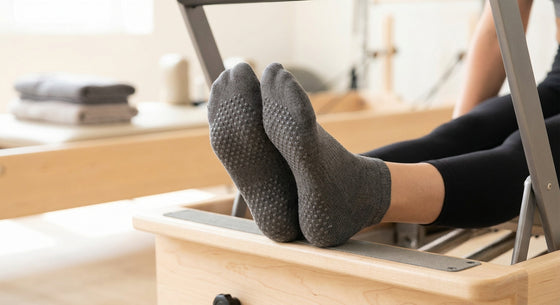
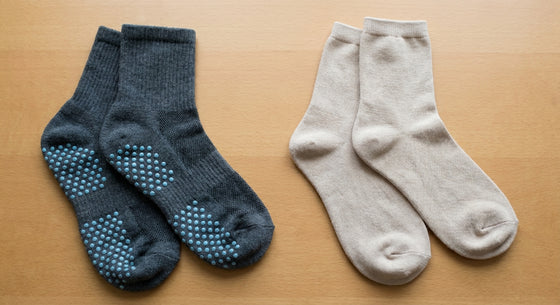
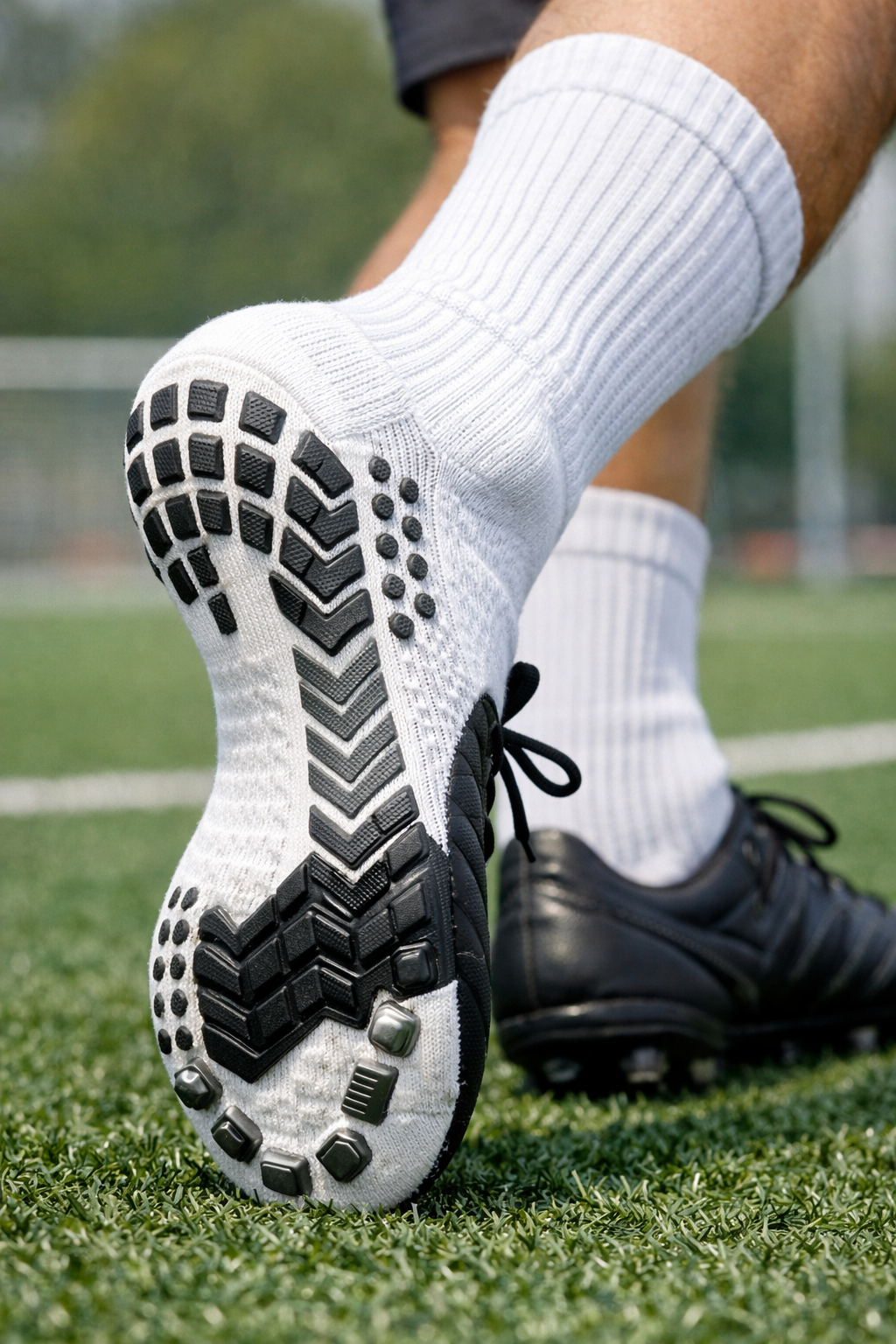
Grip socks are designed to reduce internal movement by creating friction between the sock and the insole. Most use targeted traction zones, commonly silicone or similarly grippy materials, placed under the forefoot, midfoot, and heel. The goal is simple: help “lock” the sock to the insole so the foot stays more stable during high-intensity actions.
When that internal slip is reduced, the athlete can often plant more confidently and transition faster between actions. This can be most noticeable on sharp cuts, single-step accelerations, and hard decelerations where the body demands immediate stability. It is not a magic upgrade, but it can remove a small friction point that limits performance.
Key takeaway: Grip socks aim to improve in-boot traction so more of your effort turns into controlled movement, not internal sliding.
Performance benefits athletes commonly report
Players often describe grip socks as making their boots feel more secure. From a sports science perspective, that perceived security matters because confidence influences how aggressively an athlete cuts, presses, and challenges. If your plant feels reliable, you are more likely to commit fully to the movement.
- Cleaner direction changes: Less in-boot movement can support sharper lateral cuts and quicker re-acceleration.
- More consistent planting: A stable base can improve reliability during deceleration and pivot mechanics.
- Better striking and receiving feel: When the foot stays centered, touch consistency can improve, especially under pressure.
- More tolerance for slight fit variation: Some athletes report a more secure feel even when boots are slightly looser or when switching models.
It is worth noting that grip socks do not replace proper boot fit. They can enhance a good setup, but they cannot fully “fix” a boot that is the wrong shape or size for your foot. Teams that treat grip socks as part of a complete footwear system tend to get the best results.
Comfort and foot health: the underrated reason grip socks are trending
Performance is hard to sustain if your feet are torn up. Blisters and hotspots often come from friction and shear forces created by repeated sliding. By limiting micro-movement, grip socks may help reduce rubbing at common problem areas like the heel and the toes.
This can be especially valuable during congested schedules: double sessions, tournaments, and travel weeks where recovery time is limited. Wet conditions can also increase slip and friction, so internal traction becomes even more relevant when the environment is less predictable.
Less friction, fewer distractions
When players are dealing with hotspots, they often unconsciously change how they run, cut, or strike the ball. Those compensations can reduce performance and sometimes contribute to overload elsewhere. A small reduction in irritation can keep training more consistent across the season.
For athletes prone to foot fatigue, a more stable platform may also feel less taxing. If the toes are not constantly “clawing” to maintain position, some players report they can stay relaxed longer, particularly late in matches.
Why professionals adopt grip socks: margins and repeatability
At elite levels, tiny advantages matter because the baseline is already high. Pros are constantly chasing repeatable details: more stability on a tight turn, more confidence when stopping on a wet pitch, fewer foot irritations that disrupt training. Grip socks fit that mindset because they address a specific mechanical problem without changing the athlete’s overall style of play.
Professional players also dial in their full lower-leg system. Grip socks are often combined with preferred insoles, taping routines, and shin guard setups to create a consistent “locked-in” feel. Consistency is the point: if the foot environment feels the same every match, movement choices can stay automatic under pressure.
Some clubs take a coordinated approach, standardizing or recommending sock features across the squad. Others let players choose, but still educate them on what to look for. Companies such as Nextwave Socks exist in this space, but the real takeaway is that the best choice is the one that matches your fit, foot needs, and training demands.
How to evaluate grip socks like performance equipment
Not all grip socks feel the same, and not all perform the same across conditions. Before a match, test them in training where you can pay attention to slippage, comfort, and pressure points. Start with short sessions, then progress to full-intensity work if they feel good.
- Traction placement: Look at forefoot and heel coverage, plus whether the grip zones align with your pressure points.
- Thickness and breathability: Thicker is not always better; too much bulk can alter fit and touch.
- Durability after washing: Performance should hold up after repeated cycles, not just the first wear.
- Comfort seams and compression: Poor seam placement can create new hotspots, especially around the toes.
- Wet-condition performance: If you frequently play in rain, prioritize grip consistency when moisture increases.
A simple team testing protocol
If you are a coach or equipment manager, consider a two-week trial during training. Ask players to rate stability on cuts, comfort, and blister occurrence. Track feedback by position, since high-frequency cutters often notice benefits first.
For programs considering custom grip socks, there is an added practical benefit: a unified look and easier distribution. But performance should still lead the decision, with identity as a bonus rather than the main reason.
Conclusion: a small change that can support bigger consistency
Grip socks have become popular in soccer because they target a real issue: internal foot slip. By improving in-boot traction, they can support more confident planting, cleaner cuts, and fewer friction-related foot problems. For many athletes, the biggest value is not a single highlight moment, but more consistent movement quality across an entire match and season.
If you are curious, test grip socks the same way you test boots or insoles: under game-like intensity, across multiple sessions, and with attention to comfort over time. If you have experience with them, share what changed in your setup and what you noticed on the pitch.
Grip that’s scientifically proven.
Join 23,197+ athletes. Free worldwide shipping, up to 44% off the latest drop.
Shop grip socks →