Grip Socks Manufacturing: How Athletic Socks Are Made
The Science Behind Grip Socks: From Yarn to Game-Day Traction
Grip socks look simple, but the performance you feel during sharp cuts, sprints, lifts, and landings comes from a tightly controlled manufacturing process. Every detail, from fiber selection to grip placement, is engineered to improve in-shoe stability, reduce slippage, and hold up under repeated high-intensity sessions.
This article breaks down the sports science and textile engineering behind high-performance grip socks. Whether you are outfitting a full squad or upgrading your own training kit, understanding what happens in the factory helps you evaluate what actually matters: traction consistency, comfort under load, and durability across a season.
Why Grip Socks Matter in Athletic Performance
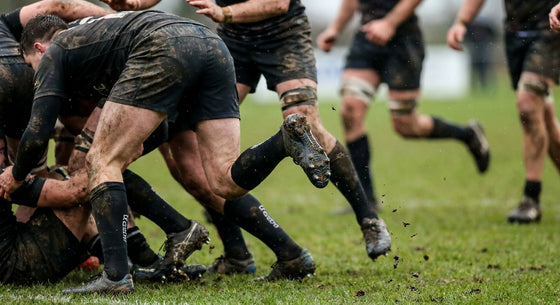
Inside your shoe, small amounts of foot movement can add up to big performance losses. Micro-slippage can reduce force transfer during acceleration, make cutting feel less secure, and increase friction that contributes to hotspots and blisters.
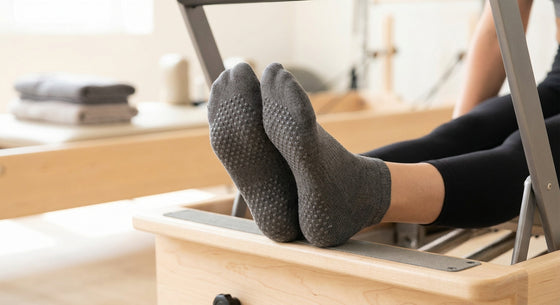
Grip socks aim to create a more stable interface between your foot, the sock, and the insole. The best results come from a combination of textile structure, compression zoning, and a grip compound that maintains traction without feeling harsh against the skin.
how grip socks are made
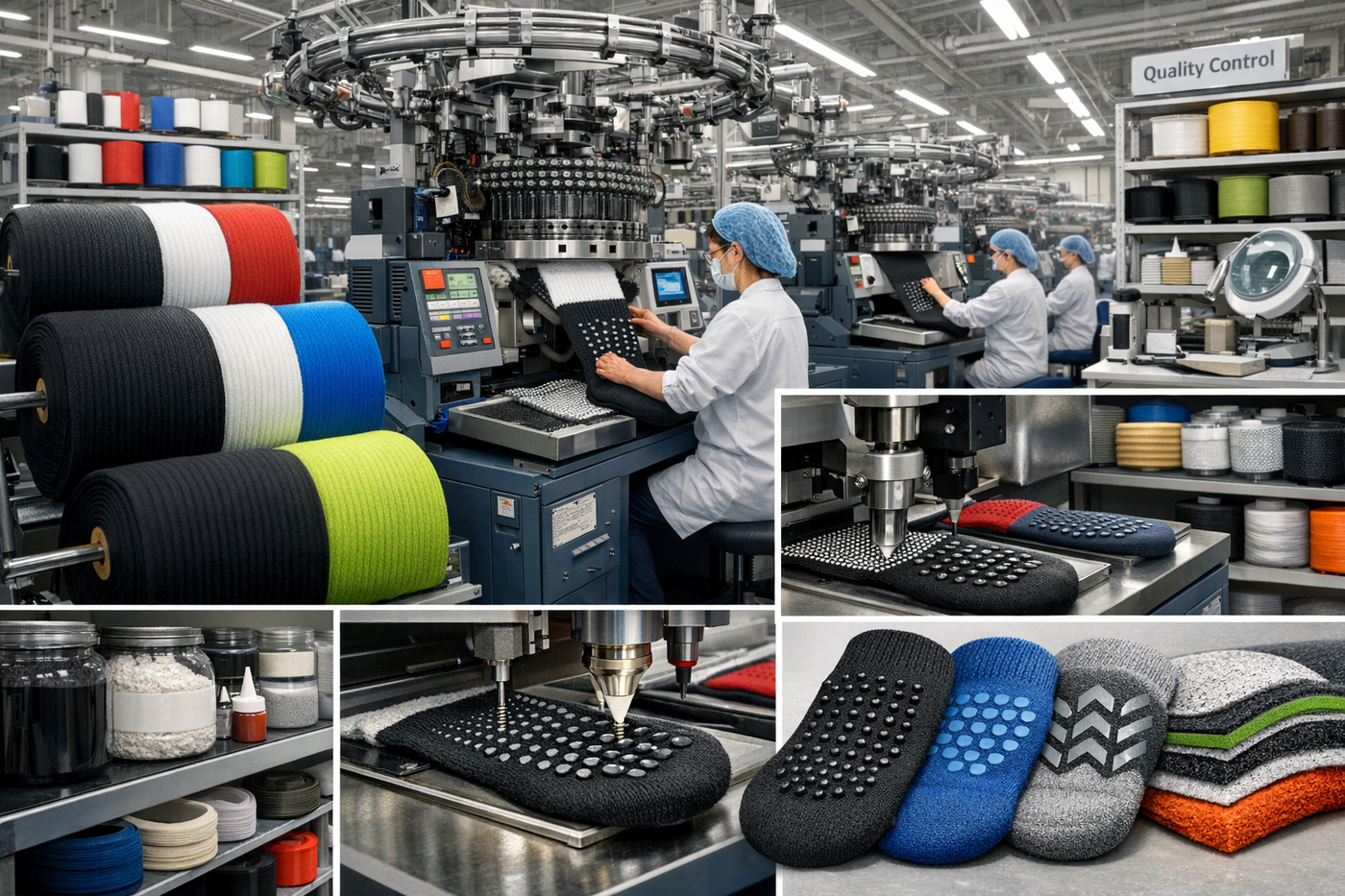
High-performance grip socks are not just standard socks with rubber dots added later. They are built through a sequence of steps that must work together: material development, precision knitting, grip application, finishing, and testing.
Consistency is the theme throughout. If sizing varies, compression relaxes too quickly, or grip adhesion is inconsistent, athletes will feel it immediately, especially during high-speed change of direction and repeated training loads.
Step 1: Material Development and Fiber Selection
The process begins with yarn selection, where manufacturers choose blends based on sport demands, climate, and intensity. Most high-performance designs rely on moisture-wicking synthetics to manage sweat, elastic fibers to maintain compression and shape, and reinforced yarns in high-wear zones.
Material choices influence temperature regulation and friction management. If the fabric holds moisture, it can increase slipping and irritation, while unstable yarns can lead to bunching inside the boot or trainer during repeated accelerations.
What to look for as an athlete or team
- Moisture control to reduce slickness as sweat builds
- Elastic recovery so the sock stays snug after many wears and washes
- Targeted reinforcement in the heel and toe to resist abrasion
Step 2: Precision Knitting and Performance Zoning
Knitting is where the sock becomes a performance tool rather than a basic garment. Specialized machines control stitch density and create zones that change how the sock feels and behaves in different regions of the foot.
Sport-focused grip socks often include arch and ankle compression for support, breathable mesh zones for ventilation, and thicker cushioning in the heel and forefoot to help reduce impact stress. Precise knitting also minimizes bunching, which is a common source of friction and discomfort.
How knit structure affects movement
When you cut or decelerate, your foot creates shear forces against the insole. A stable knit structure helps the sock stay aligned with the foot, so the grip system can do its job without the fabric sliding independently.
This is also where fit becomes measurable, not just subjective. Consistent stitch density helps ensure each pair in a team order fits similarly, which matters when athletes are training several times per week.
Step 3: Grip Application, Compound Chemistry, and Placement
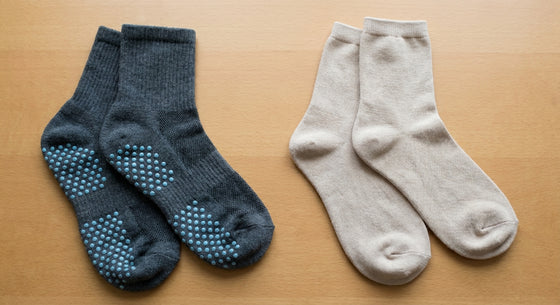
After the base sock is formed, the grip system is applied to the sole, and sometimes the heel. Most grip patterns use silicone- or rubber-based compounds added as dots, lines, or mapped shapes designed to increase traction in key areas.
The compound itself is a balancing act. If it is too soft, it may wear down quickly, while a compound that is too hard can feel slick or uncomfortable and may not deform enough to create effective friction under load.
Why grip placement is not random
High-quality designs map grip to high-pressure and shear zones, often under the forefoot for push-off and under the heel for braking and landing. This mapping is based on how athletes actually move: accelerating, stopping, changing direction, and absorbing force.
Application is commonly done through screen printing or automated dispensing, then heat curing bonds the grip to the fabric. Proper curing is crucial for durability, helping prevent cracking, peeling, or premature flattening.
Key takeaway: Grip performance depends as much on placement and bonding as it does on how sticky the compound feels in your hand.
Step 4: Construction Details That Protect Comfort
Construction is where comfort and durability are either protected or compromised. A flat or linking toe seam reduces irritation, especially for athletes who train in tight-fitting footwear or spend long periods on their feet.
Ribbing and elastic cuffs keep the sock from sliding down without over-constricting circulation. Reinforcement yarns and tighter knitting in the toe and heel improve abrasion resistance, which is important for repetitive training cycles and abrasive playing surfaces.
Blister prevention is a system, not one feature
Blisters are typically a friction and heat problem, often worsened by moisture. A stable knit that reduces bunching, paired with moisture-wicking yarns and a secure cuff, can reduce the conditions that lead to hotspots in the first place.
For athletes, this matters most late in sessions when fatigue increases movement inefficiency and sweat levels rise. Small changes in sock stability can make footwork feel more predictable when it counts.
Step 5: Dyeing, Heat-Setting, and Finishing
Dyeing is not just about color. Finishing processes can affect softness, fabric stability, and how well compression holds up over time.
Heat-setting helps lock the sock into its intended shape so it maintains fit and compression levels across repeated wash cycles. For teams and customized builds, logos or player identifiers may be integrated in ways that do not interfere with stretch or breathability.
If you are comparing options, it can be helpful to understand whether design elements are knitted in for durability or added afterward in ways that might impact elasticity. For a deeper background on fiber properties used in performance apparel, the Textile Institute offers educational resources on textiles and material behavior.
Step 6: Quality Control and Performance Testing
Quality control is where performance claims become real. Manufacturers typically check sizing consistency, stretch recovery, seam strength, and grip adhesion to ensure the product behaves the same from pair to pair.
Many also include durability testing such as repeated wash cycles and abrasion tests to confirm the grip does not peel, crack, or flatten prematurely. This consistency is especially important for teams, where inconsistent gear can create inconsistent feel across a squad.
A quick checklist for evaluating grip socks
- Fit stability: do they stay in place during repeated cuts and sprints?
- Moisture management: do they feel secure when sweat builds?
- Grip longevity: does traction remain after multiple washes?
- Comfort under load: are seams and pressure zones irritation-free?
What This Means for Teams and Individual Athletes
For teams, the big advantage of understanding manufacturing is choosing consistency. When every athlete has the same grip placement, similar compression, and predictable sizing, the entire squad benefits from a uniform feel underfoot.
For individual athletes, it helps you prioritize performance features over marketing claims. The best grip socks are the result of coordinated design decisions, not a single standout feature.
If you are exploring custom options, it is worth noting that some makers, including Nextwave Socks, highlight performance construction details as part of their approach. Use that as a starting point for questions about materials, grip curing, and testing rather than focusing only on color or pattern.
Conclusion: Performance Is Built Into the Process
Grip socks deliver reliable traction and comfort when materials, knit structure, grip chemistry, and testing all work together. That is why two socks with similar-looking grip patterns can feel completely different in real training and match conditions.
If you want more topics like this, share the post with a teammate and add your questions in the comments. If you are curious about how grip socks are made for teamwear and customization, explore that guide and use it to inform what you ask for in your next kit order.
Grip that’s scientifically proven.
Join 23,197+ athletes. Free worldwide shipping, up to 44% off the latest drop.
Shop grip socks →