Grip Socks at Club Pilates: Cost & Worth the Investment
Grip Socks for Athletes: Traction, Comfort, and Performance Value
Grip socks often get labeled as a studio accessory, but for athletes they function more like performance equipment. The right pair can improve traction during controlled strength work, rehab sessions, mobility circuits, and even pregame warmups where stable foot contact matters.
This article breaks down what you are actually paying for when you buy grip socks, why some pairs outperform others, and how to choose a set that holds up through practices, travel, and repeated laundering. If you are a coach, athletic trainer, or athlete building a reliable kit, the details below can help you make a smarter, cost-per-wear decision.
how much are grip socks at club pilates?
If you have ever asked, how much are grip socks at club pilates? you are not alone. In many boutique studio environments, grip socks commonly land in the $15 to $25 range per pair, with price shifting based on style, seasonal designs, and whether the socks are branded or part of a promotion.
That sticker price can feel high for socks, but pricing usually reflects small-batch retail markups and the fact that grip socks include extra materials and construction compared to basic cotton crew socks. The more important question for athletes is whether the sock performs under sweat, force, and repetitive movement without losing traction or fit.
Why Grip Socks Matter in Athletic Training
Traction is not only about avoiding slips, it is about improving consistency. When your foot feels secure, you can load through the ground with more confidence, which supports cleaner reps in squats, lunges, planks, and single-leg balance work.
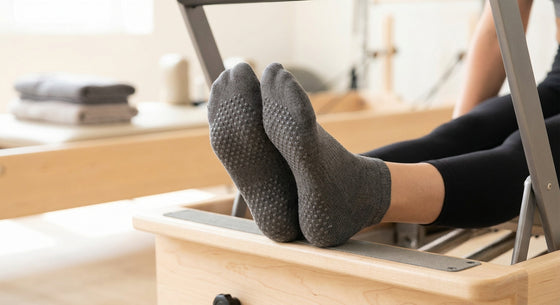
Grip socks are especially useful in environments where shoes are not worn or where surfaces are slick. That includes reformer training, mat-based strength and mobility sessions, and many rehab and prehab settings where athletes need controlled movement without footwear.
What Separates Basic Grip Socks from True Performance Grip Socks
Grip pattern design and placement
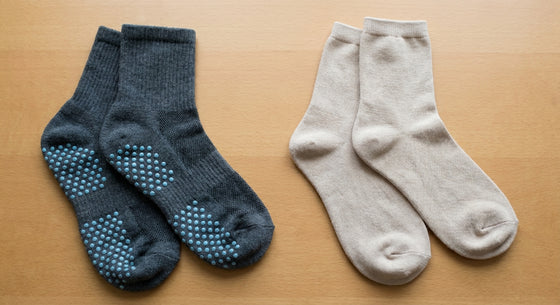
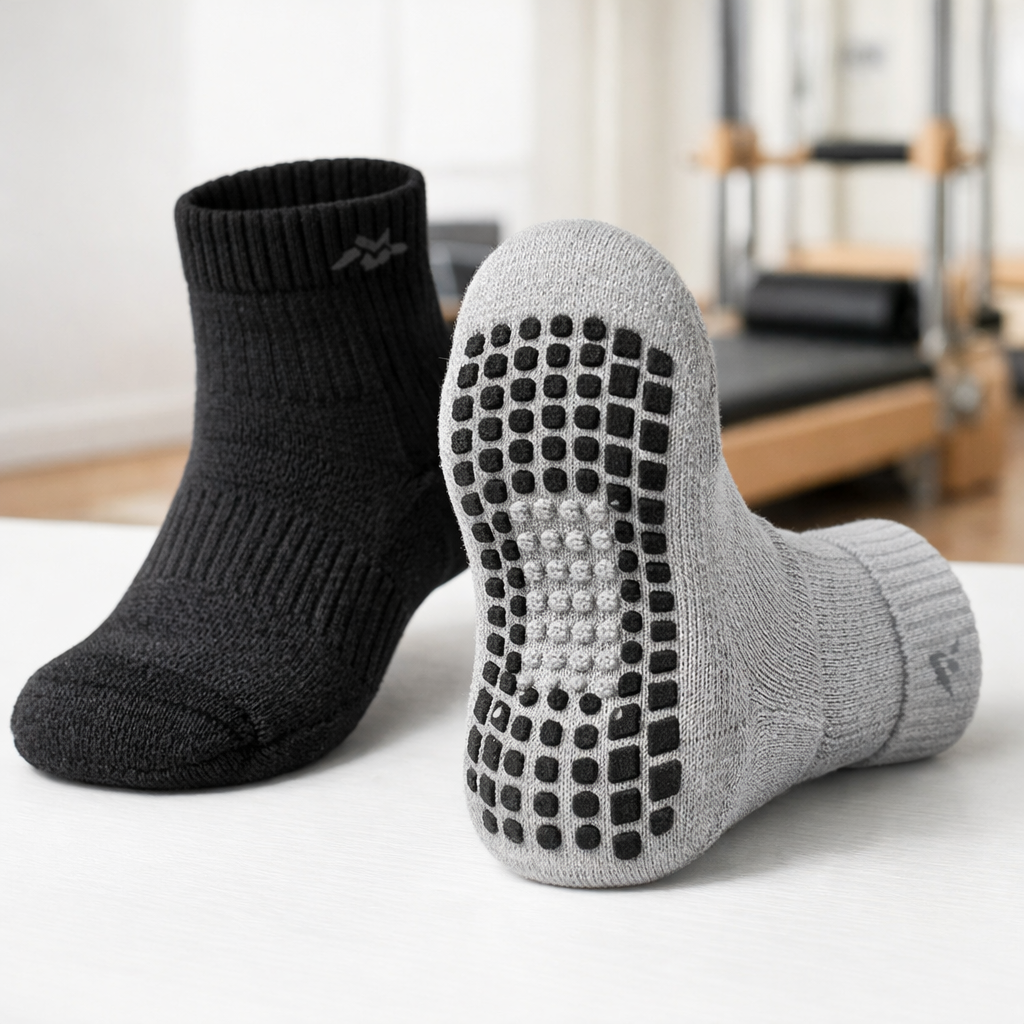
A common misconception is that more grip dots automatically means better traction. In reality, grip placement needs to match where athletes actually apply pressure during movement, like the heel, lateral forefoot, big toe region, and midfoot during transitions.
Well-designed grip maps can reduce micro-slips during pivots and lateral work. For athletes, that can mean fewer mid-set adjustments and more consistent foot placement when fatigue builds.
Rubber compound and wash durability
Traction quality depends heavily on the rubber compound used for the grips. Higher-end grips hold tackiness longer and resist becoming smooth after repeated wash cycles, which is a common failure point in cheaper pairs.
If the grips flake, crack, or flatten early, you lose the primary purpose of the sock. Over a season, durable grips often win on cost-per-wear even if the initial price is higher.
Materials and Heat Management: The Sweat Factor
Materials are not just about comfort, they are about performance under moisture. Sweat can increase friction in the wrong places, contribute to hotspots, and make your foot slide inside the sock. That combination can be a recipe for blisters during high-volume training blocks or tournament weekends.
Technical yarn blends help manage moisture and temperature while maintaining shape. If you want more background on moisture and blister risk, this sports medicine overview on friction blisters is a useful starting point for understanding why feet fail when heat and shear stack up.
Fit Features That Athletes Notice Immediately
Arch support and midfoot lock-in
Targeted knit structures around the arch can improve perceived stability by reducing internal movement. That matters during long practices, travel days, or training camps where foot fatigue becomes a limiting factor.
While grip socks are not a replacement for orthotics or structured footwear, secure midfoot compression can reduce distraction and help athletes stay focused on movement quality.
Cuff security and anti-bunching
A sock that slides down or bunches under the foot becomes a constant interruption. In fast-changing drills or recovery circuits, even minor discomfort can alter mechanics or shorten sessions.
A secure cuff and shape-retaining knit reduce the chance of slipping, especially after repeated wash cycles. For teams, these details matter because consistency across the roster reduces avoidable issues during warmups and training.
Durability and Cost-Per-Wear: The Real Value Test
One of the clearest differences between budget grip socks and performance-grade pairs is how they age. Cheaper socks often lose elasticity, pill quickly, and shed grip elements after a handful of washes.
Performance-grade options are built for repetition and laundering. Over time, a sock that maintains traction and structure may cost less per session than a cheaper pair that needs replacing mid-season.
Custom Grip Socks for Teams: Practical Benefits and Team Psychology
For sports teams, custom grip socks can provide both practical and psychological advantages. On the practical side, standardized socks can reduce slipping problems in mobility sessions, rehab, and prehab work, especially when athletes are training barefoot or on studio equipment.
On the psychological side, team-branded gear can reinforce unity and professionalism on travel days and during warmups. If you are exploring custom options, companies like Nextwave Socks offer team-focused builds, but the key is to prioritize performance specifications over aesthetics.
Key takeaway: The best grip sock is the one that stays tacky when sweaty, fits securely without bunching, and still performs after repeated washes.
How to Choose the Right Grip Socks for Your Sport
Different training environments stress socks in different ways. A reformer-based session emphasizes controlled contact and stability, while court sports and field athletes may use grip socks for warmups, mobility, and recovery when shoes are off.
Use the checklist below to keep the decision simple and performance-driven.
- Grip reliability: Look for traction that covers true load zones, not just decorative dots.
- Wash durability: Prioritize grips that stay tacky and a knit that keeps its shape.
- Moisture management: Choose materials that handle sweat without feeling slick inside.
- Secure fit: Arch support and a stable cuff reduce sliding and bunching.
- Use case match: Studio, rehab, or travel needs may differ from daily training needs.
Conclusion: Grip Socks Are Small Gear with Outsized Impact
Grip socks sit in a price range that can look high at first glance, but performance is not about what an item is called, it is about what it does. For athletes and teams, traction reliability, sweat control, secure fit, and durability can meaningfully improve training quality and reduce distractions.
If you are evaluating options, think like you would with any piece of equipment: test how it performs under fatigue, how it handles moisture, and how it holds up after washing. If you have questions about what features matter most for your sport, share your setup and training environment in the comments so the community can compare notes.
Explore more team and athlete options here: how much are grip socks at club pilates?
Grip that’s scientifically proven.
Join 23,197+ athletes. Free worldwide shipping, up to 44% off the latest drop.
Shop grip socks →