Can Grip Socks Be Washed Without Losing Performance?
How to Wash Grip Socks Without Losing Traction
Grip socks are performance gear, not everyday cotton basics. Their traction comes from silicone or rubberized grip elements, plus technical yarns that manage moisture and maintain stretch and compression through cuts, pivots, and accelerations. If you wash them the right way, you can keep that “tacky” feel longer, reduce slippage inside the boot, and avoid mid-session adjustments.
This guide breaks down what actually degrades grip over time: residue, abrasion, and heat. Whether you are a kit manager running loads for a full squad or an athlete protecting a few key pairs, the goal is the same: consistent traction and predictable fit, week after week.
Why grip sock care affects performance
Traction is a friction problem. When grip dots get coated with sweat salts, body oils, turf pellets, and dust, the surface becomes smoother and less “grabby,” even if the sock looks clean. That can translate into subtle in-boot movement, delayed force transfer, and more energy spent stabilizing.
Fit matters just as much as grip. Many grip socks rely on elastane and compression zones at the arch and ankle to reduce micro-sliding. Harsh chemicals and high heat weaken these fibers, which can make the sock feel looser, sag at the arch, and shift during high-intensity changes of direction.
can grip socks be washed
Yes, grip socks can be washed, and they should be washed regularly to maintain traction. The key is treating them like technical sportswear, not like heavy-duty laundry. Your priorities are to protect the grip pattern from abrasion and protect the stretch fibers from heat and harsh chemistry.
Athletes often delay washing because the socks “seem fine.” But performance usually drops gradually, not all at once, as residue builds and grip elements wear. A consistent wash routine is one of the simplest ways to keep grip feeling reliable across training blocks and match weeks.
Wash timing: do it sooner than later
Wash as soon as practical after use. Sweat and oils bind to the grip surface and attract dust, which can reduce friction over time. Even one or two extra days in a kit bag can allow grime to set into the yarns and around the grip dots.
If you cannot wash immediately, at least air the socks out. Leaving them damp and compressed in a bag increases odor and makes residue harder to remove later. A quick rinse in cool water buys you time without aggressive scrubbing.
Prep work that protects the grip
Turn socks inside out
Turning grip socks inside out helps the fabric release sweat and grime with less abrasion on the grip elements. It also reduces direct rubbing between the grip dots and the drum of the washer. Over time, that small habit can slow cracking or peeling.
Keep them away from abrasive items
Grip dots can catch on rough kit, especially zippers, hook-and-loop fasteners, and shin guard straps. Wash grip socks with other soft items when possible, or place them in a mesh laundry bag. This is especially useful in team loads where mixed gear is common.
When they are heavily soiled, do not scrub
For muddy sessions or turf-filled socks, pre-rinse or soak briefly in cool water. Let water flow through the fabric to release particles rather than grinding debris into the yarns. Aggressive scrubbing can accelerate wear on both the grip pattern and the knit structure.
Detergent and water temperature: keep it mild
Use cold or warm water and a mild detergent. Strong detergents, bleach, and heavy stain removers can break down elastane and weaken the compression zones that keep feet stable. They can also leave residues that make grips feel slick instead of tacky.
Skip fabric softeners. Softeners are designed to coat fibers, and that coating can transfer to grip elements and reduce friction. The same logic applies to dryer sheets later in the process.
- Use: mild detergent, cold to warm water, optional mesh laundry bag
- Avoid: bleach, fabric softener, harsh stain removers, heavy fragrance boosters
Choose a cycle that reduces mechanical wear
Cycle choice matters because grip socks fail from abrasion as often as from chemistry. A gentle or sportswear cycle limits agitation, reducing the chance that grip dots start to peel or crack. It is a small change that can preserve traction consistency.
In team settings, do not overload machines. When a drum is packed tight, items rub more aggressively, and grip elements can deform as they press against hard edges. Mixed loads with heavy garments can also increase friction and shorten the “high-performance window” of the sock.
- Turn socks inside out and close all zippers and fasteners in the load.
- Select a gentle or sportswear cycle with cold to warm water.
- Use a mild detergent and skip softener and bleach.
- Do not overfill the washer; leave room for movement and rinsing.
Drying: where most grip performance is lost
High heat is the fastest way to degrade grip socks. It can weaken adhesives, warp grip patterns, and reduce elasticity, which shows up as slipping at the arch or ankle. If you care about traction, treat heat like a stressor you control.
Air-drying is the safest choice. Lay socks flat or hang them in a well-ventilated space away from radiators and direct high heat. If time is tight, a low-heat tumble dry is the next best option, but avoid hot cycles and long drying times.
- Best: air-dry or lay flat in shade with good airflow
- Acceptable: tumble dry on low heat for the shortest effective time
- Avoid: high heat, radiators, direct heaters, ironing, dryer sheets
Key takeaway: Clean grips create traction, but heat destroys the materials that keep grip socks performing. If you only change one habit, change how you dry them.
Quick performance checks: know when a pair is fading
Grip socks rarely fail overnight. They usually lose tackiness, then start to shift, and finally lose compression shape. Catching that early helps athletes avoid chasing fit mid-session and helps teams keep standards consistent.
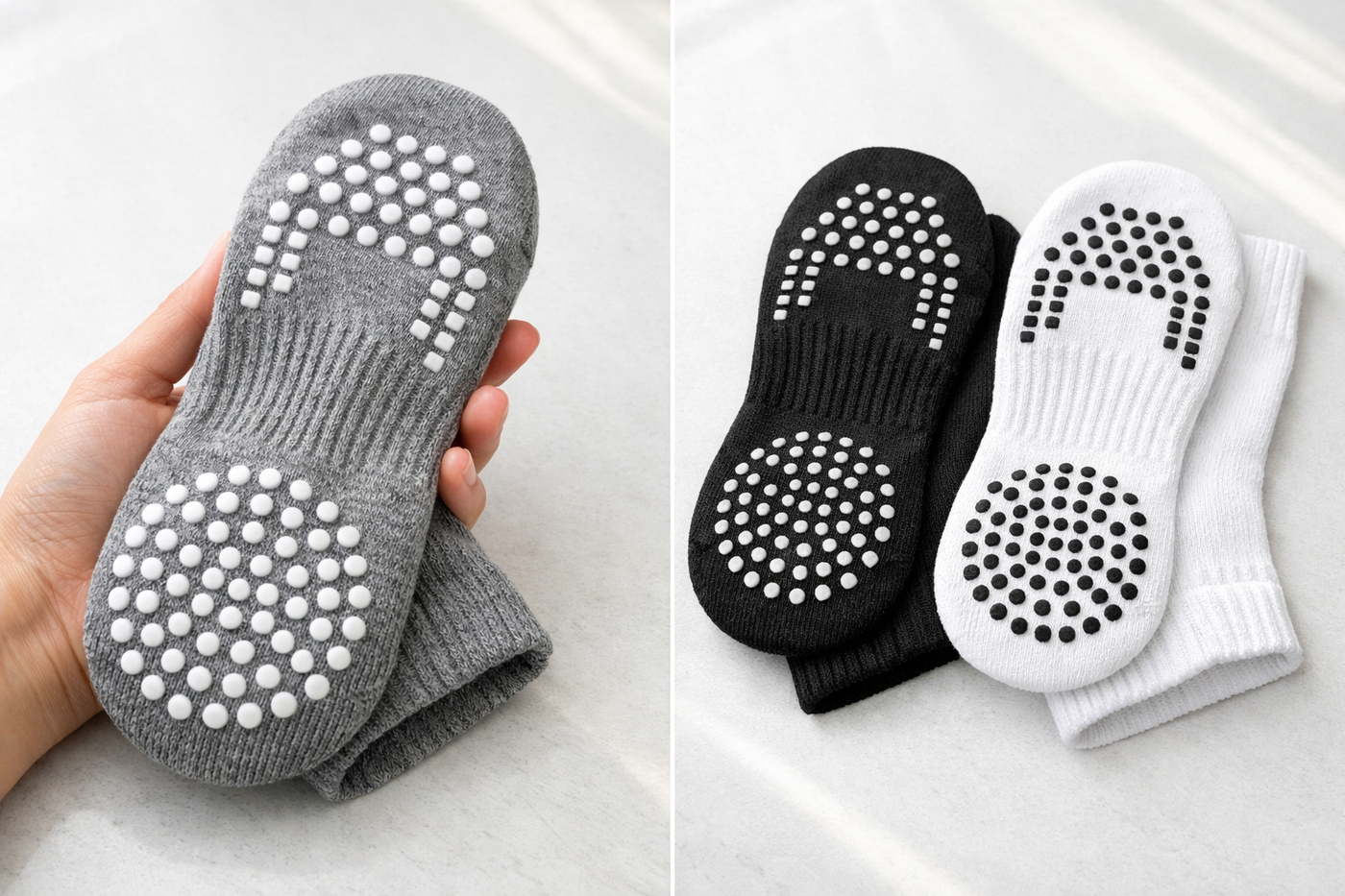
- Grip feel: dots should feel tacky, not smooth or glazed
- Grip integrity: dots should be intact and evenly distributed, not cracked or peeling
- Elastic rebound: the sock should spring back without sagging at the arch or ankle
- On-foot behavior: less in-boot movement and fewer adjustments during play
If the grips are peeling or the sock no longer holds compression, it has likely reached the end of its high-performance phase. At that point, it may still be wearable, but it is less reliable for match intensity.
Team laundry standards: consistency beats guesswork
For squads, the biggest win is standardizing the process so every player gets predictable grip and fit. Make “inside out, mild detergent, no softener, low heat” a default kit room rule. That reduces variability between loads and minimizes early wear across the roster.
It can also help to label a dedicated wash routine for technical items, including compression and grip socks, rather than mixing them with heavy training kit. Some teams even set aside a mesh-bag system to keep grip socks separated and reduce contact with fasteners. If your group uses performance socks from suppliers such as Nextwave Socks, consistent care protects the materials no matter where the socks come from.
Conclusion: treat grip socks like the performance tool they are
Grip socks can absolutely be washed without losing performance, but only if you protect the grip surface, the stretch fibers, and the compression structure. Wash soon after use, turn them inside out, choose mild detergent and a gentle cycle, and keep heat low when drying. Those habits preserve traction, reduce in-boot slippage, and extend the usable life of each pair.
If you have a routine that works well for your sport or team setting, share it with your teammates or drop your tips in the comments. For more resources on performance sock options and care, explore can grip socks be washed.
Grip that’s scientifically proven.
Join 23,197+ athletes. Free worldwide shipping, up to 44% off the latest drop.
Shop grip socks →