Are Grip Socks Supposed to Be Tight? Perfect Fit Guide
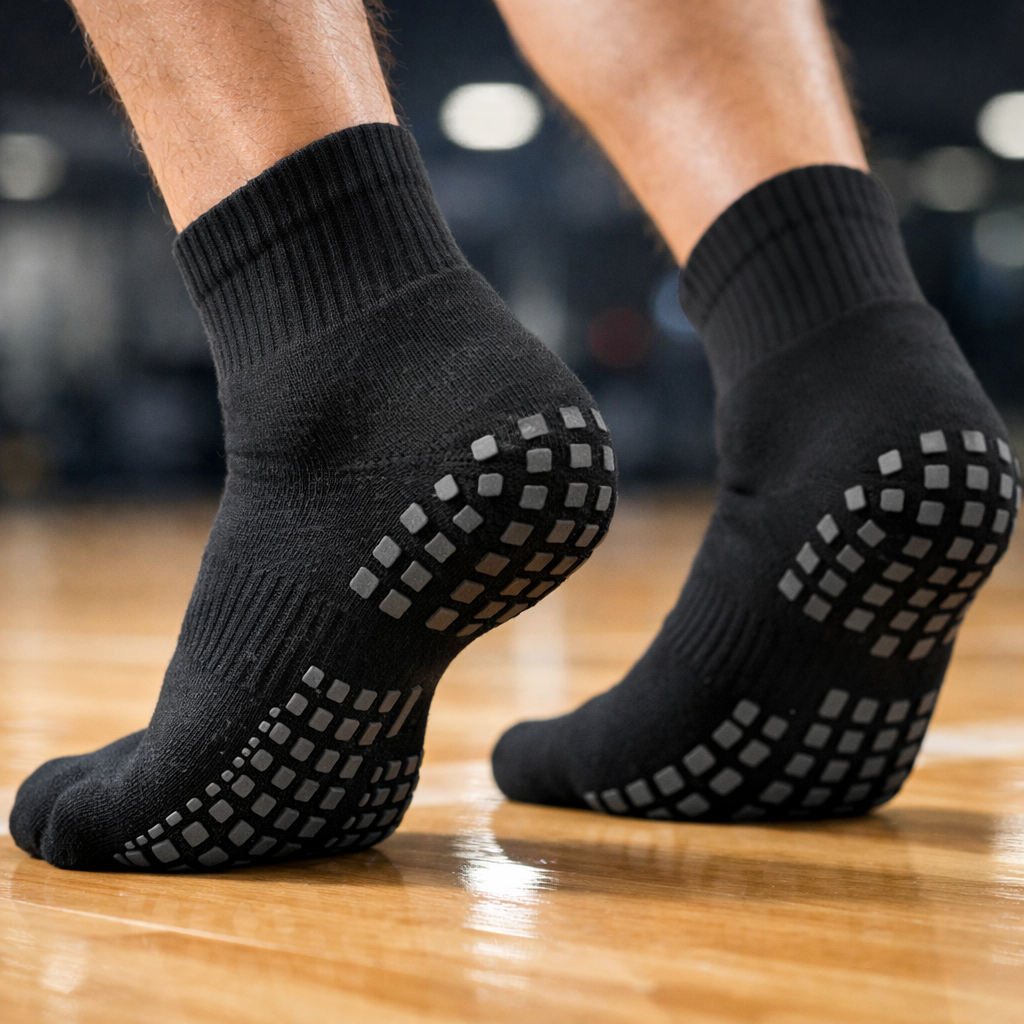
Grip Sock Fit for Athletes: Secure, Not Suffocating
Grip socks are built to help athletes feel more stable inside their shoes, especially during fast cuts, accelerations, and hard decelerations.
That performance benefit depends on fit: too loose and you lose traction, too tight and you risk numbness, hotspots, and distractions mid-game.
This guide breaks down what “snug” should actually feel like, how to check fit in seconds, and how teams can standardize sizing so every player gets the same on-field advantage.
Why grip socks feel different than everyday socks
Everyday socks are mainly about comfort and warmth, so a little sliding or bunching is common.
Grip socks are designed to reduce micro-movement between foot, sock, and shoe, which can improve stability and help lower blister risk.
That is why they often feel more compressive at first, especially through the arch and midfoot where structure matters most.
are grip socks supposed to be tight
They should feel snug and secure, but not painfully tight.
The goal is a “locked-in” sensation that supports quick changes of direction without cutting off circulation or restricting natural foot motion.
If the sock feels like a constraint rather than equipment, the sizing, cuff, or compression profile is likely wrong for your foot and sport.
What a properly fitting grip sock should feel like
A good fit is consistent across the whole foot: secure in the midfoot, smooth in the heel, and steady at the cuff.
You should feel the grip elements engaging under the forefoot and heel, while your toes still have room to move.
Think of it as supportive contact, not squeezing pressure.
Fit checkpoints that usually indicate a “performance-snug” match
- Arch and midfoot: hugged firmly with minimal fabric shifting during cuts
- Heel pocket: centered and smooth, not pulling off to one side
- Ball of foot: no bunching or folding under load
- Cuff: stays up without digging into skin or leaving deep, persistent lines
- Toes: you can wiggle freely and spread slightly inside the shoe
Red flags: signs your grip socks are too tight
Compression can be normal, but circulation problems are not.
If you notice persistent discomfort during warm-ups, your body is giving you useful information before it becomes a mid-game issue.
Use the checklist below to decide whether to size up or change the sock profile.
- Tingling, numbness, or “pins and needles” in toes or forefoot
- Cold toes or a pale foot after lacing up
- Deep sock lines that linger long after you take them off
- A “pinched” feeling across the forefoot, especially when pushing off
- Noticeable pressure around the Achilles or calf from an overly restrictive cuff
- New hotspots that appear in the same place each session
Key takeaway: Snug is about stability. Tight is about restriction. If you are losing sensation or warmth, the fit is no longer performance-enhancing.
Fit depends on the sport, the shoe, and the session length
Grip sock fit is context-dependent because movement patterns, shoe types, and session duration change what “ideal” feels like.
A sock that feels perfect for a 60-minute high-intensity session may feel overly tight during a long tournament day as feet swell.
Match your fit to your sport demands and your typical schedule.
Court and field sports: prioritize in-shoe stability
Sports with frequent cutting and repeated acceleration typically benefit from a more secure, performance-snug fit.
This includes soccer, basketball, football, lacrosse, field hockey, volleyball, and training in turf or court shoes.
The goal is reducing in-shoe slip so force transfers feel direct and controlled.
Endurance and long sessions: prioritize heat and swelling management
For longer sessions, some athletes prefer slightly less compression or a thinner construction to manage heat buildup.
Feet often swell over time, especially during double-headers, travel days, and long practices.
If sizing is marginal, what felt “just right” pre-warm-up can become restrictive by the second half.
A quick fit test you can do in under two minutes
Do not judge fit only while sitting down.
Grip socks need to be evaluated under load, inside the shoes you actually compete in.
Use this simple sequence to confirm your setup before training or match day.
- Put the sock on fully with no twisting, and smooth the fabric from toes to cuff.
- Center the heel pocket so the heel seam sits where your heel actually is.
- Stand up in your sport shoes and lace them the way you normally play.
- Wiggle your toes. You should have free toe motion without pressure across the forefoot.
- Do a few cuts and stops. You want stability without pressure points or burning sensations.
If you feel sliding inside the shoe, you may need a smaller size or a sock with more structure through the arch.
If you feel pressure points, sizing up or choosing a different cuff and compression profile is usually the fix.
When possible, test after warm-up too, since that is when swelling reveals borderline sizing.
Common mistakes that make grip socks feel too tight or ineffective
Many “bad grip sock experiences” are really setup problems: layering, shoe fit, or care mistakes that change the fabric over time.
A small adjustment can restore comfort without sacrificing traction.
These are the issues teams see most often across a roster.
- Doubling up with another thick sock: extra bulk increases pressure and can negate the grip interface.
- Choosing the smallest size to maximize grip: overtight socks can reduce feel, increase hotspots, and worsen blisters.
- Ignoring foot width: wide feet often need more toe box volume and different stretch to avoid forefoot pinch.
- Pairing with shoes that are already too snug: grip socks cannot fix a shoe that is undersized or overly narrow.
- Over-lacing to “lock in”: combining heavy lace pressure with tight socks can compress nerves across the top of the foot.
Care tips that protect fit over the season
Grip socks use technical fibers and knit structures that can change if cared for poorly.
High heat is a common culprit, shrinking materials and making a previously good fit feel restrictive.
Softening agents can also interfere with moisture management and how the sock sits against the skin.
- Avoid high-heat drying when possible to reduce unwanted shrink and stiffness.
- Skip fabric softeners because they can reduce moisture-wicking and alter feel.
- Replace socks that have lost elasticity, since slippage can return even if grip elements look intact.
Team sizing: how to keep fit consistent across the roster
For teams, the biggest performance win is consistency: every player confident that their socks will feel the same on match day.
Collect both shoe size and foot width notes, then consider how players use them, especially for long tournament schedules.
When teams explore custom options, providers such as Nextwave Socks can simplify sizing guidance so athletes are not guessing between “snug” and “too tight.”
Conclusion: secure equipment, not a mid-game distraction
The best grip socks disappear once you start playing: no bunching, no sliding, no numbness, no constant adjusting.
When fit is right, athletes often notice improved stability, fewer blisters, and more confidence during fast directional changes.
If you have questions about sizing for your sport or want to share what fit cues work best for your team, add your thoughts in the comments and compare notes with other athletes.
Grip that’s scientifically proven.
Join 23,197+ athletes. Free worldwide shipping, up to 44% off the latest drop.
Shop grip socks →