Are Grip Socks Washable? Care Guide for Athletes
How to Wash Grip Socks Without Losing Traction, Fit, or Game-Day Feel
Grip socks are built for athletes who need reliable traction, fewer in-boot slips, and a consistent feel through hard cuts, accelerations, and changes of direction. The good news is they are washable. The important part is that how you wash them can decide whether the grip stays tacky, the fabric keeps its compression, and the sock holds its shape over a long season.
This guide covers practical, sports-science-informed care habits for individuals and teams. You will learn what breaks grip down over time, how often to wash, the best wash and dry methods, and when performance changes mean it is time to replace a pair.
Why washing matters for grip performance
Most grip socks use silicone or similar grip elements bonded to the knit. That grip surface is designed to create friction against your insole or shoe liner, but it also attracts the same things that reduce friction: sweat residue, body oils, dust from courts and turf pellets, and detergent buildup.
When grime coats the grip, traction can feel inconsistent even if the grip pattern looks fine. High heat and harsh chemicals can be worse: they can dry out grip elements, weaken bonding, and stretch elastics so the sock loses its locked-in feel over time.
If you want repeatable performance, the goal is simple: remove sweat and debris effectively while protecting the grip material and the sock’s structure.
are grip socks washable?
Yes, grip socks are washable, and regular washing is part of maintaining performance. The key is using temperatures and products that clean without leaving residue or damaging the grip elements.
If you are managing team kit, this is good news because no special cleaning service is required. You just need a consistent process that avoids the most common traction-killing mistakes.
How often athletes should wash grip socks
For most athletes, washing after every training session or match is the best practice. Even when socks look clean, sweat and oils build up quickly inside the fibers. That buildup can make the fabric feel slick, reduce breathability, and make grips feel less sticky.
Regular washing is also basic hygiene that helps reduce odor and bacterial growth. Teams that train frequently should treat grip socks like base layers: worn once, then washed.
Best way to wash grip socks (step-by-step)
A consistent wash routine protects traction and helps socks maintain fit. The steps below balance effective cleaning with minimal wear on grip elements and knit structure.
- Turn socks inside out before washing. This helps sweat, skin oils, and dead skin rinse out more effectively.
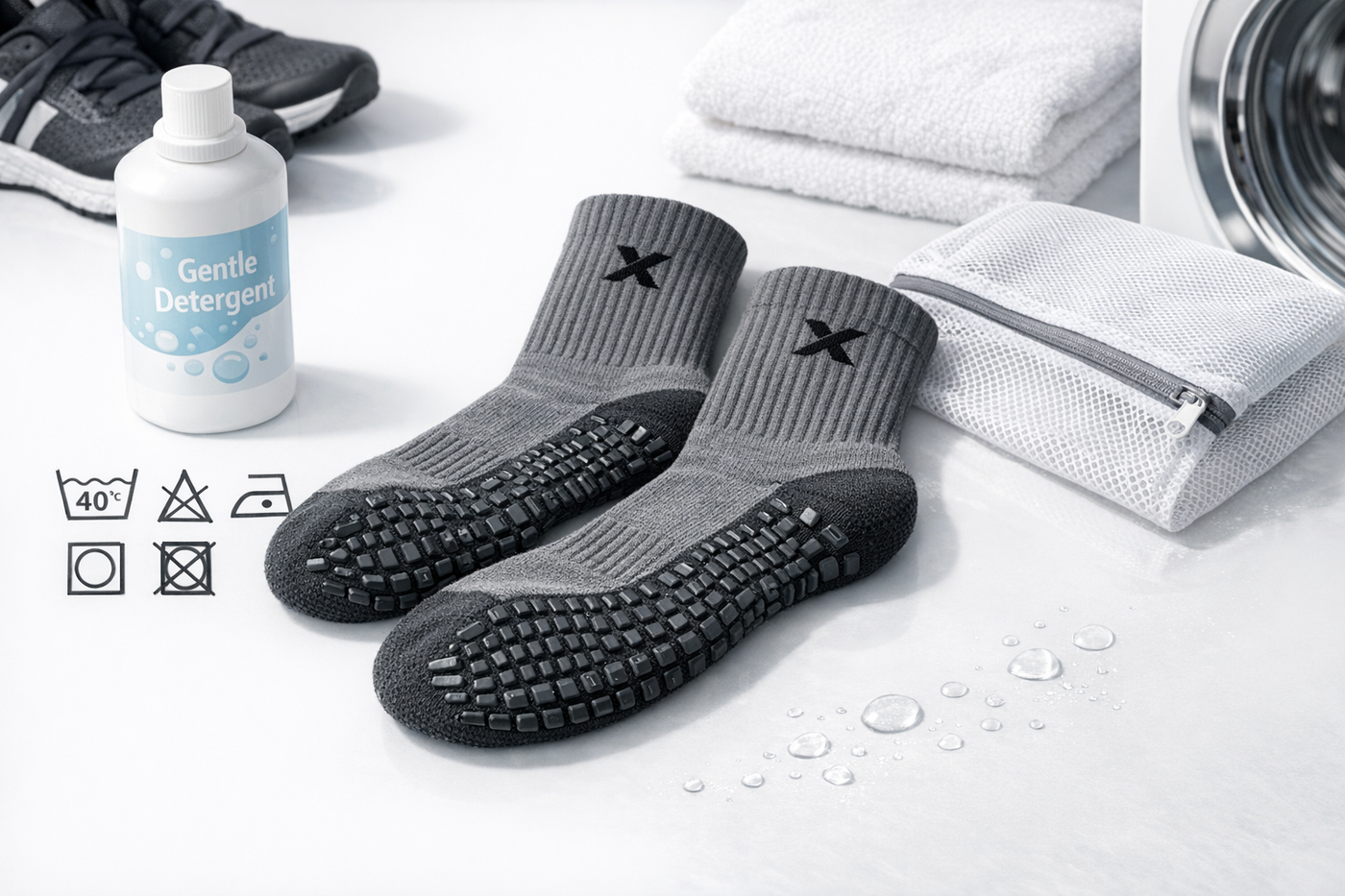
- Choose cold to warm water (30°C or 86°F max). Lower temperatures help preserve elastics and reduce risk of grip warping.
- Select a gentle cycle. This limits abrasion, especially around grip zones.
- Use a mild detergent. Strong detergents and aggressive additives can leave residue or break down fibers faster.
- Wash with similar items. Avoid rough fabrics like towels or denim that can scuff the grip surface.
If you are washing for a squad, consider using a mesh laundry bag. It helps prevent grip zones from catching on other garments, reducing peel risk and friction damage during the cycle.
Common washing mistakes that shorten grip sock lifespan
Many “worn-out” grip socks are actually just exposed to the wrong laundry habits. If you want consistent traction week after week, avoid the issues below.
- Fabric softener: It can leave a coating that reduces grip and can also affect moisture-wicking performance.
- Bleach: It can weaken fibers and damage bonding, especially around grip applications.
- High heat: Hot washes and tumble drying can warp grip elements, shrink knits, and reduce elasticity.
- Ironing or dry cleaning: Not suited to performance knit blends or silicone grip applications.
A helpful rule for teams: if a laundry practice would be risky for compression gear, it is usually risky for grip socks too.
Drying tips to protect traction and fit
Air-drying is the safest choice. Lay socks flat or hang them in a well-ventilated area. Keep them away from direct high heat sources like radiators or intense sunlight that can accelerate material aging.
If you must use a dryer due to scheduling and turnaround, choose the lowest heat setting and a delicate cycle. Expect faster wear over time compared to air-drying, especially around grip zones and the cuff elasticity.
Performance takeaway: Heat is one of the fastest ways to turn “tacky and supportive” into “slick and stretched.” Clean is important, but cool and gentle keeps performance consistent.
Managing odor and heavy sweat buildup
Odor is usually a sign that bacteria are thriving on sweat residue. If a normal wash is not enough, add a pre-wash step instead of increasing heat or using harsh chemicals.
Try a short soak before washing
Soak socks in cool water with a small amount of sports-safe detergent for 20 to 30 minutes, then wash as normal. This can loosen trapped sweat compounds so they rinse out more easily.
Rotate pairs to reduce bacterial load
Teams and heavy trainers should rotate multiple pairs rather than wearing the same pair on back-to-back days. Rotation allows full drying between sessions, which reduces odor buildup and helps the grip surface stay cleaner.
If you store used gear in a bag all day, separate worn socks in a breathable laundry pouch. That limits moisture buildup and prevents odor transfer to other kit.
How to restore grip when socks feel less tacky
When athletes say the grip is “gone,” the issue is often residue rather than true wear. Detergent film, softener coatings, and embedded dirt can all reduce friction.
First, wash inside out using mild detergent on a gentle cycle, then air-dry. If you previously used fabric softener, removing that coating may take a couple of washes to fully restore the original feel.
If the grip pattern is peeling, cracking, or turning smooth, that is typically end-of-life wear or heat damage. At that point, washing will not bring performance back reliably.
Storage and travel habits that keep grip surfaces clean
Grip elements pick up lint and debris easily, especially when stored against cotton towels or fleece layers. Store socks fully dry, and keep the grip surface free from loose fibers that can reduce tackiness.
For away matches and tournaments, pack a small breathable bag specifically for used socks. This keeps moisture contained without trapping it, which helps reduce odor and protects the rest of your kit.
Some athletes also find it useful to lightly shake socks out before packing after a turf session to remove loose rubber pellets or dust that can grind into the grip surface.
When it is time to replace grip socks
Even with perfect care, grip socks are still a high-wear performance item. Replace them when traction is inconsistent after proper washing, when grip elements peel or fracture, or when the sock no longer holds its shape and support.
For teams, consistency matters as much as peak grip. If one pair feels noticeably different underfoot, it can change how confidently an athlete plants and pivots. Keeping traction consistent helps keep movement predictable.
If you are using team-issued socks or exploring options such as Nextwave Socks, apply the same principle: the best sock is the one that stays consistent because it is cared for consistently.
Conclusion: Clean carefully for consistent performance
Grip socks are washable, and the simplest habits usually deliver the biggest performance payoff. Wash after each session, turn them inside out, use mild detergent, skip softener and bleach, keep water temperatures low, and air-dry whenever possible.
If you have a team laundry routine, standardizing these steps can extend sock lifespan, reduce odor issues, and improve game-day reliability across the squad. Consistent footing is performance, and small care details add up over a season.
Want more best practices for kit care and performance basics? Share your team’s laundry challenges in the comments and explore more resources here: are grip socks washable.
Grip that’s scientifically proven.
Join 23,197+ athletes. Free worldwide shipping, up to 44% off the latest drop.
Shop grip socks →