Can Grip Socks Prevent Injury in Sports? Research Insights
Grip Socks, Traction, and Injury Risk: What Sports Science Actually Suggests
Grip socks have become common in gyms, training rooms, and competitive sports because athletes want more control in fast, high-impact situations.
The big question is usually framed as a yes or no: do they prevent injuries? Sports science points to a more useful answer: grip socks can lower specific risk factors related to instability, especially when the main problem is the foot sliding inside the shoe.
This article breaks down what grip socks change biomechanically, what they do not change, and when they are most likely to matter for performance and durability.
What Grip Socks Are Designed to Do (in Plain Sports Science Terms)
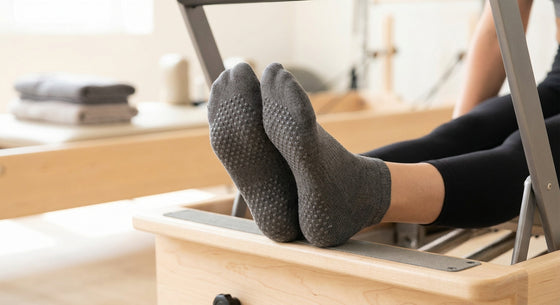
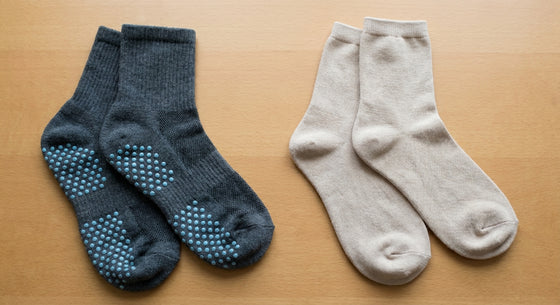
Grip socks are designed to increase traction between the foot, sock, and shoe. That traction can reduce internal slippage, sometimes called “foot lag,” which happens when your shoe moves one way but your foot shifts a split-second later.
When internal slip occurs during a hard cut or landing, the body often responds with rapid “micro-adjustments” to keep balance. Those adjustments can change how forces travel through the ankle, knee, and hip.
The goal is not magic protection. The goal is a more predictable connection so force transfers more directly and consistently when you decelerate, pivot, jump, or re-accelerate.
Two Types of Traction Athletes Confuse
Most traction conversations focus on the outsole: how well the shoe grips the court or turf. That matters, but it is only half the story.
Grip socks primarily affect foot-to-shoe traction, not shoe-to-surface traction. Understanding the difference helps teams make smarter decisions about equipment and injury risk discussions.
Shoe-to-surface traction (outsole grip)
This is the friction between the shoe and the playing surface. Too little can cause slipping, but too much in certain contexts can increase rotational loading, which is often discussed in knee injury debates.
Surface conditions, tread patterns, and sport rules (indoor court vs turf) are the big drivers here.
Foot-to-shoe traction (lock-in inside the shoe)
This is how securely your foot is “anchored” inside the shoe during movement. If your foot slides on impact, you can lose timing and stability, even if the outsole grip is excellent.
Grip socks aim to improve this internal lock-in so your foot does not drift forward, twist, or lift at key moments.
can grip socks prevent injury
It is more accurate to say grip socks can reduce certain slippage-related contributors to non-contact injuries, rather than “prevent injuries” outright. Injury risk is multifactorial, and no single tool guarantees protection.
That said, sports science and biomechanics research on traction and movement reliability supports a practical idea: if internal foot movement is forcing compensations, reducing that movement can lower instability and repeatability problems.
In other words, grip socks can be helpful when the limiting factor is your connection to the shoe, not your strength, technique, or workload management.
How Internal Slippage Can Increase Stress (and Why It Matters Late in Games)
When your foot slides inside the shoe during a cut or landing, the body often compensates instantly. Those compensations can include extra ankle motion, toe gripping, or altered knee and hip alignment to regain control.
Over time, or during one high-speed moment, these adjustments can contribute to common problems like blisters, plantar fascia irritation, ankle sprains, and lower-limb strain. They can also affect movement efficiency by wasting energy with extra correction steps.
This is one reason traction solutions often feel most valuable under fatigue, when technique naturally degrades and timing gets less precise.
Where Grip Socks Tend to Matter Most in Sport
The most promising benefits show up in sports and roles that demand rapid stopping and starting, sharp cuts, and repeatable landings. Think situations where precision matters and the margin for error is small.
Grip socks may be most relevant during movements like basketball closeouts, volleyball landings, futsal pivots, tennis direction changes, and indoor training on smoother courts.
- Cutting and change of direction: reducing foot lag can help you plant and redirect more predictably.
- Jump landings: less internal slide can support consistent foot placement and balance on impact.
- Deceleration: improved lock-in can reduce the “forward drift” feeling inside the shoe.
- Fatigue phases: better internal traction can support repeatability when legs are heavy.
Potential Benefits Beyond Injury Risk
Athletes often notice performance-related changes before anything injury-related. Better internal traction can improve perceived stability, especially during quick transitions.
There is also a plausible link to improved proprioception, meaning the body’s sense of position and pressure. When the foot is not sliding, your nervous system may get clearer feedback from the shoe-sock-foot interface.
Even small improvements in control can matter for high-performance athletes, where consistency is a competitive skill.
What Grip Socks Cannot Do (and Why That Matters)
Grip socks do not replace strength, movement quality, or smart training plans. If an athlete is overloaded, under-recovered, or returning too quickly from injury, socks will not solve the root problem.
Grip socks also cannot fix poor shoe fit. If a shoe is too large, too wide, or structurally unstable for an athlete’s foot, increased sock traction may not create the secure lock-in the athlete expects.
Finally, grip socks do not meaningfully change outsole grip on the playing surface, so they are not a solution for slippery courts, worn tread, or surface moisture.
Practical Checklist: When Are Grip Socks Worth Trying?
For teams and individual athletes, it helps to treat traction as a fit-and-function question. Grip socks tend to be most useful when internal movement is noticeable or when stability demands are unusually high.
If you are unsure, use the checklist below during training, not on game day for the first time.
- You feel your foot sliding forward during deceleration.
- You get frequent hot spots, blisters, or toe banging despite decent shoe fit.
- You notice instability during sharp cuts or pivots, especially on smooth indoor courts.
- Your role requires frequent high-speed direction changes (guards, wingers, defensive specialists).
- Your shoes fit snugly but still allow minor internal movement under load.
How to Get the Most Benefit (Without Overthinking It)
If you decide to use grip socks, the goal is to integrate them into an overall performance and injury risk system. Think of traction as one input that supports better movement repeatability.
Pair improved foot-to-shoe traction with fundamentals that consistently reduce injury risk: strength, landing mechanics, progressive workloads, and recovery routines.
- Start with fit: make sure the shoe last, width, and length match your foot, then evaluate internal slip.
- Test under game-like intensity: do change-of-direction drills and deceleration work, not just straight-line running.
- Track outcomes: pay attention to hot spots, stability, and whether you feel more consistent late in sessions.
- Keep doing the basics: calf and foot strength, ankle stability, hip control, and landing mechanics still drive outcomes.
A Quick Note on Evidence and Context
Research on traction and biomechanics strongly supports the idea that uncontrolled internal foot motion can affect landing mechanics and force transfer. That is the logic grip socks target by reducing slippage-related instability.
But sports injuries do not have single causes. Training load spikes, prior injury history, sleep, strength deficits, and decision-making under fatigue often matter more than any single piece of apparel.
If you want to explore broader consensus guidance on injury risk factors in sport, the National Library of Medicine is a useful place to search peer-reviewed sports medicine and biomechanics research.
Key takeaway: Grip socks are not an injury shield, but improving foot-to-shoe traction can reduce slippage-driven instability and the compensations that raise injury risk during cutting, landing, and fatigue.
Conclusion: A Smart Tool, Not a Guarantee
Grip socks can support athletic performance by improving the foot-to-shoe connection, reducing internal slippage, and helping athletes feel more “locked in” during high-demand movements. From a sports science perspective, that can lower certain risk factors linked to non-contact issues when traction inside the shoe is the limiting factor.
The best results come when grip socks are treated as one part of a bigger system: well-fitted footwear, strong feet and ankles, sound landing mechanics, and sensible load management. Some athletes and teams also appreciate having reliable options available, including subtle, performance-focused offerings from providers like Nextwave Socks, as long as the focus stays on fit, function, and training consistency.
If you have questions about when traction changes might help your sport or position, share your experience with your team staff or drop your thoughts in the comments and compare notes with other athletes.
Grip that’s scientifically proven.
Join 23,197+ athletes. Free worldwide shipping, up to 44% off the latest drop.
Shop grip socks →