Can Grip Socks Go in the Washing Machine? Care Guide
How to Wash Grip Socks for Peak Performance and Long-Lasting Traction
Grip socks are a small piece of kit that can make a big difference in how confident you feel planting, cutting, and changing direction. When the grip stays tacky and the fit stays locked in, you get more consistent foot stability and fewer in-shoe hotspots that can lead to blisters.
The good news is that most quality grip socks are built for regular use. The less obvious part is that washing and drying choices can either preserve performance or break it down quickly.
This guide walks through sports-science-informed care habits for athletes and teams who want reliable traction, comfortable compression, and predictable fit over repeated sessions.
Why sock care affects traction, fit, and comfort
Grip socks rely on two things working together: the textile structure (stretch, recovery, and breathability) and the grip elements (often silicone or similar applications). Damage either one and you may feel slipping, bunching, or the grip “glazing over” and losing bite.
From a performance standpoint, gritty traction helps reduce micro-slips inside the shoe, which can lower friction hot spots. Consistent fit also improves proprioception, meaning you get clearer feedback from foot-to-surface contact during fast movement.
For teams, care matters even more because kit is washed frequently and often washed in bulk. A few simple adjustments can help keep every pair match-ready rather than “good for training only.”
Can grip socks go in the washing machine?
Yes, in most cases grip socks can go in the washing machine. The key is choosing a process that minimizes abrasion, high heat, and chemical coatings that interfere with grip and moisture management.
Think of it like maintaining any performance material: you want to clean sweat, salts, and dirt without over-stressing elastic fibers or scraping the grip applications. Machine washing is usually fine when approached gently and consistently.
Best washing practices for grip socks
1) Turn them inside out before washing
This is one of the highest-impact habits. Turning socks inside out protects the grip elements from rubbing directly against the drum and other garments, which can scuff the grip surface over time.
It also helps the wash water reach the inner fabric where sweat and skin oils accumulate. Cleaner inner fibers often means less odor and a more comfortable feel during long sessions.
2) Use cold or warm water, not hot
Hot water can accelerate wear by weakening elastic recovery and increasing the risk of shrinkage or shape change. For athletic socks, maintaining stretch and rebound is essential for a secure midfoot and cuff fit.
Cold to warm water is sufficient for removing sweat salts and most field debris, especially when paired with the right detergent.
3) Choose a mild detergent and skip bleach and softener
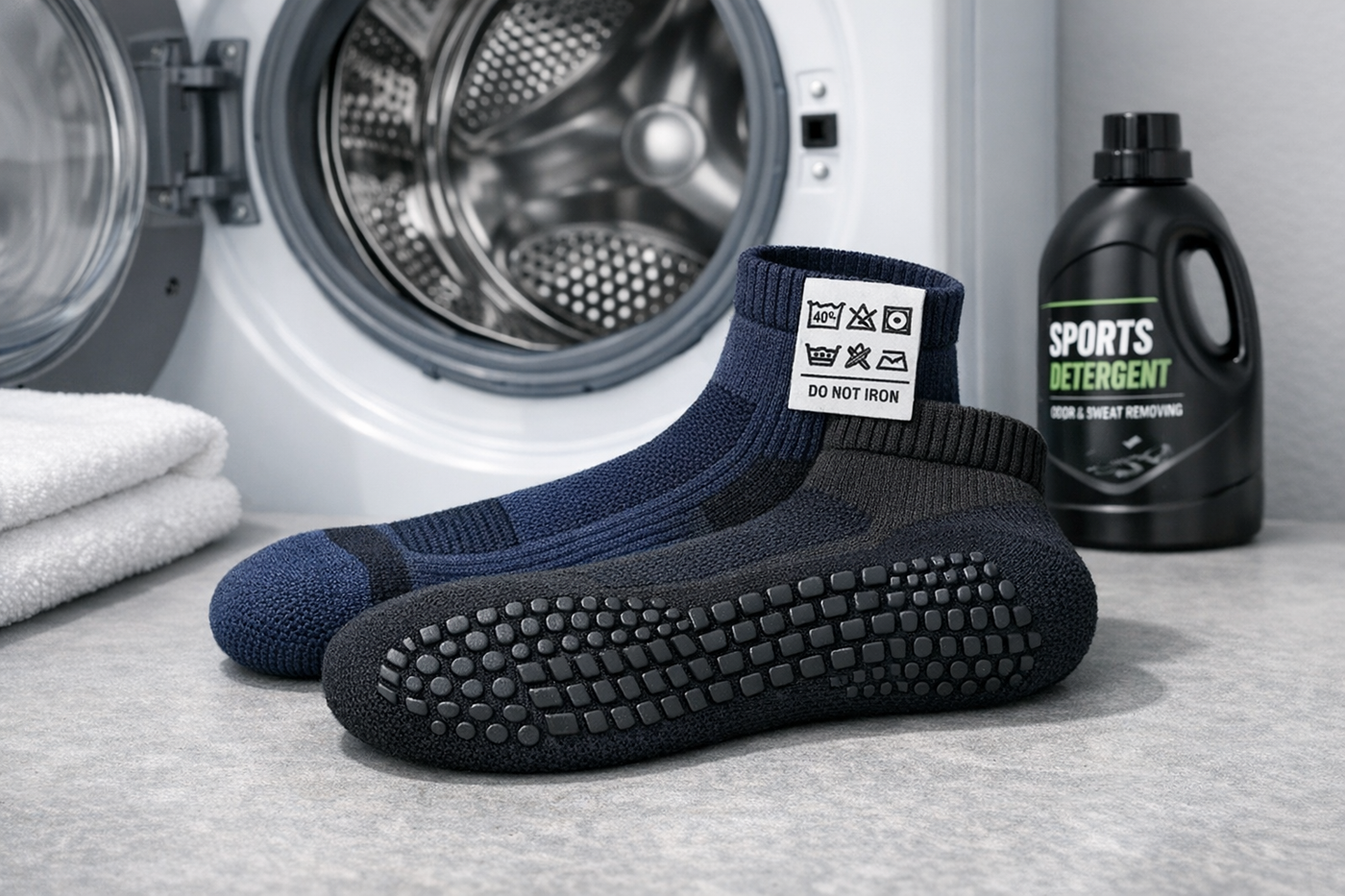
Use a mild detergent and avoid bleach unless the care label explicitly allows it. Bleach can degrade fibers and shorten lifespan, especially with repeated washes.
Fabric softener is a common performance killer because it can leave a coating that reduces grip feel and impacts moisture management. If socks start feeling slick or less breathable, softener residue is often part of the cause.
4) Pick the right cycle and the right load
A normal or delicate cycle typically works well, but keep loads balanced. Overloading increases friction between items, which can thin high-wear zones like the forefoot and heel.
Avoid washing grip socks with heavy items like towels or hoodies. Also avoid zippers, Velcro, and hard trims that can snag fibers or scrape grip pads.
5) Use a mesh laundry bag for team washes
If you manage team kit or mixed personal loads, a mesh laundry bag is a simple way to reduce abrasion and prevent lost pairs. It also makes post-wash sorting faster, especially when socks look similar.
For athletes who rotate multiple pairs per week, a bag helps keep grip socks treated like the performance item they are, not just another garment in the wash.
Drying grip socks: where performance is most often lost
Drying is the step that most commonly reduces lifespan. High heat can weaken elastic fibers, stiffen or crack grip elements, and alter shape enough that the sock no longer feels “locked in.”
If you have ever noticed cuffs stretching out, arch support feeling looser, or the grip losing tackiness faster than expected, the dryer temperature is a prime suspect.
Air drying is best
The safest option is air drying. Lay socks flat or hang them in a well-ventilated area so they dry evenly without stressing the elastic.
Avoid placing them directly on radiators or high-heat sources after a wet session. Intense localized heat can damage both fibers and grip applications.
If you must use a dryer, go low heat and remove promptly
When air drying is not possible, choose tumble dry low and remove them promptly to reduce heat exposure. Extended cycles can “cook” the elastic and accelerate breakdown.
Do not iron or dry-clean grip socks. Both introduce heat or chemicals that are mismatched to performance textiles.
Pre-wash habits for athletes who train daily
Performance care starts before laundry day. Sweat and bacteria build up fastest when damp socks sit compressed in a closed bag, especially after warm-weather sessions or indoor training.
If you cannot wash immediately, let socks air out first. This simple step reduces odor and helps prevent stubborn buildup that can be harder to remove later.
Quick rinse for heavy sweat, turf rubber, or field debris
If socks are heavily soaked or covered in turf crumb, a quick cold rinse can help lift salts and debris before the full wash. This reduces the need for aggressive scrubbing that can thin fabric and roughen grip elements.
For persistent odor, use a sports-safe enzyme detergent rather than adding softener or harsh chemicals. Enzymes target organic odor sources more effectively without coating performance fibers.
When to rotate pairs or replace grip socks
Even with excellent care, performance socks are a consumable for high-volume athletes. The goal is not to make one pair last forever, but to maintain consistent traction and fit across a rotation.
Inspect socks regularly, especially if you rely on sharp cuts and rapid direction changes. Small changes in grip feel can translate to noticeable differences in in-shoe stability.
- Grip feels less tacky or seems to glide on smooth insoles
- Thinning fabric at the heel, forefoot, or toe box
- Stretched cuffs that will not stay up or feel less supportive
- In-shoe slipping that was not present when the pair was new
If you notice a decline, rotate that pair to lighter training and reserve fresher pairs for competition. Teams can also track sock life by assigning pairs to matchday use versus heavy training blocks.
Key takeaway: Gentle washing protects the grip surface, and low-heat drying protects the sock structure. Together, they preserve traction, shape, and comfort session after session.
A quick care checklist for teams and athletes
- Turn inside out before washing
- Cold or warm wash, mild detergent, no softener
- Avoid heavy items, zippers, and Velcro in the same load
- Air dry whenever possible
- Low heat only if using a dryer, remove promptly
- Air out damp socks if you cannot wash right away
If you are building a consistent kit system for a squad, setting a shared care standard helps reduce preventable wear. Some teams even include washing guidance in their equipment policies, similar to boot care guidelines.
For more on fabric care basics, you can also review general guidance from the textile care label system at the American Association of Textile Chemists and Colorists, which explains how common symbols relate to washing and drying tolerance.
Conclusion: consistency in care equals consistency on the field
Grip socks can support traction, blister control, and a secure feel, but only if their materials stay in good condition. A gentle wash routine, smart load choices, and low-heat drying protect both the grip and the sock’s fit.
For teams and individual athletes, the payoff is simple: more predictable performance, fewer distractions during play, and better value from every rotation. If you have your own care routine or a team laundry system that works, share it in the comments so others can learn from it.
If you want to explore more performance-focused guidance and kit options, visit can grip socks go in the washing machine.
Grip that’s scientifically proven.
Join 23,197+ athletes. Free worldwide shipping, up to 44% off the latest drop.
Shop grip socks →