Why Athletes Are Switching to Grip Socks in 2024
Grip Socks in 2024: The Small Upgrade Athletes Are Taking Seriously
Athletes are increasingly focused on the details that show up in real training sessions: cleaner cuts, steadier landings, and fewer “micro-slips” that waste energy. In 2024, grip socks have moved from niche accessory to practical performance tool for teams and individuals who train hard and change direction fast.
This article breaks down the sports science behind grip socks, where they actually help, and how to choose a pair that fits your sport and training environment. The goal is simple: help you make a smart, evidence-informed gear decision that supports athletic performance without relying on hype.
Why traction inside the shoe matters more than most athletes think
When people think “traction,” they usually picture the outsole of a shoe on turf, court, or track. But for many athletes, a major source of lost stability is inside the shoe, where the foot can slide slightly during rapid acceleration, deceleration, and cutting.
That subtle movement can reduce control and force your muscles to “re-stabilize” repeatedly. Over time, small inefficiencies add up, especially during high-intensity sequences like defensive shuffles, direction changes, and reactive plays.
Sport demands that amplify foot slippage
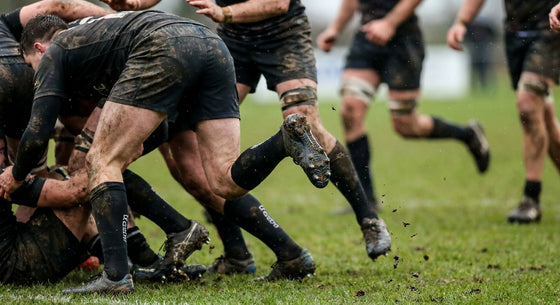
Sports with frequent cuts, pivots, and explosive transitions tend to expose any instability quickly. If you have ever felt your foot shift in a cleat or court shoe during a hard plant, you have experienced the problem grip socks aim to reduce.
- Field sports: soccer, rugby, lacrosse
- Court sports: basketball, volleyball, tennis
- Speed and agility work: cones, ladders, reactive drills
why use grip socks?
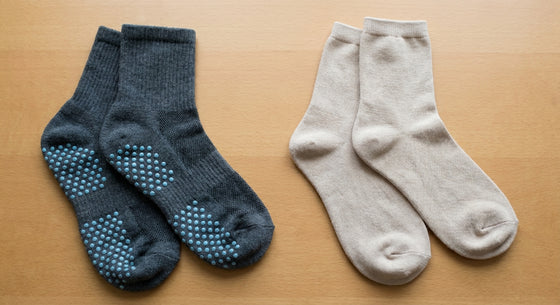
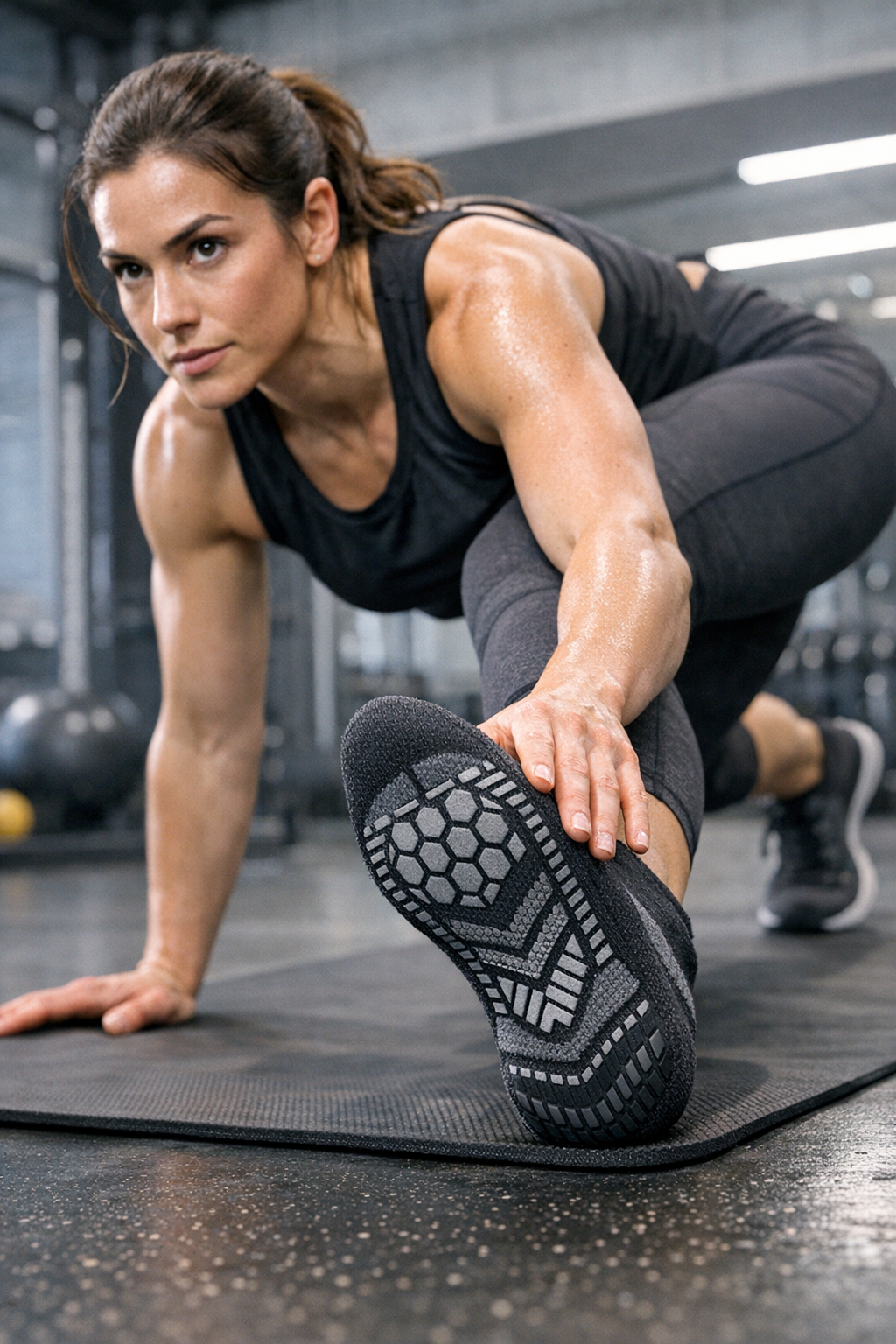
Grip socks are designed to increase friction between your sock and the shoe’s insole (or between your sock and the floor in studios). The practical outcome is a more “locked-in” feel, which can improve confidence in foot placement during fast changes of direction.
For many athletes, the biggest benefit is consistency: the foot stays more stable across repeated reps, which can support cleaner mechanics. That does not mean grip socks create speed by themselves, but they can reduce unwanted movement that interferes with efficient force transfer.
Key takeaway: Grip socks are less about “extra stickiness” and more about reducing internal shoe slippage that can disrupt footwork under fatigue.
Performance benefits athletes commonly report
While outcomes vary by athlete, sport, and footwear, there are a few recurring reasons grip socks stay in rotations once athletes try them. These are especially noticeable in sessions that involve sharp stops and starts.
- Sharper traction during cuts and pivots due to reduced foot movement inside the shoe
- More stable footwork during deceleration and re-acceleration
- More secure feel that can improve confidence when playing fast
Beyond game day: training, gym work, and studio sessions
Grip socks are not limited to match play. Many athletes train across multiple environments in one week, and traction needs change when you move from turf to weight room to studio floors.
The common thread is stability: better contact can make movement feel more controlled, especially when training at speed or under load.
Gym and strength training applications
In the gym, grip can matter during heavy compound lifts, sled pushes, and lateral agility work. If your shoe fit is slightly roomy or your feet sweat heavily, internal slippage can show up during bracing and drive phases.
- Lower body lifting: squats, split squats, deadlift variations
- Conditioning: sled pushes, change-of-direction intervals
- Agility drills: lateral bounds, quick feet patterns
Pilates, yoga, barre, and indoor conditioning
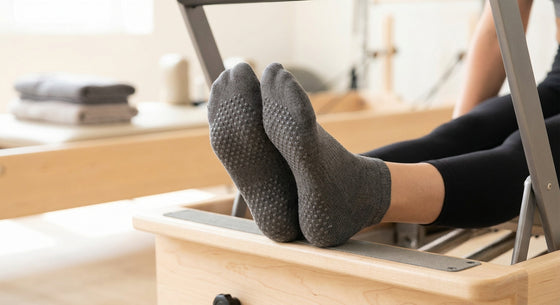
In studio settings, some athletes prefer grip socks instead of training barefoot for hygiene, comfort, or temperature reasons. On mats and smooth floors, grip patterns can reduce sliding, particularly when transitioning quickly or holding positions under fatigue.
If you train in shared spaces, grip socks can also be a practical way to maintain a barrier while still getting a stable feel on the surface.
Comfort, heat management, and durability: what changed in 2024
As training loads rise and recovery margins shrink, athletes are demanding more from every piece of equipment, including socks. Modern grip socks often incorporate performance knitting features that go beyond traction alone.
Look for construction elements that support comfort across long sessions rather than only short workouts. Comfort is not a luxury feature when it affects focus, foot feel, and blister risk.
Features that usually matter most
- Targeted cushioning in high-load areas like the heel and forefoot
- Arch compression for a secure midfoot wrap and reduced bunching
- Breathable zones to help manage heat and sweat
- Moisture control yarns to reduce friction and hotspots
Moisture management is particularly important in tournament settings, double-headers, and high-humidity environments. Less sweat buildup can mean less rubbing, fewer hot spots, and a more consistent fit from warm-up to final whistle.
Teams and uniform consistency: reducing “gear variables”
Teams are increasingly treating grip socks as part of a standardized performance kit. When athletes on the same squad have similar traction and fit, it can remove a small but real variable from training and competition.
This is not about creating identical players. It is about minimizing avoidable equipment differences so coaches can focus on movement quality, tactics, and workload management.
Customization without losing function
Customization has also made grip socks more appealing as a uniform piece. Team colors, numbers, and simple identity elements can be added while still prioritizing traction, comfort, and breathability.
Some teams explore custom options through providers such as Nextwave Socks, especially when they want a consistent look across athletes while maintaining high-performance materials. The key is ensuring style choices do not compromise fit, compression, or ventilation.
Injury prevention and stability: what grip socks can and cannot do
Grip socks are not a replacement for strength training, progressive loading, good footwear, or sound movement mechanics. However, many athletes appreciate the added stability from reduced sliding, particularly during dynamic actions like cutting, landing, and re-accelerating.
Think of grip socks as a supportive layer in a broader performance system. When fatigue increases late in sessions, small stability aids can help maintain consistency in foot placement, which may reduce the chance of awkward slips or missteps.
Smart expectations for real athletes
- Do expect improved internal traction and a more secure feel during fast footwork.
- Do not expect grip socks to “fix” poor shoe fit, weak ankles, or inadequate conditioning.
- Do prioritize proper sizing, gradual break-in, and sport-specific footwear selection.
If you are dealing with recurring pain, repeated ankle sprains, or persistent blisters, consider consulting a qualified sports medicine professional. For general foot care education, the American College of Sports Medicine resources can be a useful starting point.
How to choose grip socks for your sport and training week
The best grip sock is the one that matches your actual use cases: game day, lifting, indoor sessions, or all of the above. Start with fit and comfort, then consider traction pattern and durability based on your environment.
- For field sports: prioritize secure compression, blister resistance, and grip coverage that holds during cuts.
- For court sports: look for strong forefoot and heel grip zones and breathable panels for hot gyms.
- For gym and HIIT: focus on durability, cushioning, and sweat management.
- For studios: consider grip designed for smooth floors and a fit that stays put during transitions.
Also pay attention to how your shoes fit with grip socks. If the sock increases volume significantly, you may need to adjust lacing technique or choose a thinner model for competition.
Conclusion: the “connected to the ground” advantage
Grip socks are trending in 2024 for a practical reason: athletes notice the difference when traction improves where it matters most. By reducing internal shoe slippage and improving surface grip in studios, they can support steadier footwork, cleaner mechanics, and a more confident feel during demanding sessions.
If you have been wondering whether this is a meaningful upgrade, test them in training first. Pay attention to cutting drills, heavy lifts, and late-session fatigue to see whether your foot feels more stable and consistent rep to rep.
If this article helped, share it with a teammate or leave a comment with your sport and training setup. You can also explore options and learn more at why use grip socks?.
Grip that’s scientifically proven.
Join 23,197+ athletes. Free worldwide shipping, up to 44% off the latest drop.
Shop grip socks →