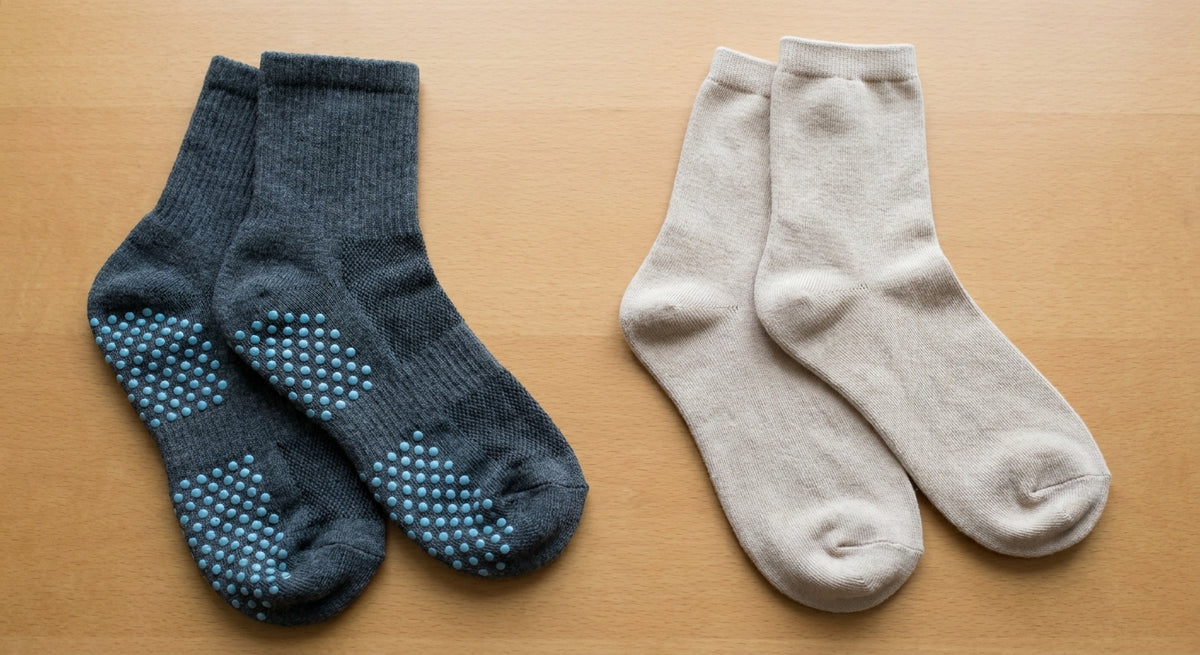
Grip Socks in 2024: Do They Actually Improve Athletic Performance?
Grip socks have gone from a niche training accessory to common kit across soccer, basketball, football, volleyball, rugby, and court-based sports. For teams chasing marginal gains and athletes who live on sharp cuts, hard deceleration, and quick re-acceleration, the question is no longer “What are grip socks?” but “Do they genuinely change performance?”
This article breaks down what grip socks are designed to do, where the evidence and athlete feedback are strongest, and how to decide if they fit your sport, your footwear, and your environment. The goal is education, not hype: a practical look at traction, stability, comfort, and injury risk so you can make a smart choice in 2024.
are grip socks worth it?
For many athletes, yes, grip socks are worth it when they are used in the right environment and paired with the right footwear. The biggest upside is improved internal traction, meaning your foot stays more secure inside the shoe during high-shear movements like cutting and decelerating.
The biggest caveat is that grip socks are not a standalone solution. If the shoe fit is wrong, the insole is slick, or sock thickness changes your sizing, more grip can create pressure points rather than performance gains.
How Grip Socks Work: Internal Traction, Not Just “More Grip”
Most athletes think about traction as shoe-to-surface grip. Grip socks target something different: friction between your sock and the insole, reducing unwanted movement inside the shoe when forces spike during play.
When your foot slides inside the boot or trainer, you lose energy and timing. You may also subconsciously change mechanics to “stabilize” yourself, which can alter how you cut, land, and push off. In simple terms, grip socks aim to help your foot feel set, especially during directional changes.
What athletes typically notice first
- More locked-in feel during lateral cuts and pivots
- Cleaner first steps after deceleration or contact
- Less sliding when feet get sweaty or conditions are humid
- Fewer hot spots that commonly lead to blisters
Performance Benefits: Where Grip Socks Make the Biggest Difference
The strongest case for grip socks is in sports with frequent stop-start actions and high shear forces. Think repeated accelerations, quick transitions, and sharp cuts where small amounts of in-shoe movement can add up over a match or training block.
In those moments, micro-slips inside the shoe can cost efficiency. Even if you do not consciously feel it, tiny delays in force transfer can reduce control when you need precision most, like planting to change direction or stabilizing under contact.
High-impact use cases by sport context
- Soccer and rugby: hard cuts, wet pitches, long match duration, repeated sprints
- Basketball and volleyball: explosive lateral movement, frequent jumping and landing, fast transitions
- American football: quick bursts, aggressive deceleration, position-specific cutting demands
- Court and indoor athletics: high friction surfaces that amplify internal slipping if the sock-insole interface is slick
Comfort and Blister Reduction: The Underappreciated Advantage
Blisters are not just a comfort issue. They can change how you run, cut, and load the foot, especially late in games or during multi-match tournament weekends.
Grip socks may help by reducing repetitive rubbing that causes hot spots. If your foot slides less, the skin experiences less shear, which is a major contributor to blister formation. This is especially relevant for athletes who sweat heavily or train in humid environments where traditional socks tend to “glide” on the insole.
Key takeaway: If you are deciding based on performance alone, focus on internal stability. If you are deciding based on consistency, focus on comfort, hot spots, and how your feet feel late in sessions.
Injury Risk: Helpful for Some Factors, Not a Magic Shield
Grip socks are not injury-proofing equipment, and it is important to be realistic. Injury outcomes depend on strength, fatigue, footwear condition, surface, and training load management. However, grip socks may reduce certain risk factors that come from excessive in-shoe movement.
When athletes do not feel stable, they often compensate subtly by adjusting foot placement, bracing differently, or changing how they decelerate. Over time, especially in high-volume training blocks, these small compensations can add stress to tissues that are already close to their limit.
When the “system” matters most
- High fatigue: late in matches, during double-headers, tournament weekends
- Worn footwear: compressed midsoles, slick insoles, stretched uppers
- Wet and humid settings: sweat increases internal slip risk
- Explosive cutting roles: wingers, guards, receivers, defensive specialists
The Caveats: Fit, Thickness, and Too Much Grip
Grip socks work best when shoe fit is already close to ideal. If a shoe is too large, adding grip does not “fix” the extra volume, it can concentrate pressure on the forefoot or heel because the foot is trying to anchor in a poor-fitting shell.
Sock thickness also matters. A thicker sock can change how the shoe fits, reduce responsiveness, or alter lockdown in a way that affects touch and feel in cleats. Athletes should treat grip socks as a performance component, not just a comfort accessory.
Practical checklist before switching
- Confirm fit first: heel lockdown should be stable before adding grip socks.
- Match sock thickness to footwear: cleats often perform best with minimal bulk.
- Check insole material: very slick insoles may amplify the benefit of grip elements.
- Watch pressure points: especially at the forefoot and Achilles area in tight shoes.
- Test in real conditions: do not evaluate them only in low-intensity sessions.
Durability and Wash Performance: What Teams Should Look For
Not all grip patterns or rubberized elements behave the same after repeated washes. Some lose tackiness, while others stiffen or irritate the skin. For teams, durability is not just a budget item, it is a consistency item: athletes perform better when their kit feels predictable.
If you are a coach or equipment manager considering standardizing grip socks, pilot them first. Test across positions, different shoe models, and different foot types. Even within the same sport, a goalkeeper’s needs may differ from a winger’s, and a post player’s needs may differ from a guard’s.
How to Evaluate Grip Socks Like a Sports Science Experiment
You do not need a lab to validate whether grip socks help your athletes. You need simple tracking that reflects performance and availability. The goal is to separate novelty from actual benefit.
Simple metrics to track for 2 to 4 weeks
- Comfort rating after training and after matches
- Blister and hot spot frequency (location and severity)
- Perceived stability during cuts (especially late in sessions)
- Consistency of movement when fatigued (self-report or coach observation)
- Footwear adjustments (re-tying frequency, re-seating heel, changing insoles)
If you want a deeper dive into the mechanics of friction, traction, and how surface conditions affect performance, a solid starting point is the National Library of Medicine database for sports footwear and injury-risk research summaries.
Conclusion: The 2024 Answer Is About Marginal Gains and Smart Pairing
Grip socks are not hype when they are used in the right system. In sports defined by cutting, deceleration, and rapid directional change, improving internal traction can translate to a more stable feel, fewer friction-related issues like blisters, and better late-game consistency.
For individual athletes, the best approach is to test them with your primary footwear in game-like intensity and track what changes. For teams, standardization can help comfort and consistency, but only after a small pilot confirms fit, durability, and athlete buy-in. If you are exploring custom kit, companies like Nextwave Socks exist, but your decision should still be driven by sport demands, surface conditions, and measurable feedback.
If you have tested them in training or matches, share what you noticed and what sport you play. For teams and athletes interested in dialing in their setup, explore options here: are grip socks worth it?