Are Grip Socks Banned in Football? Regulations & Rules
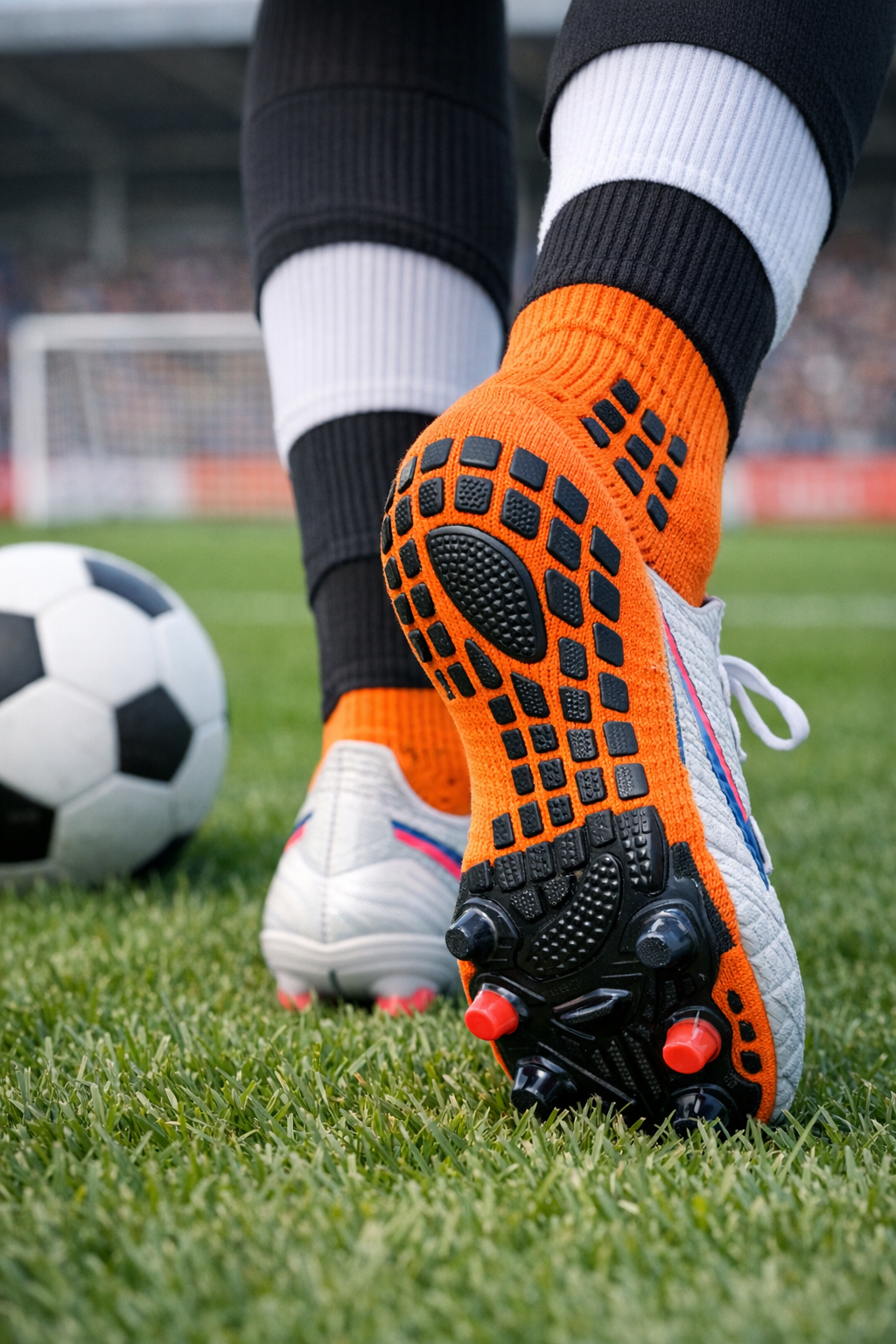
Grip Socks in Soccer: What’s Allowed, What Gets Flagged, and How to Stay Match-Ready
Grip socks have become a common piece of performance gear for athletes looking for better traction, fewer in-boot slip events, and a more stable feel during cutting and acceleration. But as adoption has grown, so has confusion around whether they are permitted in organized play. The short answer is that grip socks are rarely banned outright, yet the way they are worn can create problems with uniform rules and referee checks.
This article breaks down what most competitions care about when it comes to socks and equipment, where players typically get into trouble, and how to build a grip sock setup that supports performance while staying compliant. Whether you are a player, coach, or equipment manager, you will leave with a practical checklist for match day.
Why uniform and equipment rules matter more than “grip”
Most leagues focus their equipment rules on three themes: safety, consistency of uniform, and clear player identification. Socks are not just an accessory, they are usually a required part of the kit that helps cover shin guards and maintain a consistent appearance across a team. Referees are tasked with enforcing these standards quickly, often during a short pre-match inspection.
Grip technology itself is generally treated like other performance features in sports equipment, similar in spirit to textured insoles or supportive upper materials in boots. The issue is rarely “you have grip.” The issue is more often “your socks look altered, mismatched, or do not cover your shin guards.”
Are grip socks banned in soccer?
In most leagues, grip socks are not universally banned, but legality depends on how they fit within your competition’s rules. Many rule sets do not mention grip socks specifically, which means the decision often falls under broader uniform and equipment requirements. If your setup looks non-compliant or appears to be an illegal modification of required kit, a referee may ask you to change before you can play.
The best approach is to treat grip socks as a performance layer that must still respect the visible uniform standard. If the external appearance aligns with team sock requirements and shin guards are properly covered, athletes typically avoid problems.
Common ways players get flagged (and how to avoid it)
1) Cutting team socks to expose grip sleeves
A frequent trend is cutting the foot off a standard team sock and wearing a separate grip sock underneath, leaving a “sleeve” look on the calf. Some competitions tolerate this if the outer sock still meets color and coverage requirements, but others consider it an illegal alteration of the required uniform. Even if it is not explicitly banned, it can invite questions during inspection.
If your league is strict, use a setup that keeps your kit looking standard from the outside. If you are unsure, ask your coach or team administrator how officials in your competition typically interpret sock alterations.
2) Mismatched colors and visible non-team gear
Many leagues require socks to match team colors, and some also regulate logos or branding. A bright grip sock peeking through, contrasting cuffs, or visible compression layers can draw attention even if your gear is otherwise safe. At minimum, an official may ask you to swap to compliant socks, which is not a situation you want five minutes before kickoff.
For teams that want performance benefits without standing out, a simple rule helps: keep the visible portion of your sock aligned with team requirements. Some teams coordinate compliant options through their uniform supplier while athletes add performance elements underneath.
3) Tape and fixation rules around the calf
Players often tape socks to keep shin guards stable and reduce fabric movement. Some competitions regulate tape color, requiring it to match the sock, and may also care about excessive taping that creates bulky ridges. While tape is common, it still falls under uniform appearance and safety considerations.
- Match the tape color to your socks when required.
- Avoid over-wrapping to the point that circulation or movement could be affected.
- Keep the finish neat so it does not look like an improvised alteration.
4) Shin guard coverage is non-negotiable
Most competitions require shin guards to be fully covered by socks. If a grip sock system creates gaps, exposes the shin guard, or causes the outer sock to ride down, it can become a compliance issue regardless of the grip feature. Referees may check this directly, and in some settings it is part of a formal equipment inspection.
A performance-minded setup should still prioritize consistent coverage across sprints, tackles, and changes of direction. If your socks slip during play, it is not just a comfort issue, it may become a rules issue.
Is traction an unfair advantage, or just modern gear?
In most cases, officials do not treat grip socks as an unfair advantage on their own. Soccer already allows many performance-oriented design elements in boots, shin guards, and apparel fabrics, as long as they are safe and meet uniform standards. Grip socks generally fit into this category as a comfort and stability aid rather than a prohibited enhancement.
Key takeaway: Players are rarely penalized for using grip socks because of traction. They are more likely to be flagged for uniform compliance, visible alterations, and shin guard coverage.
Match-day compliance checklist for athletes and teams
If you want the benefits of grip socks without a pre-match scramble, build your routine around a few simple checks. This is especially important for tournaments, school associations, and competitions that enforce uniform rules more strictly than casual adult leagues.
- Read the competition rules in your league handbook or tournament packet. Start with the “players’ equipment” and “uniform” sections.
- Confirm team policy with your coach or equipment manager, especially on sock color, logos, and whether alterations are allowed.
- Keep the outside visually compliant so the visible sock matches team requirements and fully covers shin guards.
- Bring a backup set of standard socks and correctly colored tape so you can adjust immediately if asked.
- Test your setup in training at game intensity to ensure the sock stays up and the shin guard stays covered.
Performance perspective: why athletes use grip socks
From a sports science viewpoint, the idea is straightforward: reducing foot movement inside the boot may improve perceived stability, especially during high-force cuts and decelerations. Less in-boot slip can also reduce friction hot spots, which may help some athletes with blister management over long training blocks. The key is that any performance benefit is only useful if it does not compromise comfort, circulation, or compliance.
Teams looking to standardize equipment sometimes explore compliant grip sock options that align with uniform requirements while supporting athlete preference. Some suppliers, including Nextwave Socks, are part of that broader shift toward performance-focused team gear, but the deciding factor should always be what your competition allows and what your staff can enforce consistently.
Conclusion: play fast, stay compliant, avoid distractions
Grip socks generally are not banned in soccer, but your exact setup matters. The biggest risks are not the grip elements themselves, but visible sock-cutting, mismatched colors, excessive or non-matching tape, and shin guards that are not fully covered. A clean, compliant appearance paired with a tested match-day routine helps you keep the focus where it belongs: on performance.
If your team has run into sock or tape issues before, share what your league requires and what worked for you. For athletes who want to learn more about building a consistent, compliant kit setup, explore are grip socks banned in soccer.
Grip that’s scientifically proven.
Join 23,197+ athletes. Free worldwide shipping, up to 44% off the latest drop.
Shop grip socks →