Grip Socks: Boost Performance and Prevent Injuries 2024
Grip Socks in 2024: Small Upgrade, Real Performance Science
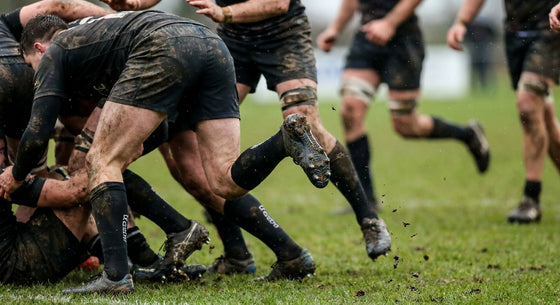
Grip socks have gone from a niche accessory to a common part of high-performance kit in many sports. The reason is practical: they reduce unwanted foot movement inside the shoe, which can quietly undermine speed, control, and comfort. When your foot slides even a few millimeters during cuts, sprints, landings, or deceleration, you lose energy and place extra stress on tissues that were not meant to stabilize that motion.
This article explains what grip socks do, why they can matter for teams and individual athletes, and how to choose a pair that actually supports performance. The goal is not hype, but a clear look at biomechanics, traction, moisture management, and injury risk factors. If you have ever felt your foot “float” inside a boot or trainer, this is for you.
Why do feet slip inside shoes in the first place?
Even well-fitting footwear can allow internal movement. Shoes are built to accommodate a range of foot shapes, sock thickness, and motion patterns, and that leaves room for micro-slips. Sweat, heat, and repeated impact make the foot more likely to shift, especially during high-speed direction changes.
That movement is not always obvious. Many athletes only notice it as a vague loss of control during cuts, a blister that shows up mid-session, or an “unstable” feeling when braking. Over time, small inconsistencies can affect technique and increase fatigue.
why wear grip socks?
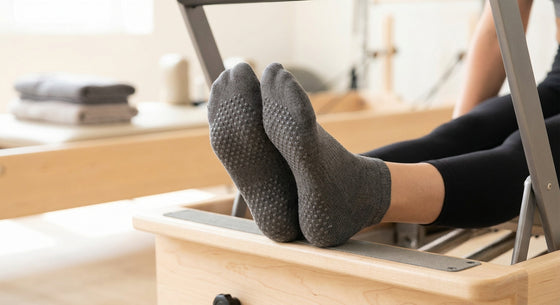
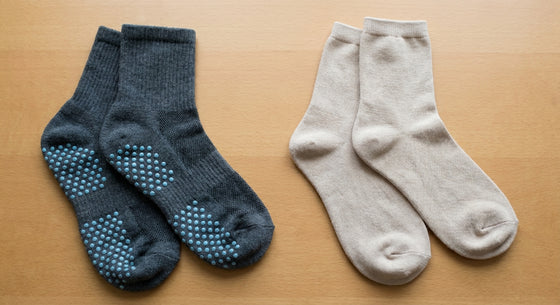
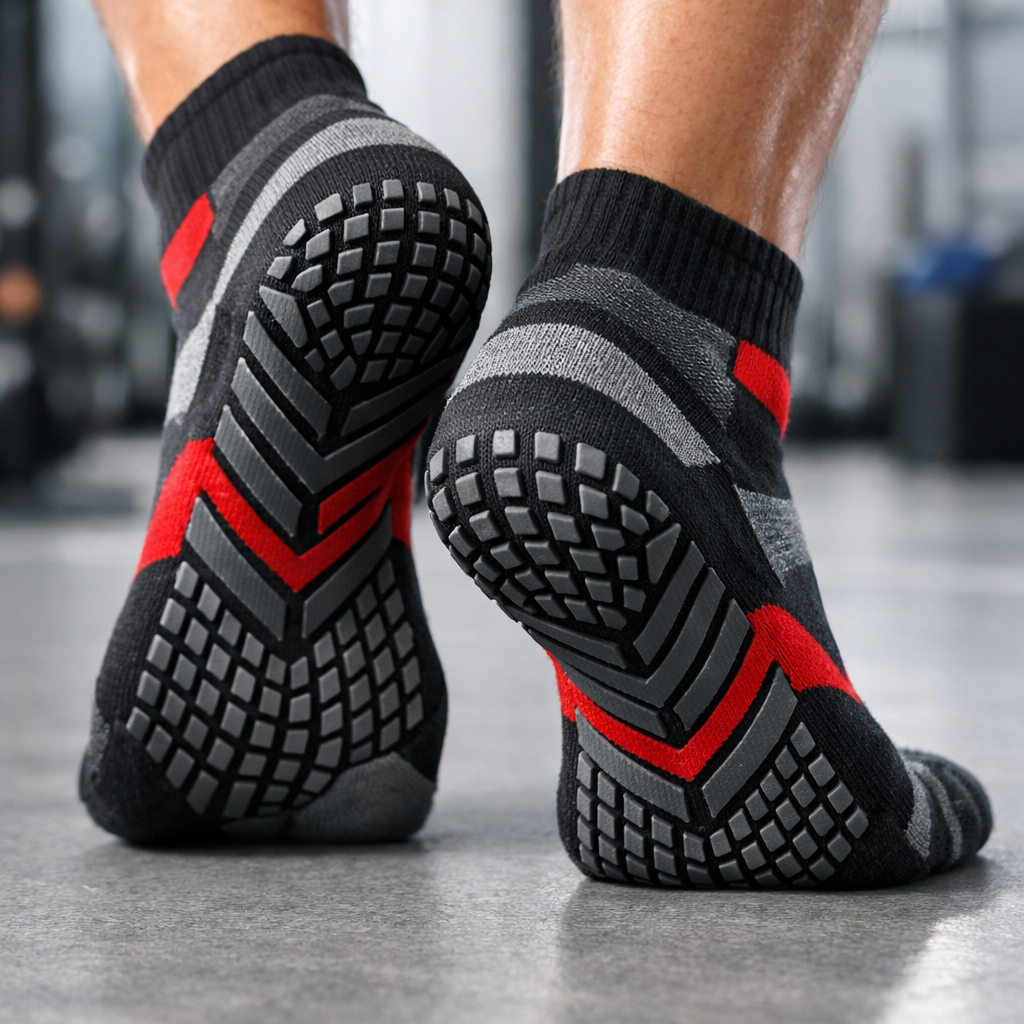
Grip socks target one core problem: internal slippage. They use silicone or rubberized grip patterns on the sole to increase friction between the sock and the insole. With better traction inside the shoe, the foot is more likely to stay “coupled” to the shoe during explosive movements.
For many athletes, that improved coupling feels like cleaner cuts, more confident acceleration, and better stability when decelerating. The benefit is often most noticeable in sports that involve repeated sprinting, jumping, and rapid change of direction.
The biomechanics of traction and force transfer
Performance starts at the ground. When you apply force into the floor, you want that effort to translate into movement, not be wasted through internal sliding. Grip socks can improve the efficiency of force transfer by reducing that “loss” between foot, sock, and insole.
Think of it like traction in a tire: if the contact is inconsistent, you lose control and energy. With a more stable foot position, athletes often report sharper starts and more predictable foot placement when planting. While grip socks are not a substitute for training, they can remove a small but persistent equipment-related limitation.
Stability, proprioception, and movement quality under fatigue
Proprioception is your body’s awareness of position and movement, especially through the foot and ankle. When the foot stays in a consistent place inside the shoe, the nervous system receives more reliable sensory information. That can support cleaner mechanics during fast, complex actions like cutting or landing.
When traction is unpredictable, the body often compensates with extra muscular tension to stabilize the joint. Over a session, that can contribute to earlier fatigue and less efficient movement. By reducing micro-slips, grip socks may help athletes maintain control later in matches or training blocks.
Injury risk management: what grip socks can and cannot do
Grip socks are not a magic tool, and they do not replace strength work, conditioning, or appropriate footwear. What they can do is reduce avoidable friction and motion inside the shoe. For many teams, that makes them one practical layer in a broader injury reduction strategy.
The most immediate prevention benefit is skin protection. Internal slippage creates hotspots that can become blisters, and blisters can change gait, reduce training quality, and limit availability. Reducing friction helps keep athletes on the field and in consistent training.
There is also a joint-stability angle. When the foot shifts inside the shoe during a high-speed change of direction, the ankle may experience extra inversion or eversion stress because the shoe is not moving as predictably with the foot. Better in-shoe stability can reduce the need for “emergency” stabilization, especially in sports with repeated cutting and contact.
Fit matters as much as the grip pattern
A common mistake is focusing only on the grip dots or lines. Grip elements work best when they are firmly pressed against the insole, and that depends on fit. If the sock is loose, bunches up, or slides around the arch, the grip cannot do its job consistently.
Look for designs with targeted compression around the arch and ankle to keep the sock seated. Anatomical left and right construction can improve alignment across the heel cup and forefoot. Reinforced heels and toes also matter for durability, especially for athletes training multiple times per week.
Quick checklist: what to look for in performance grip socks
- Secure fit with a stable arch and ankle zone to reduce bunching
- Grip coverage that matches your sport’s demands, especially under the forefoot and heel
- Durability through reinforced high-wear areas
- Cuff hold that stays up without feeling restrictive
- Comfort that supports long sessions without pressure points
Moisture management: sweat changes everything
Sweat increases slip potential and softens skin, which raises blister risk. Moisture also changes how materials interact, making traction feel less consistent over time. That is why modern performance socks focus heavily on moisture-wicking yarns and ventilation zones.
In 2024, many teams also prioritize odor resistance for hygiene during heavy training loads and travel. Antimicrobial treatments or odor-resistant fibers can help reduce bacterial buildup, especially when athletes have limited time to dry kit between sessions. For more background on blister prevention fundamentals, see this overview of friction blisters and skin mechanics.
Team perspective: consistency, standardization, and fewer preventable issues
For sports teams, one advantage is consistency across a squad. When players wear similar grip socks, the “feel” inside the boot becomes more uniform, and support staff can standardize kit decisions around known performance variables. That can reduce common, preventable problems like hotspots, sock bunching, and mid-session discomfort.
Customization is often part of team planning, too. Colors, logos, and player identifiers can be added without changing the function, as long as the construction remains performance-focused. Some clubs work with suppliers such as Nextwave Socks for custom options, but the key is to prioritize fit, materials, and moisture control over aesthetics.
How to integrate grip socks into your training and match setup
Grip socks are simple to use, but it helps to be deliberate. Pair them with footwear that fits properly, and test them in training before relying on them in competition. Pay attention to how they feel during deceleration, cutting, and repeated sprints.
- Trial in training first during a session that includes cutting and high-speed work.
- Check fit after warm-up since heat and sweat can change how the sock sits.
- Monitor hotspots on heel, forefoot, and lateral toes to confirm friction is reduced.
- Keep the inside of shoes clean because debris can reduce traction and irritate skin.
- Rotate pairs so grip and fabric can recover between sessions.
Key takeaway: Grip socks work best when they reduce internal slippage, maintain a consistent foot position, and manage moisture so traction stays reliable under fatigue.
Conclusion: a practical detail that supports performance
Grip socks have earned their place in modern sport because they address a real biomechanical problem: unnecessary motion inside the shoe. By improving in-shoe traction, they can support more efficient force transfer, more consistent proprioceptive feedback, and fewer friction-related foot issues. For athletes who rely on acceleration, agility, and stable deceleration, those small gains can add up over a season.
If you are an individual athlete, consider testing grip socks during high-intensity sessions and tracking comfort, control, and blister frequency. If you are part of a team, standardizing sock choices can help reduce preventable foot problems and improve consistency across the squad. Share your experiences or questions with your coaches and support staff, and if you want to explore options for team kit, visit why wear grip socks?.
Grip that’s scientifically proven.
Join 23,197+ athletes. Free worldwide shipping, up to 44% off the latest drop.
Shop grip socks →