
Club Pilates Grip Socks: Cost and Why You Need Them
Grip Socks for Pilates: A Small Upgrade That Can Improve Athletic Performance
Pilates has become a staple in many training programs because it builds core strength, control, and mobility without adding high impact stress. For athletes and teams, those benefits only translate when movement quality stays high, especially during transitions and balance work on smooth studio equipment. That is where grip socks come in: they are a studio-specific tool designed to improve traction, stability, and consistency.
This article breaks down why grip socks cost more than standard athletic socks, why many studios require them, and how to choose a pair that supports performance and durability. If you are a coach standardizing gear for a roster or an athlete fine-tuning your training setup, you will leave with a practical checklist you can use right away.
Why Grip Socks Cost More Than Standard Athletic Socks
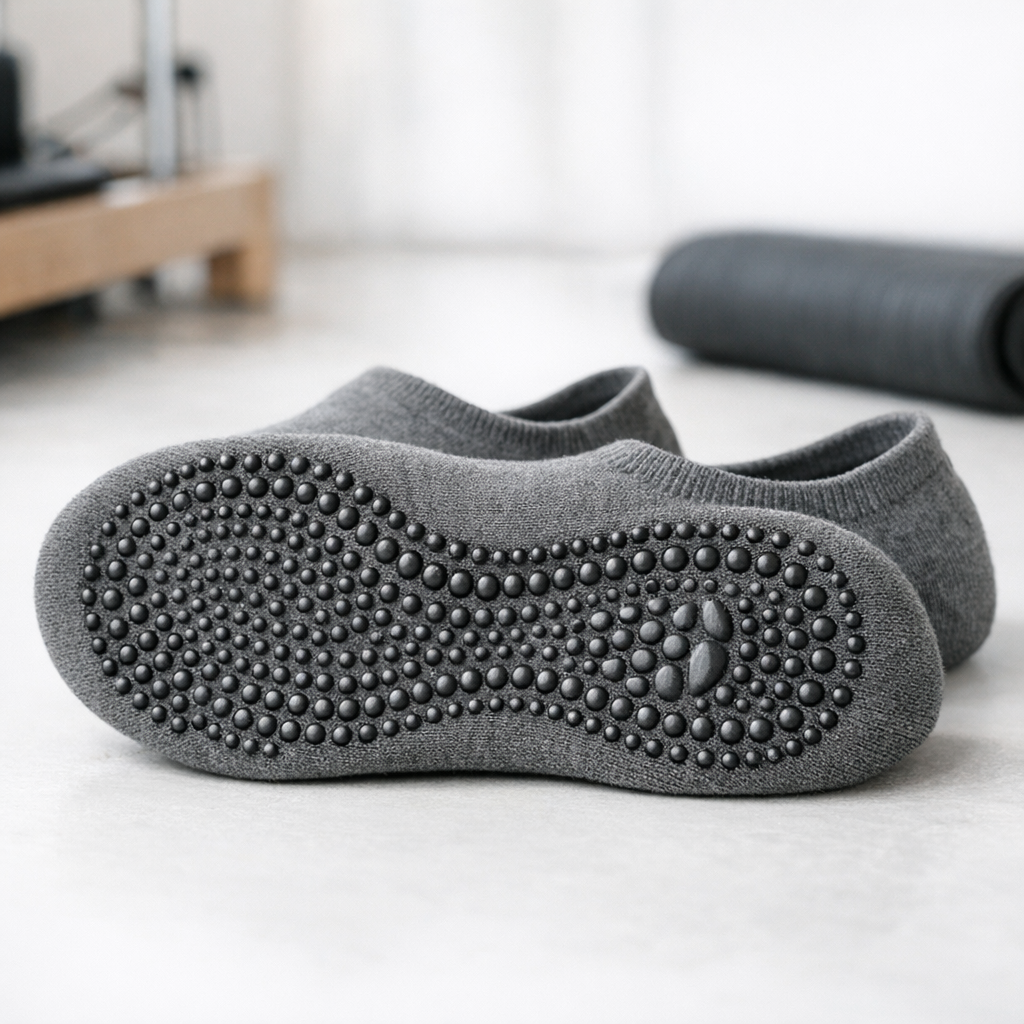
Grip socks are priced more like specialty fitness gear than everyday apparel because their construction is more complex. They incorporate silicone or rubber tread, reinforced knitting in high-wear zones, and performance yarns meant to manage sweat and friction. That build quality typically costs more to produce than a basic cotton crew sock.
Studios often sell grip socks at the front desk for convenience, and pricing can vary by location and inventory. You are paying for access and immediacy as much as the product itself. Many athletes still buy studio socks when needed, then source their preferred performance pairs elsewhere for consistent fit and durability.
If you are comparing options, evaluate cost over time rather than price per pair. A sock with tread that wears down quickly can become a recurring expense, while a more durable knit and high-quality grip can last through more sessions before traction drops off.
how much are grip socks at club pilates?
This is one of the most common questions new members ask, especially athletes who are used to training with minimal footwear. In most cases, studios price grip socks in the range typical for specialty fitness accessories rather than basic athletic socks. Exact cost can differ by studio, region, and current stock.
If you want the most accurate number for your area, check your local studio directly or ask at the front desk before class. As a general planning note for teams, build a small buffer into your budget for replacement pairs, since grip and fit matter more than having the cheapest option available.
Why Grip Socks Are Considered Essential for Pilates Safety and Technique
Pilates requires controlled force production, not just strength. On reformers and mats, where surfaces can be smooth, slipping changes joint angles, timing, and load. Grip socks help provide a stable base so you can apply force through the foot without losing position.
That traction matters during footwork, planks, and standing series, where small slips can disrupt alignment and reduce training quality. When the foot stays planted, it is easier to maintain neutral positioning, recruit the intended muscle groups, and move with precision.
Key takeaway: Better traction often leads to better alignment, and better alignment supports better output and lower injury risk over time.
For athletes using Pilates as cross-training, the payoff is efficiency. Sessions become more consistent because you spend less time correcting instability caused by a sliding foot and more time training mechanics that carry over to sport.
Performance Benefits for Athletes and Teams
Grip socks are not just about avoiding slips. They can help athletes keep cleaner positions under fatigue, which is when compensations typically show up. That makes them a useful tool during long training weeks, double days, or return-to-play progressions where movement quality is the priority.
A more consistent “no-slip” foundation
When traction is predictable, the nervous system can focus on coordination instead of constantly managing small balance errors. This can be especially helpful during rehab-oriented Pilates sessions that emphasize controlled range of motion and symmetry. Over time, consistency supports better skill acquisition and fewer setbacks.
Cleaner transitions and better control
In Pilates, transitions are part of the workout. Grip socks can reduce the micro-slips that happen when changing positions quickly, helping you stay organized through the trunk and hips. That control is a major reason Pilates transfers well to sprint mechanics, cutting, and landing demands.
What to Look for in High-Performance Grip Socks
Not all grip socks perform the same, and athletes tend to notice the differences quickly. A good pair should combine traction, fit, and moisture management so the foot stays stable on the surface and inside the sock. Use the checklist below to evaluate options without getting distracted by marketing claims.
- Grip placement that matches load points: Look for tread under the forefoot and heel, plus coverage along lateral edges where athletes often load during balance and transitions.
- Durable grip compound: Traction should resist smoothing and peeling over time, especially if you train multiple times per week.
- Secure fit that does not shift: A sock that rotates or bunches can create hotspots and reduce traction right when you need it most.
- Breathable, sweat-managing yarns: Moisture inside the sock can cause internal slipping even if the outer tread is grippy.
- Targeted compression and arch support: Light structure through the midfoot can improve lock-in and reduce fatigue during longer sessions.
- Comfortable cuff and seam design: Poor seam placement can irritate the toes during footwork and plank variations.
Fit is the most overlooked variable for athletes training at high intensity. If the sock is slightly oversized, the tread may not contact the surface evenly, and the material may fold under the arch. If it is too tight, circulation and comfort can become limiting during longer holds and slower tempo work.
How to Standardize Grip Socks for a Team
For sports teams, grip socks are an easy item to standardize because they are low cost compared with most training equipment and they can reduce avoidable disruptions in sessions. The goal is not to make everyone wear identical apparel, but to ensure everyone has safe, functional traction during Pilates, mobility work, and rehab blocks.
Team ordering priorities
- Consistent sizing: Choose a size run that maps cleanly to your roster so athletes are not forced into poor fit.
- Durability under frequent use: Look for reinforced knitting and grip that holds up across repeated washes.
- Color consistency and customization options: If you want a standardized look, confirm that future reorders will match. Some suppliers also support logos and team colors for easier distribution.
If your program values customization, it can be worth exploring suppliers that focus on performance sock construction and team logistics. For example, Nextwave Socks is one option athletes sometimes consider when they want grip plus consistent sizing for repeat orders, but the selection process should still prioritize fit, traction placement, and durability over any single label.
Care and Longevity: Keeping Traction Working
Grip socks can lose performance when the tread gets clogged with lint or the compound breaks down from harsh washing. To extend lifespan, wash them inside out on a gentle cycle and avoid high heat when possible. Letting them air dry can help preserve elasticity and grip integrity.
Also, rotate pairs if you train frequently. Alternating gives the knit time to recover its shape and can slow down wear in high-pressure zones like the forefoot. When you notice smoothing or peeling that affects traction, it is a signal to replace them before a slip becomes a preventable setback.
Keep reading: our guide to best grip socks for Pilates, or see Pilates grip socks.
Conclusion: Traction Supports Technique, and Technique Supports Performance
Grip socks are a small piece of equipment, but they solve a real performance problem in Pilates: unreliable traction on smooth surfaces. By improving stability and reducing slips, they help athletes maintain alignment, execute controlled movement, and get more out of every session. For teams, they are also an easy way to standardize safety and consistency across the roster.
If you have a favorite grip pattern, fit feature, or team standard that has worked well in training, share it in the comments and pass this post to a teammate who is new to Pilates. If you are exploring team options, you can also review customization considerations here: how much are grip socks at club pilates?
Grip that’s scientifically proven.
Join 23,197+ athletes. Free worldwide shipping, up to 44% off the latest drop.


