Where to Cut Grip Socks for Better Performance Guide
How to Cut Socks for DIY Grip Socks Without Ruining Fit or Performance
Turning standard team socks into a DIY grip-sock setup is one of the simplest, lowest-cost ways athletes try to improve traction and comfort inside tight footwear. Done well, it can reduce bunching, improve foot-to-boot feel, and help prevent hot spots that lead to blisters. Done poorly, it can create slipping, fraying edges, or a sleeve that rolls down mid-session.
This guide breaks down why athletes cut socks, where to cut based on your sport and kit rules, and how to mark and finish cleanly. The goal is a secure, low-bulk interface that supports consistent movement on match day and in training.
Why athletes cut socks in the first place
Most athletes are not cutting socks for style. They are trying to solve a performance problem inside the boot: excess fabric that moves, folds, or squeezes the foot in the wrong places. That extra material can reduce sensitivity, change pressure distribution, and increase friction during acceleration and change of direction.
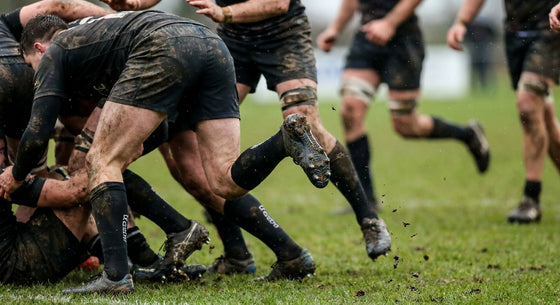
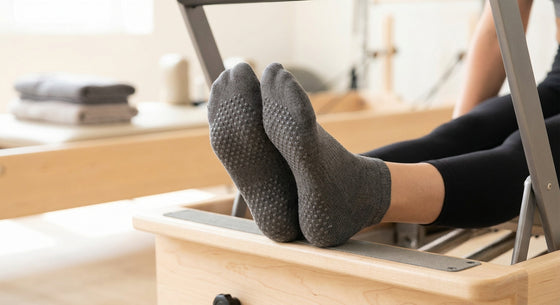
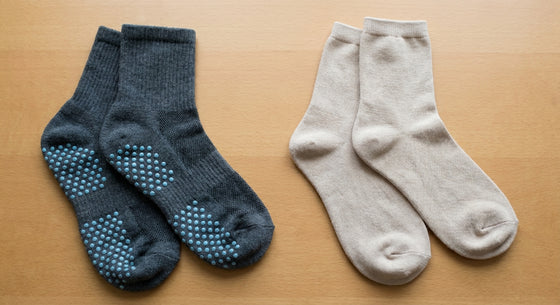
The common performance goals include reducing bunching in the forefoot, improving heel lock, and creating a cleaner connection between the foot and a grip layer. In many team sports, athletes also want to keep the same outer “team sock” look while wearing a separate grip sock underneath. That is where cutting becomes a practical, kit-friendly workaround.
Where to cut socks for grip socks?
The best cut line depends on your setup: Are you wearing a separate grip sock underneath, or trying to modify one sock to do everything? It also depends on your sport, your footwear collar height, and whether you need to match team uniform policies. Use the options below as a menu, then test in training before committing for competition.
Option 1: Mid-calf cut (most common for soccer, football, and rugby)
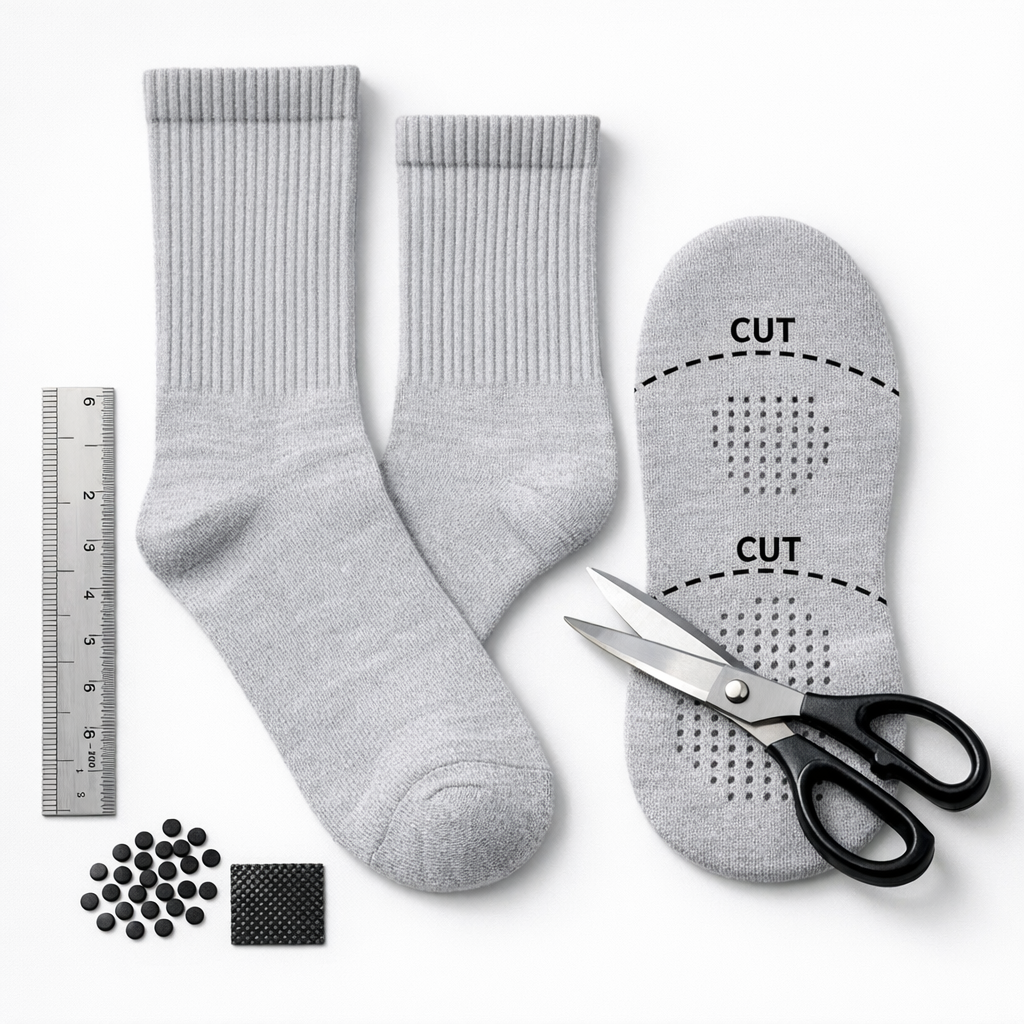
This is the standard approach when you want grip performance but still need the “team sock” visible on the outside. You cut a long sock around mid-calf so the remaining sleeve covers the shin and holds the look, while your foot and ankle come from a separate grip sock underneath. It often reduces bulk at the ankle joint, where fabric overlaps are most likely to rub.
Mid-calf cuts also tend to stay up better than lower cuts because there is more surface area to grip the calf. For teams, it is easier to standardize across a squad because the cut location is relatively forgiving.
Option 2: Above-ankle cut (minimal bulk near the boot collar)
If your cleats are snug around the collar or you are prone to Achilles irritation, cutting just above the ankle bone can remove the “ring” of layered fabric that forms when socks bunch. Less bulk here can improve comfort and reduce pressure points during repeated sprints. It can also help with perceived lock-in because the collar area feels cleaner and less crowded.
The tradeoff is stability: cut too low and the sleeve may slide upward with sweat and contact. This option works best when the remaining sleeve still has enough length and tension to hold on the lower calf.
Option 3: Foot-off conversion (advanced leg sleeve method)
Some athletes remove the entire foot portion and use the sock only as a leg sleeve over a separate grip sock. This maximizes foot-level performance because the grip sock is the only material inside the boot, reducing wrinkles and seam stacking. It can be a strong option when you want consistent traction and feel, but must still match team sock appearance on the shin.
This method requires careful cutting because many socks have reinforced zones around the heel or arch. If you cut through structural knit patterns, the edge can unravel faster or lose shape after washing.
Option 4: Toe or forefoot adjustments (use caution)
Small trims near the toe box can sometimes relieve pressure on toenails or accommodate a wider forefoot. However, this is where mistakes happen most often: small rough edges can become friction points, and aggressive cutting can cause unraveling. If you try it, keep adjustments minimal and prioritize a smooth edge.
How to measure and mark so both socks match
Symmetry matters because uneven tension between left and right legs can change how the sleeve sits during movement. A sleeve that is slightly shorter on one side may roll or pull differently when you plant, cut, or tackle. The easiest way to avoid this is to mark the cut while the sock is on your leg and stretched to game-like tension.
- Put the sock on and stand up to load the fabric as it will be during play.
- Choose your target cut height and mark a line all the way around using a washable marker or tailor’s chalk.
- Remove the sock and lay it flat, then compare left and right socks before cutting.
- Measure from a consistent reference point (top cuff or heel seam) so the second sock matches the first.
A key principle: leave extra length the first time. You can always shorten later after a test session, but you cannot add material back once it is gone.
Tools and cutting technique for a clean, durable edge
You do not need complex equipment, but you do need the right basics. Dull scissors create jagged edges that fray faster and can feel rough against the skin. A clean cut helps the knit hold its shape and makes any finishing work easier.
- Use sharp fabric scissors and cut in one smooth pass whenever possible.
- Stabilize the fabric on a flat surface so it does not twist as you cut.
- Avoid cutting through reinforced zones like thick heel or arch panels unless your plan specifically requires it.
- Finish the edge if needed using a simple folded hem, fabric tape, or a quick stitch for teams doing this at scale.
If your socks fray easily, consider a basic finishing step early rather than waiting until the sleeve starts to unravel. A small amount of prevention can significantly increase durability across repeated wash cycles.
Common mistakes that reduce comfort and traction
Most DIY issues come from cutting too much, too low, or too unevenly. The resulting problems show up quickly: a sleeve sliding down, a tight band that creates a pressure ring, or an edge that rubs during long sessions. Treat the first attempt as a prototype and test it under real movement, not just while standing.
- Cutting too low, which can cause the sleeve to slide and bunch behind the ankle.
- Creating a rough edge, which can become a friction point that feels fine at first and then burns later.
- Ignoring kit rules, especially in team environments with strict sock height or color requirements.
- Over-modifying the toe area, which can lead to unraveling or uncomfortable seams.
Key takeaway: The best DIY grip-sock setup is the one you forget about during play because it stays locked in and distraction-free.
Sport-specific considerations for teams and individual athletes
Different sports create different demands at the ankle and shin. In soccer and rugby, many athletes prefer higher sleeves to support shin guard stability and keep a uniform look, making the mid-calf cut a natural fit. For rapid change-of-direction sports, reducing collar bulk can improve comfort during repeated pivots and decelerations.
Surface also matters. Turf can increase abrasion and heat inside the boot, which may amplify any friction from rough cut edges. Grass can be more forgiving, but wet conditions increase the chance of sliding if the sleeve fit is too loose.
For teams, standardization helps. Agree on a cut height, use the same marking method, and run a short trial week before match day. Some squads also choose purpose-built options for consistency, including custom sock solutions from providers such as Nextwave Socks, while still using the cut-sleeve method to meet kit appearance requirements.
Quick test-session checklist (do this before match day)
A modified sock that feels fine walking around may fail under sprints, cuts, and contact. Use a short test session to confirm your setup holds up under real movement. This protects you from discovering problems mid-game when it is too late to adjust.
- Do 5 to 10 accelerations and hard stops to check for heel lift or forefoot sliding.
- Perform lateral cuts and pivots to identify any rubbing at the cut edge.
- Check the sleeve after 15 minutes: is it creeping down or twisting?
- Inspect your skin and sock edge post-session for redness, hot spots, or fraying.
Conclusion: cut with purpose, then refine
Learning where to cut socks is less about copying a trend and more about creating a clean, low-bulk fit that supports traction and comfort. Start with a conservative cut, match both socks carefully, and test under game-like intensity. Small refinements after one or two sessions usually produce the best result.
If you have a setup that works well for your sport or a team-wide method for consistent cuts, share it with teammates and compare notes. For more resources on team sock solutions and performance-focused options, explore where to cut socks for grip socks.
Grip that’s scientifically proven.
Join 23,197+ athletes. Free worldwide shipping, up to 44% off the latest drop.
Shop grip socks →